





 954-767-9662
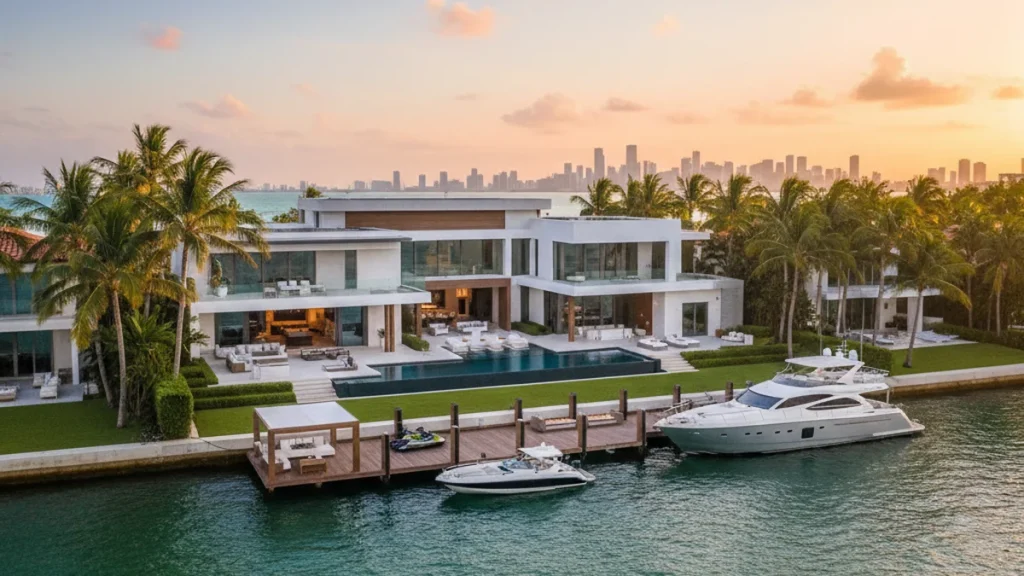
If you’re buying a luxury home in Florida and you’re about to sign a purchase agreement, the clauses in that contract will determine what happens if a defect surfaces after closing, if the seller backs out, if the appraisal comes in low, or if the closing gets delayed. Florida luxury real estate purchase agreements are not form documents you glance at and they’re the legal base for a transaction that may be the largest financial decision of your life. Here are the clauses that matter most and what they actually mean for you.
Why Luxury Purchase Agreements in Florida Are Different
Higher Stakes Mean Every Word Matters
In a standard residential transaction, contract disputes usually involve deposits in the $5,000–$30,000 range. In Florida luxury real estate, you’re often looking at deposits of $100,000 to $500,000 or more, inspection periods covering complex systems like seawalls and custom automation, and purchase terms that involve 1031 exchanges, entity structures, or seller financing. A single ambiguous clause can cost hundreds of thousands of dollars. Working with a Florida real estate litigation attorney to review your agreement before you sign prevents the litigation that comes after.
FAR/BAR vs. Custom Contract
Many luxury transactions use custom contracts drafted by the seller’s attorney, especially in new construction, developer sales, and off-market deals. These contracts are written to protect the seller and developer. Every deviation from the standard FAR/BAR contract is intentional and usually not in your favor.
The Key Clauses in a Florida Luxury Purchase Agreement
Inspection Contingency, Your Most Important Protection
The inspection period is the buyer’s primary window to discover and respond to defects. In standard FAR/BAR contracts it defaults to 15 days. In luxury transactions, this often isn’t enough. You’re dealing with:
- Seawall and dock inspections for waterfront property
- Roof inspections on complex tile and flat roof systems
- Custom automation, smart home, and HVAC system evaluations
- Pool, spa, and outdoor kitchen equipment assessments
- HOA and CDD document review requiring their own timeline
Negotiate for 21–30 days minimum on a luxury property. Once the inspection period expires without proper written cancellation, your right to exit without forfeiting your deposit is gone and you may be in breach of the Florida purchase contract.
AS-IS Rider — What It Does and Doesn’t Mean
Most Florida luxury transactions use the AS-IS rider. Buyers sometimes think this means the seller has no disclosure obligation. That’s wrong. Florida’s disclosure duty from Johnson v. Davis still applies and sellers must disclose known material defects that aren’t readily observable regardless of AS-IS language. What the AS-IS rider actually eliminates is the buyer’s right to demand repairs after the inspection. You can still cancel based on inspection findings, but you can’t force the seller to fix anything. That distinction matters enormously when you discover a $200,000 seawall repair mid-transaction.
Liquidated Damages Clause
This clause defines what happens to the deposit if one party defaults. In a standard FAR/BAR contract, it can be checked two ways:
- Liquidated damages checked: Seller’s sole remedy for buyer default is keeping the deposit and they can’t sue for more
- Liquidated damages NOT checked: Seller can pursue actual damages beyond the deposit amount, including loss of a better deal
On a $3 million luxury sale, this distinction can mean the difference between losing a $150,000 deposit or facing a $300,000 damages lawsuit. Know which box is checked before you sign.
Financing Contingency — Don’t Waive It Without Understanding It
What a Proper Financing Contingency Does
A financing contingency protects your deposit if your loan application is denied despite good faith efforts. In today’s luxury market where jumbo loan underwriting can be rigorous and rates volatile and waiving this contingency entirely is a significant risk. Some buyers waive it to be competitive in a multiple-offer situation, which is a legitimate strategy, but only if you genuinely have cash or ironclad financing in place. The CFPB’s guidance on financing contingencies explains how lenders and buyers should handle these provisions.
Personal Property, Fixtures, and What Conveys
Disputes That Happen After Every Luxury Closing
| Item | Default Rule | What to Do |
|---|---|---|
| Light fixtures | Typically convey unless excluded | Specifically list any seller wants to keep |
| Smart home equipment | Often disputed — is it a fixture or personal property? | List every system specifically in the contract |
| Custom window treatments | Depends on how they’re installed | Explicitly include or exclude in writing |
| Outdoor furniture | Personal property — does NOT convey unless listed | Negotiate inclusion if you want it |
| Wine collection | Personal property | Never conveys without specific contract language |
Frequently Asked Questions
| Question | Answer |
|---|---|
| Can I get my deposit back on a luxury AS-IS purchase in Florida? | Yes — if you properly cancel within the inspection period. Once that window closes, the AS-IS nature of the sale makes deposit recovery much harder without proving seller fraud or breach. |
| Do I need an attorney to review my luxury purchase agreement? | Not legally required — but practically essential on transactions of this size. The cost of a contract review is trivial compared to what a bad clause can cost you. |
| Can a Florida luxury seller back out after accepting my offer? | Only with legal justification. Backing out without cause makes the seller the defaulting party — and you can pursue specific performance or damages including your deposit plus costs. |
Review Your Florida Luxury Purchase Agreement Before You Sign — Not After
Feinstein Law reviews and negotiates Florida luxury real estate purchase agreements and handles post-closing disputes for buyers and sellers throughout South Florida. Call (954) 767-9662 or contact us at our contact page.
About Michael Feinstein: Michael Feinstein is a Fort Lauderdale based Real Estate Attorney and Broker for for high-asset clients.
