

Phone

What to Do When a Florida Business Partner Steals from the Company

Partnership Dissolution in Florida: What Happens When Business Partners Split

How Florida Courts Handle Breach of Partnership Agreements

Shareholder Disputes in Florida: When Partners Cannot Agree

Can I Sue My Business Partner For Negligence?

Call Now Email12
Florida's Business Law Firm
Fort Lauderdale Phone954-767-9662

What to Do When a Florida Business Partner Steals from the Company

Florida business theft investigation with locked safe and financial records

Discovering that a business partner is stealing from your Florida company is one of the most destabilizing things that can happen in business. The instinct is to confront them immediately — but that is almost always the wrong move. What you do in the first 48 hours after discovering theft or embezzlement by a Florida business partner will determine how much you can recover and whether your business survives the fallout. Here is exactly what to do, in order.

Step 1: Do Not Confront Your Partner Yet

Why Immediate Confrontation Backfires

When a partner knows they’ve been caught, they act fast. Bank accounts get drained, documents get shredded, and assets get transferred to relatives or shell companies. A partner who feels cornered can do more damage in a day than they did over months of gradual theft. Before you say a word to them, you need an attorney and you need your evidence secured.

Preserve Every Record You Can Access

Access and copy every financial document you have a right to see — bank statements, QuickBooks files, vendor invoices, payroll records, expense reports. Do this digitally and store copies somewhere your partner cannot access. If you are locked out of accounts, a Florida business litigation attorney can seek emergency court relief including temporary injunctions and asset freezes.

Action Do This Avoid This
Evidence Copy all records you can access immediately Deleting or altering anything — even theft records
Communication Keep it business-as-usual until advised otherwise Confronting, accusing, or threatening via text or email
Banking Notify your bank of potential fraud with counsel’s guidance Unilaterally freezing accounts (may backfire legally)
Partners/Employees Tell only those on a strict need-to-know basis Broadcasting the situation — it can create defamation exposure
Legal Retain counsel immediately Waiting to “see what happens”

Step 2: Call a Florida Business Litigation Attorney

Civil and Criminal Remedies Run Simultaneously

You do not have to choose between suing your partner and reporting to law enforcement. Civil and criminal proceedings can run in parallel. A civil lawsuit moves faster for financial recovery — especially if you pursue a civil theft claim under Florida Statute § 772.11, which awards treble damages and attorney fees. Criminal charges may be appropriate, but prosecutors control that timeline, not you.

Emergency Injunctions and Asset Freezes

If there is evidence of ongoing theft or imminent asset dissipation, your attorney can file for an emergency temporary injunction to freeze your partner’s access to company funds and assets. Florida courts can issue these orders within days when the facts support immediate irreparable harm. A breach of fiduciary duty claim is typically filed simultaneously, establishing the legal basis for the freeze.

Step 3: Quantify the Damage

  • Hire a forensic accountant to trace every unauthorized transaction
  • Document the full period of the theft — courts need specific dollar amounts
  • Identify any third parties who may have received stolen funds
  • Assess whether your company’s insurance covers employee or partner dishonesty

The Association of Certified Fraud Examiners reports that the median duration of partner fraud before discovery is 18 months — meaning the actual losses often far exceed what the victim initially suspects. A thorough forensic accounting review is essential before settling on a recovery number.

Step 4: Decide on Your Exit Strategy

Once the immediate legal situation is stabilized, you face a business decision: do you buy your partner out, dissolve the business, or continue while litigation is pending? Each path has different legal and tax implications. A Florida partnership dissolution attorney can model out each scenario so you make this decision with full information rather than in the heat of the moment.

Florida forensic accountant discovering missing company funds on laptopForensic accounting is often the first step in building a business theft case in Florida.

Frequently Asked Questions

Question Answer
Can I kick my partner out of the business immediately? Not unilaterally — you need a court order or a specific provision in your partnership agreement.
What if my partner is also a signatory on all accounts? An attorney can seek a court-ordered change of signatories as part of emergency injunction relief.
What is the statute of limitations for partner theft in Florida? Civil theft: 4 years from discovery. Fraud: 4 years. Breach of fiduciary duty: 4 years.
Can I recover attorney fees if I win? Yes — Florida’s civil theft statute mandates treble damages and attorney fees if you prevail.
Do I have to file a police report first? No. Civil litigation is independent. You can pursue both simultaneously or one without the other.

Act Fast — Every Day Matters in Fraud Cases

When a Florida business partner steals from your company, the window to recover assets closes quickly. Feinstein Real Estate Litigation & Business Law has helped South Florida business owners take immediate legal action to freeze assets, quantify damages, and hold dishonest partners accountable. Call (954) 767-9662 or visit our contact page now.

About Feinstein Real Estate Litigation & Business Law

A South Florida business litigation firm with 37+ years of experience in partner fraud, civil theft, breach of fiduciary duty, and emergency injunctions. Serving Fort Lauderdale, Miami, and throughout South Florida.

By : Michael Feinstein | April 27, 2026 | Business Litigation

Partnership Dissolution in Florida: What Happens When Business Partners Split

Florida business partners discussing dissolution with attorneys at conference table

Partnership dissolution in Florida is one of the most contentious and legally complex events a business can face. When partners disagree about the direction of a company, one wants out, or misconduct surfaces, the process of unwinding the relationship touches on contracts, fiduciary duties, asset valuation, and litigation — all at once. Whether you are the partner exiting or the one staying, understanding how Florida partnership dissolution works is essential to protecting what you’ve built.

What Triggers Partnership Dissolution in Florida?

Voluntary Dissolution by Agreement

Partners can agree to dissolve at any time. Most partnership agreements include a dissolution procedure — notice requirements, buy-out formulas, and asset distribution rules. If your agreement is well-drafted, this process is relatively orderly. If not, you default to the Florida Revised Uniform Partnership Act (Florida Statute Chapter 620), which fills the gaps but may not align with what the partners expected.

Involuntary Dissolution

A partner can petition a Florida court for judicial dissolution when:

  • Another partner engaged in wrongful conduct that materially harmed the business
  • A partner willfully breached the partnership agreement or fiduciary duties
  • The business can no longer operate economically or equitably
  • A partner is incapacitated or deceased without a succession plan

Judicial dissolution is the nuclear option — it places the process under court supervision and can result in a forced sale of partnership assets. A business litigation attorney in Fort Lauderdale can often negotiate a buyout or structured exit that avoids going to court.

Dissolution Type Trigger Court Involved? Timeline
Voluntary by agreement Partner consensus No Weeks to months
Voluntary per agreement terms Triggering event in agreement No Per agreement
Judicial dissolution Misconduct, deadlock, or impossibility Yes 6–18+ months
Dissociation without dissolution One partner exits; others continue Sometimes Varies

Fiduciary Duties During Dissolution

Partners Still Owe Each Other Duties While Winding Down

Even during dissolution, Florida law requires partners to continue acting in good faith toward each other and the partnership. Self-dealing — diverting business opportunities, transferring assets to yourself at below-market value, or soliciting the partnership’s clients before dissolution is complete — constitutes a breach of fiduciary duty that can result in damages, disgorgement of profits, and personal liability.

The Duty to Wind Down Properly

Dissolution does not mean the partnership immediately ceases to exist. Partners have a legal duty to wind down business affairs in an orderly way — completing pending contracts, paying debts, notifying customers and creditors, and distributing remaining assets. Rushing this process or doing it unilaterally exposes partners to personal liability.

How Assets Are Divided in a Florida Partnership Dissolution

  • Partnership debts are paid first — before any distributions to partners
  • Remaining assets are distributed per the partnership agreement
  • If no agreement, Florida law requires equal distribution unless capital contributions differed
  • Disputes over asset valuation require an independent appraisal or forensic accounting
  • Goodwill — especially for professional practices — is frequently the most contested asset

The Florida Bar’s business section notes that valuation disputes in professional partnerships — medical practices, law firms, accounting groups — are the most litigated aspect of partnership dissolutions in South Florida.

What If There’s No Partnership Agreement?

Many informal partnerships operate on a handshake. When they dissolve, Chapter 620 controls. By default, Florida law treats all partners as equal — equal shares, equal votes, equal liability. This often produces an outcome nobody wanted. If you are in a business partnership without a written agreement and a dispute is emerging, contact a partnership litigation attorney immediately before informal negotiations solidify positions that are hard to undo.

Florida partnership dissolution documents being reviewed by attorneys
Partnership dissolutions often require court intervention when buyout terms cannot be agreed upon.

Frequently Asked Questions

Question Answer
Can one partner force a dissolution in Florida? Yes, through a judicial dissolution petition if grounds exist under Chapter 620.
What happens to personal guarantees when a partnership dissolves? They survive dissolution. Personal guarantors remain liable to creditors regardless.
Can I leave a partnership without dissolving it? Yes — this is called dissociation. You exit, but the partnership may continue with remaining partners.
How is goodwill valued in a Florida partnership dissolution? By an independent business valuator, often using income, market, or asset-based approaches.
What if my partner took assets before dissolution was complete? This may constitute conversion, breach of fiduciary duty, or fraud — all actionable in Florida court.

Protect Your Stake Before the Split Gets Complicated

The earlier you bring legal counsel into a Florida partnership dissolution, the more options you have. Waiting until the other side has already moved assets or poisoned the relationship limits your remedies. Feinstein Real Estate Litigation & Business Law handles partnership disputes and business dissolutions throughout South Florida. Call (954) 767-9662 or reach us at our contact page.

About Feinstein Real Estate Litigation & Business Law

A South Florida business and real estate litigation firm with 37+ years of experience. Handling partnership disputes, shareholder conflicts, breach of fiduciary duty, and business dissolutions throughout Broward, Miami-Dade, and Palm Beach Counties.

By : Michael Feinstein | April 24, 2026 | Business Litigation

How Florida Courts Handle Breach of Partnership Agreements

Florida partnership agreement breach — attorneys at conference table

If your business partner has stopped showing up, started a competing company on the side, or is making decisions that benefit themselves at the expense of the partnership — you’re facing a breach of a Florida partnership agreement, and it needs to be addressed before the damage compounds. Florida partnership agreement breaches can destabilize a business built over years, and the legal outcomes depend heavily on what your written agreement says, what Florida’s default statutes provide when it’s silent, and how quickly the non-breaching partner acts.

What Florida Law Governs Your Partnership

The Right Statute Depends on Your Entity Type

Florida has separate statutes governing different types of partnerships, and knowing which one applies changes your options significantly:

These statutes provide default rules — but a well-drafted partnership agreement can modify most of them. If your partnership has no written agreement at all, Florida’s defaults kick in: equal profit sharing, equal management rights — which creates constant friction when partners have different expectations. A Florida business litigation attorney will review both the agreement and the applicable statute to identify where your partner went wrong.

If There’s No Written Agreement

You’re not without options, but you’re in a harder position. Without a written agreement specifying buyout procedures, management rights, or non-compete obligations, every dispute becomes a factual argument about what the partners actually intended. That’s expensive to litigate and unpredictable to win.

What Partner Conduct Actually Constitutes a Breach

Florida business litigation settlement — partners reaching agreement

The Breaches That Trigger Litigation Most Often

  • Withdrawing partnership funds without authorization or proper documentation
  • Competing directly against the partnership while still a member or general partner
  • Refusing to contribute agreed capital or perform promised duties
  • Making binding commitments on behalf of the partnership without authority
  • Disclosing confidential business information or trade secrets to competitors
  • Blocking a partner’s buyout rights or refusing to honor the agreed valuation method

These aren’t just business disagreements — they’re legally actionable breaches. If your partner is doing any of these things, the longer you wait, the more damage they can do and the harder it becomes to document what happened. Start preserving emails, financial records, and communications now, before you approach them or file anything.

What Remedies Are Available When a Florida Partner Breaches

Your Options Range From Money to Dissolution

Remedy What It Does
Damages Financial recovery for losses the breach caused — lost profits, diverted revenue, business value reduction
Accounting Court-ordered financial review to identify misappropriated funds or unauthorized distributions
Injunction Emergency order blocking the partner from accessing accounts, soliciting clients, or continuing to compete
Buyout Court-ordered or negotiated buyout of the breaching partner’s interest using the agreement’s valuation formula
Judicial dissolution Florida courts can dissolve the partnership entirely when continued operation is not reasonably practicable

The Role of Your Partnership Agreement in CourtFlorida breach of fiduciary duty — business litigation attorney

Florida courts enforce partnership agreements as written. If your agreement has a specific buyout formula, a non-compete obligation, or a dispute resolution clause requiring mediation first — courts will hold both parties to it. If the agreement requires a certain valuation method for a departing partner’s interest, that method controls unless it produces a manifestly unfair result. Your Florida contract dispute attorney needs to know every relevant clause before the first letter goes out.

Acting Quickly Is the Difference Between Recovery and Loss

Why Speed Matters in Florida Partnership Disputes

A partner who is in breach usually knows it. The moment they sense a dispute is coming, they may start moving assets, accelerating side deals, or manipulating financial records. Emergency injunctive relief is available in Florida when ongoing harm is being caused — but you have to move before the damage is done, not after. The American Bar Association’s mediation resources outline when pre-litigation resolution actually works — and in partnership disputes, early intervention often produces better outcomes than waiting for full litigation.

Frequently Asked Questions

Question Answer
Can I force a partner out of a Florida partnership for breaching the agreement? Yes. Florida law allows judicial dissolution or expulsion when a partner’s wrongful conduct makes continued operation impracticable.
How long do I have to sue a Florida partner for breach? 5 years for a written agreement breach; 4 years for other business torts. The clock starts when the breach occurred or was discovered.
What if my partner claims I also breached the agreement? Cross-claims and counterclaims are standard in partnership disputes. Having clean documentation of your own conduct is essential before filing.

Protect What You Built — Your Florida Partnership Has Legal Remedies

A Florida partnership agreement breach doesn’t fix itself with time — it gets worse. Feinstein Law represents business owners in partnership disputes and breach of contract litigation throughout South Florida. Call (954) 767-9662 or contact us through our contact page.

About Feinstein Law: Feinstein Law is a Fort Lauderdale litigation firm focused on business, contract, and real estate disputes throughout Broward, Miami-Dade, and Palm Beach counties.

By : Michael Feinstein | April 16, 2026 | Business Litigation

Shareholder Disputes in Florida: When Partners Cannot Agree

Florida shareholder dispute attorney — business partners in disagreement

If you’re a shareholder in a Florida company and you and your co-owners can no longer agree on anything — management decisions, distributions, exit strategy, compensation — you’re in what courts call a shareholder dispute in Florida, and it can paralyze a business faster than almost any external threat. Florida shareholder disputes between closely held company owners are some of the most contentious and expensive pieces of business litigation, because the financial stakes are intertwined with personal relationships that have usually broken down completely by the time an attorney gets involved. Here’s what you’re dealing with and what the law actually allows.

What Triggers a Florida Shareholder Dispute

It Usually Builds Over Time

Most Florida shareholder disputes don’t start with one dramatic event — they build through accumulated resentment about unequal contributions, compensation disparities, disagreements about the company’s direction, or one shareholder suspecting another of self-dealing. By the time a formal dispute surfaces, both sides have a list of grievances. The legal process then focuses on which of those grievances are actually actionable under Florida law and the governing documents.

Common Catalysts

  • Majority shareholders cutting off distributions while paying themselves inflated salaries
  • A controlling owner entering self-dealing transactions at the company’s expense
  • Deadlock in a 50/50 company where neither partner can force a decision
  • One shareholder wanting to sell the business while the other refuses
  • Minority shareholders being frozen out of management information and financial records
  • Disagreement over valuation in a buyout triggered by death, disability, or voluntary exit

If you’re seeing any of these patterns, speak with a Florida business litigation attorney before the situation deteriorates further.

Florida Law Governing Shareholder Rights

Florida business partners discussing dissolution with attorneys at conference table

The Governing Statutes

Florida’s Business Corporation Act (Chapter 607) governs corporations. The Florida Revised LLC Act (Chapter 605) governs LLCs. Both statutes give shareholders and members specific rights — to inspect company records, to bring derivative suits on behalf of the company, and in certain circumstances, to petition for judicial dissolution. Your shareholder agreement or operating agreement may expand or restrict those statutory defaults — which is why reviewing that document is the first step in any dispute.

The Right to Inspect Records

Florida law gives shareholders the right to inspect and copy company records upon proper written demand. This includes financial statements, meeting minutes, and the list of shareholders. If a controlling owner is blocking access to financial information, this is often the first formal step — sending a statutory inspection demand — before filing suit. It forces the other side’s hand and creates a paper record of obstruction if they refuse.

Remedies Available in Florida Shareholder Disputes

Remedy When It Applies
Damages Financial losses caused by breach of fiduciary duty, self-dealing, or unauthorized distributions
Forced buyout Court orders the majority to buy out the minority at fair value — used when minority is oppressed
Injunction Stops ongoing harm — blocking access to accounts, continued self-dealing, or breach of shareholder agreement
Accounting Court-ordered financial review to identify misappropriated funds or undisclosed transactions
Judicial dissolution Florida courts can dissolve a company when continued operation is not reasonably practicable due to shareholder deadlock or oppression

Minority Shareholder Oppression in Florida

Florida courts recognize minority shareholder oppression as a basis for relief. Oppressive conduct includes freezing out minority shareholders from management, withholding distributions while paying insiders excessive compensation, or conduct that defeats the minority’s reasonable expectations when they invested. If you’re a minority owner being squeezed out, a Florida business dispute attorney can pursue a forced buyout at fair value as an alternative to full litigation. The ABA’s framework on minority oppression in closely held companies outlines the standards courts apply.

Frequently Asked Questions

Question Answer
Can a minority shareholder force a sale of the company in Florida? Not directly — but they can petition for judicial dissolution or a buyout in cases of oppression or deadlock, which often leads to a negotiated sale.
What if our shareholder agreement has no buyout clause? Florida’s default statutory rules apply. Courts will determine fair value using accepted valuation methods — which makes the process more expensive and unpredictable.
Can I get attorney fees in a Florida shareholder dispute? Yes, in certain circumstances — especially derivative suits on behalf of the company where the shareholder prevails and the company benefited.

Florida Shareholder Disputes Can Be Resolved — But Speed Matters

The longer a Florida shareholder dispute drags on, the more the business suffers. Feinstein Law handles shareholder disputes and closely held company litigation throughout South Florida. Call (954) 767-9662 or contact us at our contact page.

About Feinstein Law: Feinstein Law is a Fort Lauderdale firm focused on business litigation, contract disputes, and real estate law throughout Broward, Miami-Dade, and Palm Beach counties.

By : Michael Feinstein | March 31, 2026 | Business Litigation

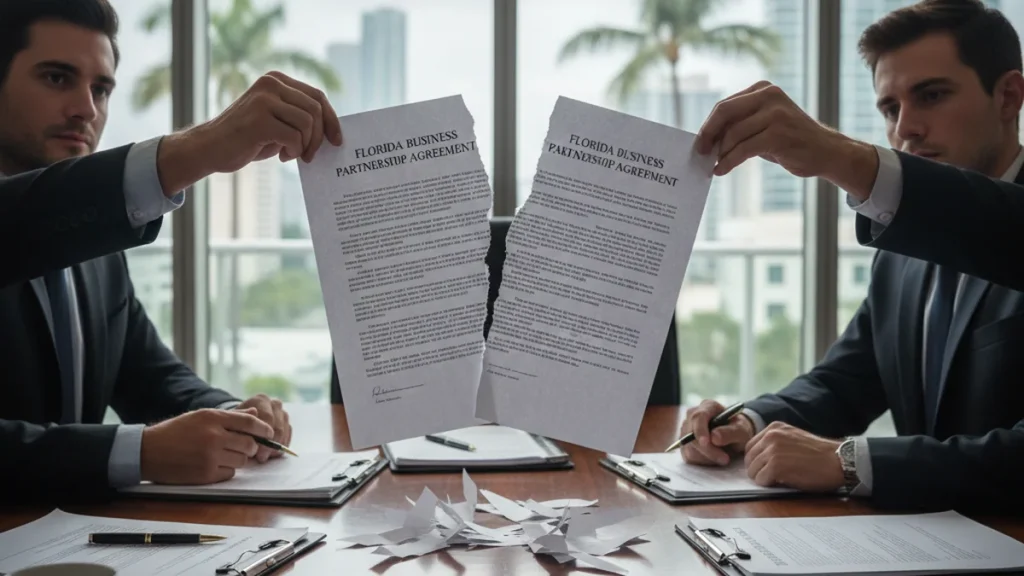
Can I Sue My Business Partner For Negligence?

Business Disputes In Miami

Can You Sue a Business Partner for Negligence?

Are you wondering whether you can sue a business partner for negligence? The answer is yes, you can sue your business partner if their negligent actions have caused harm to your business or financial interests. However, proving negligence in a business partnership involves specific legal requirements and depends on the structure of your partnership agreement. What constitutes negligence? How does it applies to business partnerships, and what steps you can take if you believe your partner has acted negligently? Lets discuss.

Understanding Negligence in Business Partnerships

Negligence occurs when a person fails to exercise the level of care that someone of ordinary prudence would have exercised under the same circumstances. In the context of a business partnership, this means that a partner failed to fulfill their duties, leading to financial losses or damage to the business. To learn more about the legal definition of negligence, you can visit the Cornell Law School’s Legal Information Institute.

Common Examples of Partner Negligence

  • Failing to keep accurate financial records
  • Not paying taxes or business debts on time
  • Entering into contracts without proper authority or due diligence
  • Ignoring compliance with state or federal regulations
  • Neglecting key business responsibilities, resulting in loss or liability

Florida partnership dissolution documents being reviewed by attorneys

Legal Grounds for Suing a Business Partner

To successfully sue your business partner for negligence, you must prove the following elements:

  1. The existence of a duty of care owed by your partner to you or the business
  2. A breach of that duty through negligent actions or omissions
  3. Actual damages or losses suffered as a result of the breach
  4. A direct link between the breach and your damages (causation)

These requirements are similar to standard negligence claims, but partnership agreements or state laws may impose specific duties. For more on business torts, visit the Legal Information Institute’s business torts section.

Review Your Partnership Agreement

Before taking legal action, review your partnership agreement for any clauses regarding dispute resolution, partner responsibilities, or limitations on liability. Many agreements require mediation or arbitration before a lawsuit can be filed. If you don’t have a formal agreement, state default laws will apply.

For more information on partnership disputes and agreements, see our resource on Partnership Disputes.

Steps to Take If You Suspect Partner Negligence

  1. Gather Evidence: Collect documents, emails, and records that demonstrate the negligent actions and the resulting harm to the business.
  2. Consult Your Agreement: Review the partnership agreement for guidance on dispute resolution.
  3. Attempt Resolution: Consider mediation or negotiation to resolve the matter without litigation.
  4. Seek Legal Advice: If resolution is not possible, consult with a legal expert to discuss your options for filing a lawsuit.

Learn more about resolving partnership disputes on our Business Litigation page.

Potential Remedies in a Negligence Lawsuit

If you prevail in a negligence lawsuit against your business partner, remedies may include:

  • Monetary damages to compensate for losses
  • Removal of the negligent partner from the business
  • Reimbursement for legal fees and costs
  • Dissolution of the partnership, if warranted

The outcome often depends on the severity of the negligence and the terms of your partnership agreement.

Florida Laws on Partnership Negligence

In Florida, the Florida Revised Uniform Partnership Act governs the duties and liabilities of business partners. Partners owe fiduciary duties of loyalty and care to each other and the partnership. Negligent actions that breach these duties may be grounds for legal action.

When to Seek Professional Help

Business disputes involving negligence can be complex and emotionally charged. If you’re unsure whether your situation qualifies as negligence, or if you need guidance on the next steps, seeking professional assistance is highly recommended.

It is possible to sue a business partner for negligence if their actions breach their duty of care and cause harm to your business. However, success depends on the specifics of your partnership agreement, the evidence you can provide, and compliance with applicable state laws. Always review your agreement, attempt to resolve disputes amicably, and consult legal resources when necessary to protect your business interests.

For assistance Contact our office if you have questions about your partnership dispute.

About Michael L. Feinstein

Fort Lauderdale Real Estate Litigation AttorneyMichael L. Feinstein is a highly respected attorney with over three decades of experience in complex commercial litigation, partnership disputes, and business law. As the founder of Feinstein Law, he has built a reputation for providing strategic legal counsel to business owners, entrepreneurs, and professionals throughout Florida. Michael’s extensive background in handling high-stakes business conflicts, including cases involving negligence, fiduciary duties, and contract disputes, demonstrates his deep understanding of both legal and financial complexities. He is known for his commitment to ethical advocacy, personalized service, and achieving favorable outcomes for his clients. Michael L. Feinstein’s expertise and dedication make him a trusted resource for individuals and businesses seeking knowledgeable and reliable legal representation.

Learn more about Michael’s experience and credentials on the Attorney Profile page.

By : Michael Feinstein | January 10, 2026 | Business Litigation
Call Now