
Phone

Dual Representation in Florida Real Estate: How One Attorney-Broker Saves You Money

Fort Lauderdale Real Estate Law Firm

Fort Lauderdale Contract Attorney

Broker Commission Disputes: New Enforcement Trends

Florida’s Live Local Act and Zoning Litigation

New Flood Risk Disclosure Requirements in Florida

Florida Property Insurance Litigation

Florida’s Commercial Rent Sales Tax Repeal

Florida’s Condo Law Reforms

7 Legal Pitfalls to Avoid When Buying Property in Fort Lauderdale

Call Now Email12
Florida's Business Law Firm
Fort Lauderdale Phone954-767-9662

Dual Representation in Florida Real Estate: How One Attorney-Broker Saves You Money

Dual representation florida real estate attorney

Dual Representation in Florida Real Estate: Why One Attorney-Broker Gives You an Edge

Dual representation in Florida real estate gives luxury buyers and sellers a powerful advantage. Instead of splitting your transaction between a broker who handles the sale and a lawyer who handles the paperwork, one professional does both. Michael Feinstein holds both a Florida real estate broker license and is a top South Florida Real Estate Attorney. He negotiates your deal and drafts your contract under a single fiduciary duty. You get legal strategy built into every step of the transaction, not bolted on at the end. For high-value properties in Fort Lauderdale, this integrated approach means stronger protection and smoother closings for your Luxury Real Estate.

What Dual Representation Actually Means in Florida

Dual representation in Florida real estate means one licensed professional serves as both your attorney and your broker. Florida law permits attorneys to hold real estate broker licenses, and Michael Feinstein does exactly that. He owes you a single fiduciary duty that covers both the legal and transactional sides of your deal. Every conversation, every negotiation, and every document review happens with legal judgment already in the room. Dual representation in Florida real estate means you never have to relay information between two separate professionals who may have competing priorities.

Traditional real estate transactions split these responsibilities across two people. Your broker focuses on getting the deal closed. Your attorney focuses on limiting liability. When those two goals conflict, you end up paying for the friction. Dual representation in Florida real estate eliminates that tension entirely by putting one person in charge of both objectives.

The Financial Advantage of Attorney-Broker Representation
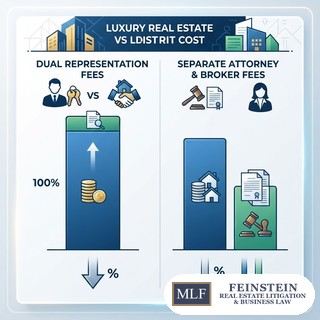
dual representation fee comparison chart The financial structure of dual representation in Florida real estate works in your favor. Instead of paying a broker commission and then hiring an attorney at an hourly rate, you work with one professional under a single fee arrangement. The broker fee covers both the transactional work and the legal protection. You know exactly what you are paying for and who is responsible for every part of the deal.

Separate advisors often duplicate work. Both your broker and your attorney review contracts, attend meetings, and coordinate closing details. With a single attorney-broker, there is no overlap. Every task gets done once by one person who sees the full picture. The Florida Realtors association outlines standard broker commission structures across the state.

For luxury transactions, the savings compound. High-value contracts involve intricate clauses that standard brokers may not fully understand. When your broker is also your attorney, those clauses get negotiated and drafted in the same conversation. There is no additional legal retainer for contract review, and no risk that your broker will skip a legal issue your attorney would have caught. Reviewing your real estate professional fees Florida expectations helps you see why this model delivers more value per dollar spent.

Why Separate Advisors Create Friction in Luxury Deals

Competing Priorities Between Broker and Attorney

Brokers are paid to close deals quickly. Attorneys are paid to protect you from risk. These two incentives pull in opposite directions during negotiations. Your broker may push you to accept terms that speed up closing. Your attorney may want to slow down and negotiate harder. Dual representation in Florida real estate resolves this conflict by putting both decisions in the same hands. Michael Feinstein weighs the market timing and the legal risk together, giving you advice that serves your full interest.

Communication Delays That Kill Deals

When your broker and attorney are different people, every decision requires a phone call or email between them. Your broker sends a contract to your attorney for review. Your attorney sends back revisions. Your broker then presents those revisions to the seller. Each step adds hours or days to the timeline. In competitive luxury markets, that delay can cost you the property. Dual representation in Florida real estate means decisions happen immediately because the negotiator and the legal reviewer are the same person. The National Association of Realtors documents how transaction delays affect closing rates.

Single Fiduciary Duty: Stronger Protection, Not Lessflorida dual representation disclosure form
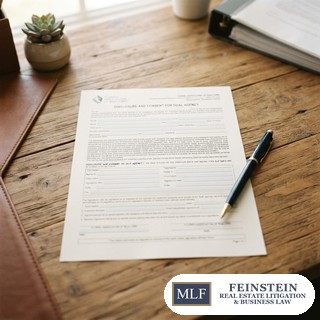
Some buyers worry that one person serving both roles means divided loyalty. The opposite is true in Florida. Attorneys are bound by the strict ethical rules of The Florida Bar. When your broker is also your attorney, that ethical duty covers the entire transaction. You have one professional who is legally obligated to protect you on every front, from the first showing to the final signature. This is the core advantage of dual representation in Florida real estate.

With separate advisors, accountability splits across two professional standards. If something goes wrong, each advisor can point to the other. With a single attorney-broker, there is one person responsible for the outcome. That clarity benefits you at every stage of the transaction. You can review our luxury real estate purchase agreements key clauses to see how legal strategy shapes every contract term.

The Fee Comparison: What You Actually Pay

Understanding real estate attorney and broker cost Florida buyers face helps you see the value clearly. With separate professionals, you pay a broker commission on the sale side and a separate hourly legal fee for contract review, title issues, and closing oversight. Those two costs add up quickly on a luxury property. Dual representation in Florida real estate bundles both services under one fee, so you are not paying twice for overlapping work.

Representation Model What You Pay Who Is Accountable Legal Protection
Separate Broker and Attorney Broker commission plus attorney hourly fees Two professionals, split accountability Legal review added after negotiation
Single Attorney-Broker One unified fee covering sale and legal work One professional, full accountability Legal strategy built into negotiation

Where the Value Shows Up

The real value of dual representation in Florida real estate is not just the fee savings. It is the quality of representation you get at every decision point. When Michael Feinstein reviews a counter offer, he is evaluating it as both a broker who knows the market and an attorney who knows the law. That dual perspective catches issues that a broker-only approach would miss. You get attorney broker savings on fees and superior judgment on the deal itself.

  • One fee covers both brokerage and legal representation
  • Contract clauses drafted with legal expertise from the start
  • No communication delays between separate professionals
  • Single fiduciary duty covering the entire transaction
  • Negotiation strategy informed by legal risk assessment

How Dual Representation Works in Practice

The process starts with a consultation where dual representation in Florida real estate is explained in full. Michael Feinstein reviews your transaction goals. He evaluates the property, the contract, and your legal exposure in one conversation. As your broker, he handles showings, listings, and negotiations. As your attorney, he drafts contract language, reviews title documents, and manages contingencies. Every step benefits from legal insight that a traditional broker simply cannot provide. This is why dual representation in Florida real estate delivers a higher standard of service for luxury clients.

For buyers, this means your offer strategy includes legal protections from the first draft. For sellers, it means your listing agreement and counter terms are built to hold up under scrutiny. The Florida Statutes govern real estate contract enforceability, and having an attorney draft your terms ensures compliance. You can learn more about Florida real estate contract contingencies and how they protect your deposit.

Questions About Dual Representation in Florida Real Estate

Question Answer
Can a Florida attorney also serve as my real estate broker? Yes. Licensed Florida attorneys can hold broker licenses and provide both legal and brokerage services under a single engagement.
Does dual representation mean I get less advocacy? No. You get stronger advocacy because one professional owes you a fiduciary duty across both legal and transactional matters.
How are fees structured for attorney-broker representation? One unified fee covers both the brokerage work and the legal representation. There is no separate hourly legal billing on top of the commission.
What types of properties benefit most from dual representation? Luxury and high-value properties benefit most because the legal exposure and financial stakes are higher.

Choose Dual Representation for Your Fort Lauderdale Property Transaction

Dual representation in Florida real estate gives you a single advocate who handles every aspect of your transaction with legal precision. Feinstein Real Estate Litigation and Business Law offers integrated attorney-broker representation for luxury buyers and sellers in Fort Lauderdale. Call (954) 767-9662 or contact us to schedule a consultation with Michael Feinstein today.

About Feinstein Real Estate Litigation and Business Law

A Fort Lauderdale real estate litigation and business law firm specializing in high-asset clients and intricate cases. Michael L. Feinstein serves as both a licensed real estate broker and attorney, offering integrated legal and transactional representation. The firm handles luxury purchase disputes, title litigation, and contract negotiations throughout Broward County and South Florida. Our team delivers aggressive, results-driven legal representation for clients navigating high-value property transactions.

By : admin | August 7, 2026 | Uncategorized

Fort Lauderdale Real Estate Law Firm

Fort Lauderdale-Real-Estate-Law-Firm

Trusted Legal Guidance for Complex Property Matters

South Florida’s real estate market moves fast — and mistakes can be expensive. Whether you’re purchasing a home, developing commercial property, or resolving a title issue, having a Fort Lauderdale real estate law firm by your side ensures that every deal is handled with precision and legal protection.

At Feinstein Real Estate Litigation & Business Law, experience and strategy come together to safeguard clients in one of the most competitive property markets in the country.

Why Work with a Real Estate Law Firm Instead of a Title Company?

Many buyers assume a title company provides the same protection as a law firm, but that’s rarely true.
A real estate attorney can interpret complex contracts, identify risks before closing, and represent your interests in negotiations — something a title company simply can’t do.

When disputes arise — such as boundary issues, lien complications, or seller nondisclosure — only a law firm can provide legal advice or representation in court.

Every transaction carries legal implications. Having an attorney ensures you’re not signing away your rights without realizing it.

Key Services Provided by a Fort Lauderdale Real Estate Law Firm

A full-service real estate law firm like Feinstein Law can assist with all phases of a property transaction or dispute, including:

  • Contract drafting and review for residential and commercial deals
  • Title and escrow services to verify clear ownership
  • Closing representation for buyers, sellers, and investors
  • Landlord-tenant agreements and lease negotiations
  • Real estate litigation involving breach of contract, fraud, or construction defects
  • Development and zoning compliance for builders and developer.
  • HOA and condominium disputes common throughout South Florida

Whether you’re closing on your first investment property or managing a portfolio of assets, legal oversight can prevent costly problems down the road.

Common Legal Challenges in Florida Real EstateComplex Commercial Real Estate Issues

Florida’s property market offers incredible opportunities — but also unique challenges.
Frequent issues that bring clients to a real estate attorney include:

  • Title defects discovered after closing
  • Boundary or easement disputes between neighbors
  • Misrepresentation or fraud by sellers or contractors
  • Unresolved code violations that delay transactions
  • Breach of purchase contracts or escrow disputes
  • Commercial lease violations between landlords and tenants

A local firm familiar with Broward County property law and Fort Lauderdale’s zoning codes can address these problems quickly and effectively.

Why Experience in Real Estate Litigation Matters

Even the best-prepared transactions can turn into disputes. When they do, it’s critical to have representation from a law firm that understands both real estate law and litigation strategy.

Feinstein Law has represented developers, brokers, and investors across South Florida for decades, handling courtroom disputes, arbitration, and settlement negotiations with a focus on results.
This dual experience — transactional and litigation — allows the firm to anticipate risks and prevent future problems before they escalate.

Your Real Estate Partner in Fort Lauderdale

Buying or selling property should be an exciting step, not a legal nightmare. With proper guidance, you can close deals with confidence, resolve disputes efficiently, and protect your financial investment every step of the way.

If you’re seeking a Fort Lauderdale real estate law firm that delivers personalized service and proven results, Feinstein Real Estate & Business Law offers the knowledge and dedication your transaction deserves.

About Michael Feinstein, Esq.

Michael Feinstein is a veteran South Florida Real Estate and Business Litigation Attorney with over 35 years of experience representing buyers, sellers, developers, and business owners in complex property and commercial matters. His firm, Feinstein Real Estate & Business Law, provides comprehensive legal services throughout Fort Lauderdale and the surrounding South Florida communities.

📍 Address: 501 E Las Olas Blvd, Suite 300, Fort Lauderdale, FL 33301
📞 Phone: (954) 767-9662
🌐 Website: https://feinsteinlaw.net

By : admin | December 20, 2025 | Uncategorized

Fort Lauderdale Contract Attorney

Business-Contract-Attorney-Feinstein-Law

Contracts are the foundation of every successful business relationship but one unclear sentence, missing clause, or misunderstood term can lead to serious financial loss. Whether you’re starting a new venture, entering a partnership, or finalizing a commercial lease, working with a knowledgeable Fort Lauderdale contract attorney ensures your agreements actually protect you, not the other side.

Why Contracts Matter More Than Ever

In today’s business world, handshake deals don’t hold up in court. Every business owner in South Florida from small entrepreneurs to corporate executives relies on contracts to define expectations and obligations.

Contracts are legally binding for a reason: they spell out what happens if something goes wrong. But they only work when they’re written clearly and reviewed by someone who understands how Florida law interprets them.

Many disputes that land in court could have been prevented if the parties had a properly drafted or reviewed agreement in the first place.

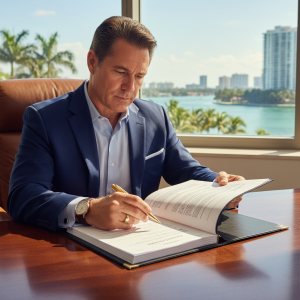
What a Fort Lauderdale Contract Attorney Can Do for YouFlorida luxury real estate attorney reviewing purchase contract

A strong contract isn’t just about legal jargon — it’s about protecting your time, money, and business interests.

A seasoned contract lawyer can help with:

  • Drafting contracts that clearly outline duties, payment terms, and dispute-resolution procedures.
  • Reviewing agreements to catch vague or risky language before you sign.
  • Negotiating terms that are fair, balanced, and reflect your goals.
  • Enforcing or defending contracts when the other party breaches or fails to perform.
  • Amending or terminating agreements as your business grows or relationships change.

At Feinstein Real Estate & Business Law, every contract is reviewed with the client’s long-term protection in mind, not just immediate needs.

Common Contract Disputes in South Florida

The business landscape in Fort Lauderdale is fast-paced and competitive, which means contract disagreements can arise from almost anything.
Typical cases include:

  • Breach of contract: One party fails to deliver goods, pay, or perform as agreed.
  • Non-compete violations: Former employees or partners compete against your business despite contractual limits.
  • Real estate or lease disputes: Commercial property contracts that fail to account for maintenance, zoning, or use issues.
  • Vendor and supplier issues: Deliverables that don’t meet quality standards or deadlines.

When disputes arise, your attorney can interpret the contract’s language, assess your legal remedies, and help you pursue damages or enforcement.

How to Avoid Contract Problems Before They Start

A few proactive steps can prevent most costly legal battles:

  1. Never sign a pre-written or “standard” form without review. Many are drafted to favor one side.
  2. Make sure every key term is clear — including payment, deadlines, termination rights, and dispute resolution.
  3. Put verbal promises in writing. If it’s not in the contract, it usually doesn’t count.
  4. Update contracts regularly. As your business evolves, your agreements should too.

The time to involve a lawyer is before you sign — not after a problem arises.

Why Choose Feinstein Law

With more than three decades of experience in Florida contract law, Attorney Michael Feinstein has reviewed, drafted, and litigated thousands of business agreements for clients across South Florida. His firm blends practical business insight with strong legal acumen — ensuring your contracts are not only enforceable but strategically written to protect your bottom line.

Whether you need help with a new partnership agreement, lease, or complex business transaction, having a Fort Lauderdale contract attorney on your side can save you time, stress, and unnecessary loss.

About Michael Feinstein, Esq.

Michael Feinstein is a respected South Florida Real Estate and Business Litigation Attorney with over 35 years of experience in contract law, commercial litigation, and real estate transactions. He represents business owners, investors, and professionals throughout Fort Lauderdale and beyond.

Address: 501 E Las Olas Blvd, Suite 300, Fort Lauderdale, FL 33301
Phone: (954) 767-9662
Website: https://feinsteinlaw.net

By : admin | November 13, 2025 | Uncategorized

Broker Commission Disputes: New Enforcement Trends

Broker Commission Disputes in Fort Lauderdale

Broker Commission Disputes: New Enforcement Trends & Contract Litigation Involving South Florida Agents

Commission disputes are surging into 2025–2026 as South Florida agents, brokers, and clients adapt to sweeping policy changes stemming from national settlements and updated MLS rules. Below is a practical overview of what changed, how enforcement is evolving, and where contract litigation is most active—plus steps to reduce risk before a dispute turns into a lawsuit.

What Changed in 2024–2025 (and Why It Matters Now)Florida broker commission dispute attorney consulting with real estate agent

Where Disputes Are Emerging in South Florida

  • Earned vs. payable commission: Whether a listing or buyer-broker agreement defines commission as “earned” at contract, at closing, or upon performance—and what happens when a deal collapses.
  • MLS vs. contract conflicts: Old templates that referenced MLS cooperative compensation now clash with 2024 policy. If the listing packet, buyer agreement, and addenda don’t match, disputes follow.
  • Dual/competing claims: Two brokers claim the same buyer or argue “procuring cause,” especially where private off-MLS compensation terms differ from expectations.
  • Termination and withdrawal: Sellers withdraw listings or switch brokerages; agents claim entitlement based on protection periods or ready-willing-able buyer production.
  • Team/agent split disputes: Internal commission-split fights between brokers and associated licensees often bypass FREC and head straight to civil court, per Florida guidance (Florida Realtors Commission Library).

Enforcement & Compliance Trends

  • MLS compliance actions: Local associations are policing prohibited compensation fields, remarks, and attachments. Repeated violations risk fines or access issues (Miami MLS Rules).
  • Written buyer agreements: Missing or vague buyer agreements undermine claims for payment and are drawing scrutiny in arbitration, mediation, and litigation (NAR FAQs).
  • FREC’s role is limited in pay disputes: The Florida Real Estate Commission does not compel commission payments between brokers/agents; these are civil contract matters (FREC/DBPR and
    Florida Realtors guidance).

Risk-Reduction Checklist for South Florida Brokerages

  1. Update all templates: Replace pre-2024 language that references MLS-posted compensation. Ensure listing and buyer agreements clearly state when and how compensation is earned, negotiated, and paid (off-MLS).
  2. Use written buyer agreements before showings: Spell out scope of services, fee structure (flat, hourly, percentage), and who may pay the fee (NAR FAQs).
  3. Align your MLS inputs with the rules: Do not place compensation in remarks, attachments, or any MLS field (NAR 2024 Policy;
    Miami MLS Rules).
  4. Document procuring cause: Maintain detailed timelines of showings, offers, negotiations, and communications. These records decide many split and procuring-cause disputes.
  5. Train teams on off-MLS negotiations: Compensation is now negotiated privately. Use Florida-specific forms and keep signed copies in every file (Florida Realtors FAQs).
  6. Consider ADR first: Many agreements (and board bylaws) permit or require mediation/arbitration prior to litigation. Early mediation can preserve relationships and cut legal spend.

Litigation Posture: What We’re Seeing in 2025–2026

  • Contract-centric claims: Breach of listing or buyer-broker agreements; disputes over “earning” events and protection periods.
  • Arbitration appeals and court challenges: Parties testing arbitration outcomes in court when MLS policy intersects with private contracts.
  • Antitrust-adjacent defenses: In higher-stakes matters, parties raise competition arguments informed by national policy shifts and government filings (DOJ Antitrust Appellate Briefs and
    AP coverage).

How Feinstein Real Estate Litigation & Business Law Can Help

We represent South Florida brokerages, teams, and individual licensees in commission disputes, including contract drafting and audit, pre-suit negotiations, mediation, arbitration, and state-court litigation. We also offer mediation services designed to resolve commission conflicts efficiently—often before they escalate into expensive, public litigation.

Feinstein Real Estate Litigation & Business Law
501 E Las Olas Blvd, Suite 300, Fort Lauderdale, FL 33301
Phone: (954) 767-9662
Website: www.feinsteinlaw.net

By : admin | October 24, 2025 | Uncategorized

Florida’s Live Local Act and Zoning Litigation

zoning and litigation in south florida

Florida’s Live Local Act and the 2025 Surge in Zoning Litigation: How Pre-emption Is Redefining Real Estate Development

Florida’s Live Local Act, originally enacted in 2023 and strengthened in 2024 and 2025, continues to reshape the state’s development environment. While its goal is to encourage affordable housing construction, the law’s sweeping pre-emption of local zoning powers has sparked new waves of litigation between developers, municipalities, and neighborhood associations. The result: 2025 has become a landmark year for real estate disputes over density, height limits, and local authority.

What the Live Local Act Does

The Live Local Act allows qualifying affordable and mixed-income housing projects to bypass local zoning restrictions and secure approval based on the existing commercial or mixed-use designation of a parcel. It also limits a local government’s ability to deny projects meeting statutory criteria and caps parking and height restrictions under certain conditions. A summary from Florida Housing Finance Corporation notes that the law provides developers with density bonuses, streamlined approval, and partial property-tax exemptions for qualifying units.

By 2025, dozens of local governments—especially in coastal and high-value markets—had issued moratoria, adopted “interpretive” ordinances, or created new zoning overlays to slow down Live Local projects. Those restrictions have in turn triggered lawsuits alleging that cities and counties are violating the Act’s pre-emption provisions.

Florida zoning map and property development planningRising Litigation Over Local Pre-emption

The 2025 Chambers Real Estate Litigation report highlights that Florida courts are now seeing a significant uptick in suits where developers challenge local denials or delays under the Live Local Act. Common claims include:

  • Whether a project truly qualifies as “mixed-income housing” under statutory definitions;
  • Whether local governments can impose design standards, impact fees, or parking requirements inconsistent with state law;
  • Whether temporary zoning moratoria violate the Act’s intent to promote rapid approval;
  • Conflicts between municipal comprehensive plans and the Act’s state-level pre-emption clause.

Early rulings in 2025 have generally favored state pre-emption, reinforcing that local governments cannot enact ordinances or administrative policies that effectively block qualifying projects. However, courts are also requiring developers to meet strict documentation and affordability-duration requirements before invoking the Act’s protections.

Implications for Property Owners and Developers

For developers, the Live Local Act offers both opportunity and uncertainty. When properly structured, a project can gain major entitlements in locations that previously prohibited high-density housing. But missteps—such as inadequate affordable-unit verification or failure to follow procedural notice requirements—can lead to litigation or local resistance.

Property owners considering sales or joint ventures should understand that parcels zoned for commercial use may now have expanded development potential under the Act, potentially increasing value. At the same time, neighboring owners are challenging projects that they claim are incompatible with existing neighborhoods, leading to new private litigation outside the governmental context.

Municipal Responses and State Oversight

Several Florida counties have requested legislative clarification, arguing that the law undermines local comprehensive plans and infrastructure capacity. The Florida League of Cities has called for amendments to clarify notice and compatibility standards, while the Florida Housing Finance Corporation continues issuing guidance on compliance and eligibility.

The Florida Attorney General’s Office has also issued interpretive opinions supporting the state’s authority to pre-empt local zoning where affordable housing goals are clearly established. See recent updates on MyFloridaLegal.com.

Practical Compliance Steps

  1. Conduct thorough due diligence: Confirm the property’s land-use classification and verify that it meets the Live Local Act’s affordability thresholds (40% of units at or below 120% of area median income).
  2. Document affordability commitments: Prepare affordability covenants and record them to satisfy state oversight and future audit requirements.
  3. Engage early with local planning staff: Even though pre-emption limits denials, early communication helps prevent unnecessary delays and procedural challenges.
  4. Monitor pending legislative updates: Lawmakers are expected to revisit aspects of the Act in 2026 to refine definitions and funding mechanisms. Track updates through the Florida Senate and Florida House websites.
  5. Consult experienced counsel: With zoning disputes increasingly litigated at the circuit and appellate levels, having legal guidance from attorneys familiar with both development law and pre-emption issues is critical.

How Feinstein Real Estate Litigation & Business Law Can HelpFort Lauderdale Real Estate Litigation Attorney

At Feinstein Real Estate Litigation & Business Law, we represent developers, property owners, and investors in Florida zoning and land-use disputes, including cases involving the Live Local Act. Our team provides both proactive counsel and litigation support, helping clients navigate state pre-emption challenges, local opposition, and compliance with evolving statutory requirements.

We also offer mediation services to help developers and municipalities resolve Live Local Act conflicts before they escalate into costly litigation. As Florida continues expanding affordable housing policy through 2026, experienced legal representation will be essential to protecting your property rights and development goals.

Feinstein Real Estate Litigation & Business Law
501 E Las Olas Blvd, Suite 300, Fort Lauderdale, FL 33301
Phone: (954) 767-9662
Website: www.feinsteinlaw.net

By : admin | October 17, 2025 | Uncategorized

New Flood Risk Disclosure Requirements in Florida

florida-flood-risk-disclosure-laws

New Flood Risk Disclosure Requirements in Florida (Effective Oct. 1, 2025): What Sellers, Landlords & Agents Must Know

Florida is expanding flood risk disclosure laws in 2025. Beginning October 1, 2025, sellers of residential real property and landlords entering into longer leases must provide new, more detailed flood disclosures to buyers and tenants. These changes bring higher transparency — and higher compliance risk.

What’s New & Who’s Covered

  • Home Sales: A new statute (SB 948) amends Chapter 689, Florida Statutes, requiring sellers to disclose not just flood-insurance claims, but any known flooding damage during their period of ownership. The prior version required only claims and federal assistance; the new disclosure broadens that scope. See coverage from Florida Realtors.
  • Residential Rentals: Landlords must provide a stand-alone Flood Disclosure form (not buried inside the lease) to prospective tenants in rental agreements of one year or longer, at or before lease execution. This obligation was added through HB 1015 / SB 948 analysis published by the Florida Senate.
  • Developers and Others: The legislative package also extends flood-related disclosures to certain condominium, cooperative, and mobile-home sales, aligning developer obligations with the new rental rules.

Tenant & Buyer Protections / Remedies

  • If a landlord fails to deliver the required disclosure and a tenant’s personal property suffers “substantial loss” (defined as damage equal to or exceeding 50% of fair-market value), the tenant may terminate the lease by written notice within 30 days of flooding. The landlord must refund prepaid rent for the remaining period. Details are available in the Florida Department of Revenue consumer guidance.
  • Sellers who fail to comply may face claims of misrepresentation or breach of contract in a sales dispute, especially if flooding events occur later.

Key Steps for Compliance (Sellers, Landlords & Agents)

  1. Use the updated, statutory or substantially similar flood disclosure form in all applicable sales and lease transactions. Florida Realtors has released new forms, including a “Lease Flood Disclosure (LFD-1)” to mirror statutory requirements.
  2. Train agents, leasing staff, and property-management teams about the separate disclosure requirement and ensure it is delivered prior to or at lease signing.
  3. Investigate the flood history of the property: review past insurance claims, FEMA records, disaster-assistance data, and county property reports to ensure accuracy. Resources can be checked via FEMA Flood Maps.
  4. Keep signed copies of the flood disclosure in the transaction or lease file, with dated proof of delivery.
  5. Adjust lease documents and listing packets to remove ambiguity and reflect the new statutory disclosure obligations.
  6. Monitor renewals and new leases to ensure they comply with the law beginning October 1, 2025.

Implications & Risks

Inaccurate or omitted disclosures can lead to lease terminations, refund obligations, or litigation over misrepresentation. Sellers and landlords may face reputational damage and claims in closing or leasing disputes if flooding occurs later. Real-estate agents and brokers must include new flood-disclosure processes in their transaction workflows to avoid liability. Properties with a history of flooding will need to be priced and marketed accordingly, as disclosure requirements make risk more visible to buyers and tenants.

Feinstein Offers Mediation & Litigation Support

At Feinstein Real Estate Litigation & Business Law, we help sellers, landlords, tenants, and agents navigate Florida’s new flood-disclosure requirements. Our team assists clients in preparing compliant disclosure forms, resolving disputes over non-disclosure or rescission, and providing mediation services to resolve conflicts quickly and cost-effectively before litigation. When settlement isn’t possible, we represent clients in court to protect their property and contractual rights.

If you are preparing a sale or lease after October 1, 2025, contact us to ensure your documents meet state requirements and minimize legal exposure.

Feinstein Real Estate Litigation & Business Law
501 E Las Olas Blvd, Suite 300, Fort Lauderdale, FL 33301
Phone: (954) 767-9662
Website: www.feinsteinlaw.net

By : admin | October 11, 2025 | Uncategorized

Florida Property Insurance Litigation

property-insurance-in-south-florida

Florida Property Insurance Litigation: Declining but Still Substantial After AOB and Legislative Reforms

Florida’s property insurance market has long been the most litigated in the nation, but recent legislative reforms have begun to change that narrative. While lawsuits have dropped significantly since the peak of 2021–2022, property insurance litigation remains a major factor in the state’s real estate and construction sectors. The combination of the Assignment of Benefits (AOB) reforms and new property insurance laws enacted in 2023 and 2024 continues to reshape how claims, coverage disputes, and contractor payments are handled in 2025—and will continue to influence the landscape into 2026.

A Brief Look Back: What Sparked the Crisis

For years, Florida’s insurance market suffered from rising premiums and a flood of lawsuits. Thousands of claims were being litigated over roof damage, water intrusion, and hurricane losses. A large portion of those suits involved “Assignment of Benefits” (AOB) agreements—contracts that allowed contractors, roofers, or remediation companies to stand in the policyholder’s place and demand payment directly from insurers.

The AOB system was meant to help homeowners get quick repairs, but it was often abused. Some contractors inflated repair costs or filed lawsuits before insurers could properly investigate claims. By 2022, AOB-related suits were overwhelming state courts, driving insurers out of the market and forcing major premium hikes for homeowners and associations.

AOB Reform and the 2023–2024 Legislative Overhaul

In response, Florida lawmakers passed sweeping insurance reforms targeting both AOB abuse and litigation costs. The most impactful changes include:

• A full prohibition on AOB agreements for property insurance policies issued after January 1, 2023.
Elimination of one-way attorney fees, meaning each party now pays its own legal costs unless a contract or statute explicitly provides otherwise.
• Tightened timelines for insurers to acknowledge, investigate, and pay claims, reducing opportunities for delay-based suits.
• Streamlined mediation and appraisal procedures to encourage pre-litigation resolution.
• Creation of the Florida Optional Reinsurance Assistance (FORA) Program to stabilize insurers’ financial risk and promote new market entrants.

These measures collectively reduced the volume of new lawsuits filed in 2024 and 2025, with the Florida Office of Insurance Regulation reporting a steady year-over-year decline in property claim litigation. However, the overall number of open cases remains significant due to older, pre-reform claims still making their way through the courts.

What We’re Seeing in 2025

While the reforms have slowed the flood of new lawsuits, Florida continues to see thousands of active property insurance cases in both state and federal court. Many of these disputes now focus on complex policy interpretation issues rather than AOB-related claims.

Key trends shaping 2025 include:

1. Fewer but More Complex Cases
With AOB claims largely gone, remaining litigation involves larger dollar amounts, disputed policy exclusions, and alleged bad-faith handling. These cases often stem from hurricane or flood damage in coastal counties.

2. Rise in Condominium and HOA Claims
Condominium boards and associations are increasingly litigating coverage disputes over common area repairs, roof replacements, and wind mitigation issues. Associations must now handle these claims directly without assigning them to contractors.

3. Contractor Payment Challenges
Without AOB, contractors now rely on direct contracts with property owners for payment. Disputes over repair quality, scope of work, and unpaid balances are shifting from insurance litigation into civil and construction litigation.

4. Continued Premium Pressures
Although litigation has declined, insurers remain cautious. Reinsurance costs and catastrophic risk continue to keep premiums high, even as legislative reform brings gradual stability.

5. Increased Use of Mediation and Appraisal
With fewer attorney-fee incentives to litigate, both insurers and property owners are turning to alternative dispute resolution methods to settle claims more efficiently.

The Impact of Recent Court Decisions

Several Florida appellate courts have upheld the new AOB restrictions and confirmed the constitutionality of removing one-way attorney fees. These rulings reinforce the state’s push to balance consumer protection with insurer sustainability. At the same time, courts have emphasized that insurers must continue acting in good faith when handling claims—ensuring that policyholders’ rights are not compromised by the shift in incentives.

What Property Owners and Associations Should Do Now

Review Insurance Policies Carefully – Understand new policy language, including deductible structures, windstorm exclusions, and repair obligations.
Document Every Claim Thoroughly – Photos, estimates, and correspondence are essential to protecting your position in any dispute.
Use Licensed Contractors Only – Unlicensed or out-of-state contractors may violate state law and compromise claim validity.
Engage Legal Counsel Early – For large losses or denied claims, consulting an attorney before taking legal action can help determine whether mediation, appraisal, or litigation is the best path forward.
Update Governing Documents – Condominium and HOA boards should review bylaws and insurance provisions to ensure compliance with post-reform statutes.

What to Expect Heading Into 2026

Florida’s property insurance litigation volume is expected to continue declining through 2026, but disputes will likely become more specialized. As new insurance companies enter the market, competition may stabilize premiums, while courts continue clarifying the limits of policy exclusions and attorney fee recovery.

The transition period will remain critical. Homeowners, condo boards, and contractors must adapt to a new reality—one where prevention, documentation, and negotiation play a greater role than litigation did in the past decade. For insurers, the reforms are beginning to restore financial viability, but rebuilding trust among policyholders will take time.

Bottom Line

Florida’s property insurance litigation is no longer in crisis, but it is far from quiet. The reforms targeting AOB agreements and attorney fee recovery have reduced volume, yet thousands of cases remain active as older claims wind through the courts. The coming year will test whether these legislative changes can deliver the long-term stability Florida’s property owners and insurers have been seeking for years.

Feinstein Real Estate Litigation & Business Law
501 E Las Olas Blvd, Suite 300, Fort Lauderdale, FL 33301
Phone: (954) 767-9662
Website: www.feinsteinlaw.net

Feinstein Real Estate Litigation & Business Law represents property owners, condominium associations, and developers in insurance coverage disputes, construction defect claims, and complex real estate litigation across South Florida.

By : admin | September 28, 2025 | Uncategorized

Florida’s Commercial Rent Sales Tax Repeal

commercial-sales-attorney-fort-lauderdale

Florida’s Commercial Rent Tax Repeal: One Year Later and What’s Ahead for 2026

When Florida officially repealed its commercial rent sales tax in June 2024, it became the only state in the country to eliminate the tax on commercial lease payments. Now, as 2025 draws to a close, the full impact of that change is becoming clear — and it’s reshaping the state’s business and real estate heading into 2026.

The repeal has made Florida more attractive to investors, reduced costs for tenants, and spurred redevelopment in key commercial corridors. But it has also raised new compliance and contract questions for landlords, developers, and brokers navigating the first full year under the new tax-free framework.

A Quick Recap: What Changed

Before the repeal, Florida charged a 5.5% state sales tax on rent for commercial spaces such as offices, retail storefronts, and industrial warehouses. Landlords collected the tax and remitted it to the Florida Department of Revenue, increasing occupancy costs for businesses across the state.

On June 1, 2024, the rate dropped to 0%. That single change eliminated the sales tax burden on all commercial leases — new and existing — and brought Florida in line with every other state that does not tax business rent.

What 2025 Has Revealed So Far

With one full year of data and experience, both the benefits and the complications of the repeal are coming into focus.

1. Leasing Activity Is Surging
Businesses are reinvesting savings from the tax repeal into expansion. Florida’s office and industrial markets have shown measurable leasing growth in 2025, particularly in Broward and Miami-Dade counties. For small and mid-sized tenants, the savings amount to thousands of dollars a year — often enough to fund buildouts or equipment upgrades.

2. Property Values Are Rising
With lower operating costs and stronger tenant demand, commercial properties are becoming more valuable. Appraisers are beginning to adjust capitalization rates to reflect improved net operating income (NOI), giving property owners a measurable boost in asset value.

3. Lease Language Is Creating Legal Issues
Many leases signed before mid-2024 still contain outdated clauses requiring sales tax collection on rent. Some landlords have continued to charge the tax by mistake, while others have faced refund requests from tenants who overpaid. These issues are driving a noticeable increase in lease amendment requests and contract disputes in 2025.

4. Developers Are Gaining Momentum
Lower leasing costs have encouraged developers to move forward with delayed projects. Adaptive reuse and mixed-use developments are particularly active, with investors taking advantage of Florida’s competitive business environment and rising population growth.

5. Brokers Are Using the Repeal as a Selling Point
Real estate professionals are promoting Florida’s “no tax on commercial rent” status as a major advantage for relocating companies. In a national market where operating costs matter more than ever, this remains a persuasive marketing angle heading into 2026.

Key Compliance Steps for Property Owners

Even though the tax is gone, landlords and property managers still have obligations to keep their leases and accounting records compliant.

• Review and update all lease templates to remove any language referencing rent sales tax.
• Audit invoices issued after June 2024 to ensure that no tax was accidentally charged or remitted.
• If tax was collected in error, coordinate with the Florida Department of Revenue to process tenant refunds or credits.
• Adjust property management software to prevent future billing issues.
• Communicate clearly with tenants to confirm that future rent invoices reflect the 0% rate.

Emerging Legal Disputes

Feinstein Real Estate Litigation & Business Law is seeing a growing number of commercial lease disputes tied to the repeal. Common issues include overcollection of rent tax, delayed refunds, miscalculated CAM (common area maintenance) charges, and confusion over “triple-net” lease provisions that still reference sales tax. These disputes will likely continue into 2026 as older leases renew and portfolios are updated.

What to Expect in 2026

As the repeal enters its second full year, the focus will shift from adjustment to optimization. Landlords will continue revising long-term leases and using the savings to reinvest in property improvements. Tenants may see moderate rent increases as landlords capture part of the savings through market adjustments, while developers will likely expand projects that stalled during higher-cost years.

The Florida Department of Revenue is also expected to release further clarification on how the repeal affects subleases, CAM pass-throughs, and mixed-use contracts. Staying informed and working with experienced real estate counsel will remain essential through 2026.

Bottom Line

The repeal of Florida’s commercial rent sales tax is proving to be one of the most impactful business reforms in state history. It’s lowering barriers for companies, attracting new investors, and strengthening the real estate market from Miami to Jacksonville. But it also demands careful attention to contracts, accounting, and compliance — areas where small errors can still lead to major disputes.

With 2026 approaching, property owners, managers, and investors should ensure their documentation is up to date and that their lease terms align with Florida’s new tax-free reality. Doing so now will help avoid costly mistakes later and position their properties for long-term success.

Feinstein Real Estate Litigation & Business Law
501 E Las Olas Blvd, Suite 300, Fort Lauderdale, FL 33301
Phone: (954) 767-9662
Website: www.feinsteinlaw.net

Feinstein Real Estate Litigation & Business Law advises landlords, developers, and commercial tenants throughout South Florida on lease disputes, contract compliance, and real estate development matters.

By : admin | September 21, 2025 | Uncategorized

Florida’s Condo Law Reforms

condo-law-reforms-broward-county

What the New SIRS Deadlines and Funding Rules Mean for Boards, Owners, and Real Estate Agents

Florida’s condominium laws are once again in the spotlight — and for good reason. The Structural Integrity Reserve Study (SIRS) requirements, milestone inspection rules, and new funding mandates taking effect through late 2025 are reshaping how condominium communities plan, budget, and maintain their properties.

For many condo boards and owners, these reforms are not just about compliance — they’re about financial survival. The new deadlines and funding rules are transforming budgets, testing community relationships, and influencing the entire Florida real estate market.

What Exactly Is the SIRS — and Why It Matters

The Structural Integrity Reserve Study (SIRS) is a comprehensive evaluation of a condominium’s critical structural components, designed to ensure that associations set aside enough money to repair or replace them when needed.

It covers major systems that affect safety and habitability, including:

  • Roofs, load-bearing walls, and foundations
  • Electrical, plumbing, and fire-protection systems
  • Windows, waterproofing, and exterior painting
  • Structural floors and mechanical equipment

Every condo association with three or more habitable stories must complete a SIRS and follow its funding recommendations. These studies must be prepared by a licensed engineer or architect and updated regularly.

2025 SIRS Deadlines: The Countdown Is On

By December 31, 2025, most Florida condominiums built before 1992 must complete:

  1. Their milestone structural inspection, and
  2. Their initial SIRS to determine the required reserves for structural components.

This deadline extension — granted after many associations struggled to meet the previous 2024 timeline — gives boards a small but critical window to complete compliance. However, failing to meet it could expose boards to state enforcement, owner lawsuits, and even insurance complications.

The End of Reserve Waivers

Perhaps the biggest shift in Florida condo law is the elimination of reserve waivers for certain critical items. For decades, associations could vote to “waive” or “partially fund” reserves — often to keep monthly dues low.

That’s no longer an option. Associations must now fully fund reserves for the components listed in the SIRS, including structural and life-safety elements.

This reform aims to prevent catastrophic underfunding — but it’s creating intense financial pressure for many aging communities.

New Funding Mechanisms for Condo Boards

Recognizing these challenges, Florida lawmakers have introduced new tools for associations to manage reserve funding responsibly.

1. Loans and Lines of Credit

Boards may now obtain loans or credit facilities to fund reserves or finance repairs, provided they secure majority approval of the total ownership interests — not just a simple quorum.

2. Phased Reserve Restoration

Associations can plan multi-year reserve restoration strategies, allowing owners to gradually adjust to higher assessments while still moving toward full compliance.

3. Limited Deferral Mechanisms

Under certain conditions, boards can temporarily pause reserve funding if:

  • A milestone inspection was completed recently, and
  • A current SIRS will be completed before reserve payments resume.

This limited deferral gives financially stressed communities short-term breathing room — but it comes with strict procedural rules and should be used cautiously.

How These Changes Affect Key Stakeholders

Condo Boards

  • Administrative Burden: Boards must now coordinate engineers, accountants, and legal advisors to meet all new requirements.
  • Financial Planning: Expect sharp increases in assessments as reserves are recalculated.
  • Legal Risk: Failing to comply can lead to personal liability claims against board members for breach of fiduciary duty.
  • Documentation: Boards should maintain complete records of votes, reserve budgets, inspection contracts, and funding schedules.

Condo Owners

  • Higher Costs: Assessments and monthly dues will likely increase as full funding takes effect.
  • Transparency Rights: Owners have a legal right to inspect the SIRS, milestone reports, and budgets.
  • Protection of Investment: While painful in the short term, proper reserve funding preserves property values and marketability.
  • Litigation Awareness: Owners can challenge boards that misuse funds or fail to follow statutory procedures.

Real Estate Agents and Buyers

  • Disclosure Requirements: Buyers must now receive clear disclosures about a condominium’s inspection and reserve status before closing.
  • Valuation Impact: Properties in compliant, well-funded buildings will command higher values — while those with poor SIRS results or missed deadlines could see devaluation.
  • Due Diligence Priority: Real estate agents should encourage clients to review inspection reports and confirm reserve balances early in the purchase process.

Common Legal Disputes Emerging from the New Law

  1. Failure to Comply with Deadlines: Boards that miss the 2025 SIRS or milestone inspection deadlines risk lawsuits and insurance cancellations.
  2. Disputes Over Reserve Allocations: Owners may challenge how the board calculates or applies reserve funds.
  3. Assessment Challenges: Some owners claim new special assessments are improperly adopted or disproportionately allocated.
  4. Developer Conflicts: In newer communities, disputes arise over whether developers adequately funded reserves prior to turnover.

These conflicts are expected to dominate Florida’s real estate litigation landscape in 2025 and beyond.

Steps to Stay Compliant and Avoid Litigation

  1. Engage Qualified Professionals Early
    Hire licensed engineers and financial consultants who specialize in condominium reserve studies and milestone inspections.
  2. Follow Statutory Procedures Exactly
    Every vote, notice, and budget adoption must comply with Florida Statutes Chapters 718 and 719. Procedural mistakes can invalidate board decisions.
  3. Educate Unit Owners
    Transparency builds trust and reduces backlash when assessments rise. Regularly publish updates and hold informational meetings.
  4. Plan for Financing Options
    Evaluate loan or phased-funding strategies before imposing large one-time assessments.
  5. Retain Legal Counsel
    Work with experienced real estate attorneys who understand both the compliance side and the litigation risks under the new SIRS regime.

The Bigger Picture: Stability and Safety

While the 2025 reforms may feel burdensome, they mark an important evolution in protecting Florida’s aging condominium infrastructure. The combination of stricter inspections, realistic reserve funding, and professional oversight will help prevent future tragedies and stabilize property values across the state.

For condo boards and owners, the message is clear: act now, document everything, and seek professional guidance before the deadline passes.

Feinstein Real Estate Litigation & Business Law

Address: 501 E Las Olas Blvd, Suite 300, Fort Lauderdale, FL 33301
Phone: (954) 767-9662
Website: www.feinsteinlaw.net

Feinstein Real Estate Litigation & Business Law represents condominium associations, unit owners, and developers throughout South Florida in complex real estate, construction, and HOA disputes.

By : admin | September 14, 2025 | Uncategorized

7 Legal Pitfalls to Avoid When Buying Property in Fort Lauderdale

Fort Lauderdale Real Estate Contract Lawyer

7 Legal Pitfalls to Avoid When Buying Property

Buying property in Fort Lauderdale can be a profitable move—but without legal guidance, it can also be a minefield. A seasoned real estate attorney in Fort Lauderdale can help you avoid costly mistakes, delays, and disputes. Here are seven legal issues buyers must understand before signing a contract.

1. Failing to Review the Contract Thoroughly

Florida real estate contracts are not one-size-fits-all. Many buyers rely on standard forms, unaware of hidden clauses or obligations. Michael Feinstein reviews every detail—purchase price adjustments, inspection periods, escrow terms—to ensure the agreement reflects your interests and avoids post-closing surprises.

2. Overlooking Title Defects or Liens

Even luxury and waterfront properties can carry hidden legal baggage—unpaid taxes, HOA liens, or incorrect deed filings. Our legal team performs a full title examination and works to cure any defects before closing, so you don’t inherit someone else’s problem.

3. Ignoring Zoning Restrictions or Code Violations

Zoning laws in Fort Lauderdale are strict and change frequently. You could purchase a home only to find it’s not zoned for short-term rentals or has illegal additions. Feinstein Law investigates zoning, variances, and code compliance upfront.

4. Not Understanding Condo or HOA Rules

Buying in an association-managed property? Condo documents or HOA bylaws can severely limit how you use your property. From pet restrictions to renovation bans, our team reviews governing documents to flag red tape and liability risks.

5. Skipping a Proper Inspection Contingency

Without a strong inspection clause, you may be forced to accept costly repairs or lose your deposit. Feinstein Law structures contingencies that protect your rights while keeping your deal competitive.

6. Not Escrowing Properly or Mismanaging Deposits

Escrow disputes are common in South Florida. A real estate attorney in Fort Lauderdale ensures deposits are held by a neutral, trustworthy party and that funds are released per contract terms—avoiding litigation down the line.

Internal Link Placeholder: Escrow Dispute Representation

7. Closing Without Legal Representation

Buyers often assume title companies protect their interests—they don’t. At closing, Michael Feinstein ensures all documents are accurate, fees are justified, and final terms are honored. Our presence can stop last-minute changes or mischarges.

🏡 Why Legal Guidance Matters in Fort Lauderdale

The Fort Lauderdale market moves fast—and mistakes move even faster. Whether you’re a first-time buyer or an experienced investor, Michael L. Feinstein protects your property rights and maximizes your legal security.

📍 Contact Michael L. Feinstein

Feinstein Real Estate Litigation & Business Law
200 SE 18th Court, Fort Lauderdale, FL 33316
📞 (954) 767-9662
📩 Contact Us

Avoid the most common legal pitfalls and close with confidence. Schedule a consultation with a top real estate attorney today.

By : Michael Feinstein | July 4, 2025 | Uncategorized
Call Now