
Phone

What Makes a Business Dispute Worth Litigating in Florida?

Corporate Veil Piercing in Florida: When Owners Become Personally Liable

Florida Zoning Disputes: What Property Owners and Developers Need to Know

What to Do When a Florida Business Partner Steals from the Company

Florida Real Estate Contract Contingencies: What Every Buyer and Seller Must Know

Business Fraud in Florida: Types, Warning Signs, and Legal Remedies

Partnership Dissolution in Florida: What Happens When Business Partners Split

What Is a Lis Pendens in Florida Real Estate? A Practical Guide

Landlord-Tenant Disputes in Florida: Rights on Both Sides

Florida Real Estate Closing Disputes: What Can Go Wrong and How to Fix It

Call Now Email12
Florida's Business Law Firm
Fort Lauderdale Phone954-767-9662

What Makes a Business Dispute Worth Litigating in Florida?

South Florida business district skyline — business litigation attorney fort lauderdale

Business disputes worth litigating in Florida share a specific profile — they involve real money, a clear legal violation, and a defendant who can actually pay. Not every business conflict belongs in a courtroom, and experienced Florida business litigation attorneys will tell you that filing suit prematurely is one of the most expensive mistakes a business owner can make. Before you commit to litigation, the analysis has to be honest: what did you lose, who caused it, can you prove it, and what will it cost to recover it?

The Core Question: Is It Worth It?

Damages Must Justify the Cost of LitigationBusiness professionals reviewing litigation documents in Fort Lauderdale office

Florida business litigation is not cheap. Attorney fees, court costs, expert witnesses, depositions, and lost management time add up fast. A dispute over $15,000 may not justify a $40,000 litigation budget — even if you are completely right. The economic calculus matters as much as the merits. A Fort Lauderdale business litigation attorney should give you an honest assessment of projected costs against realistic recovery before you file anything.

The Defendant Must Be Collectible

Winning a judgment against a company with no assets or a defendant who has filed for bankruptcy produces nothing. Collectibility analysis — what does the other side actually have, and can a judgment be enforced against it — is a step many business owners skip in the heat of a dispute. Florida allows judgment liens on real property, wage garnishment, and bank account levies, but only if there is something to go after.


Types of Business Disputes That Typically Warrant Litigation

Dispute Type Litigation Threshold Key Factor
Breach of contract Damages exceed $25,000+ Written contract with clear terms
Partner or shareholder dispute Almost always Ownership and control of the business
Fraud or civil theft Yes — treble damages available Provable intent and documented loss
Tortious interference When lost revenue is quantifiable Third-party interference with contracts
Trade secret misappropriation Yes — injunctive relief critical Speed matters; delay kills the claim
Non-compete violations When damage is ongoing Injunction to stop ongoing harm

When Mediation or Demand Letters Work Better

Not Every Dispute Needs a Judge

Florida requires pre-suit mediation for many contract disputes, and for good reason — a well-executed demand letter followed by mediation resolves a significant portion of business conflicts faster and cheaper than litigation. If the other side has something to lose (reputation, a business relationship, a license), negotiation often produces a better outcome than a courtroom. The Florida Bar reports that the majority of civil cases filed in Florida settle before trial.

When a Demand Letter Signals Weakness

In some situations — particularly where the other side is dissipating assets, has ignored prior communications, or is actively harming your business — a demand letter telegraphs your position without stopping the damage. In those cases, filing for an emergency injunction without warning is the right move. A breach of fiduciary duty attorney experienced in emergency relief can make that call quickly.

Factors That Strengthen a Florida Business Litigation Case

Business professionals reviewing litigation documents in Fort Lauderdale office

  • A written contract with clear, unambiguous terms
  • Documented communications showing the other party’s breach or fraud
  • Quantifiable financial damages with records to support them
  • A defendant with identifiable, attachable assets in Florida
  • A clean timeline — you acted reasonably and promptly when the dispute arose
  • No applicable statute of limitations issues — Florida’s general contract SOL is 5 years

According to the Florida Courts system, business litigation filings in Broward and Miami-Dade Counties have increased steadily — making experienced local counsel familiar with specific judges and procedures more valuable than ever.

The Cost of Waiting Too Long

Florida statutes of limitations are unforgiving. A breach of written contract claim must be filed within 5 years. Fraud claims have a 4-year window from discovery. Tortious interference claims: 4 years. Miss the deadline and even a clear-cut case is permanently barred. Business owners who spend months trying to resolve disputes informally before consulting a Florida business dispute attorney sometimes discover they’ve run out of time. The consultation costs nothing compared to losing your right to sue.


Frequently Asked Questions

Question Answer
How do I know if my business dispute is worth litigating? Analyze damages vs. litigation costs, the defendant’s collectibility, and strength of your evidence before filing.
What is the minimum amount worth suing over in Florida? There’s no legal minimum, but practically speaking, claims under $8,000 belong in small claims court; complex business disputes typically need circuit court and justify larger damage amounts.
Can I recover attorney fees in a Florida business dispute? Only if a contract provides for it, or if you succeed on a civil theft or RICO claim. Otherwise each side bears their own fees.
How long does business litigation take in Florida? Simple cases: 6–12 months. Complex multi-party disputes: 2–4 years. Emergency injunctions can be obtained in days.
What if the other party is out of state? Florida courts have jurisdiction if the contract was signed in Florida, performance was due in Florida, or the defendant has sufficient Florida contacts.

Make the Decision With Clear Eyes, Not Just Anger

The best Florida business disputes worth litigating are the ones where the facts, the law, and the economics all align. Feinstein Real Estate Litigation & Business Law gives South Florida business owners a straight assessment — not just a path to filing. Call (954) 767-9662 or visit our contact page to talk through your situation.

About Feinstein Real Estate Litigation & Business Law

A South Florida business and real estate litigation firm with 37+ years of experience. Serving Fort Lauderdale, Broward County, Miami-Dade, and Palm Beach with honest, strategic counsel on complex disputes.

By : Michael Feinstein | April 30, 2026 | Business Litigation

Corporate Veil Piercing in Florida: When Owners Become Personally Liable

Florida corporate law meeting on veil piercing liability


Corporate veil piercing in Florida is the legal process by which a court disregards the separate legal existence of a corporation or LLC and holds its owners personally liable for business debts. Most business owners form an entity specifically to avoid this outcome — but courts in Florida pierce the veil more often than many owners realize. Understanding what triggers veil piercing in Florida is the first step to maintaining the protection your entity is supposed to provide.

How the Corporate Veil Works — and When It Fails

The Purpose of Corporate Separation

When you form a corporation or LLC in Florida, the law treats the entity as separate from you. The business can own property, enter contracts, and incur debts — and you, as the owner, are generally not personally responsible for those obligations. This separation is the central reason most businesses incorporate. But Florida courts will collapse this separation when owners treat the business as an extension of themselves rather than as a distinct legal entity.

The Two-Prong Test Florida Courts Apply

Florida’s veil piercing standard, established in Dania Jai-Alai Palace, Inc. v. Sykes and refined in subsequent cases, requires two findings:

  • The owner dominated and controlled the corporation to such a degree that it had no independent existence
  • The corporate form was used to perpetuate fraud, evade legal obligations, or cause injustice

Both elements must be present. Courts do not pierce the veil simply because a business is struggling or because an owner made bad decisions. The focus is on improper use of the corporate form combined with genuine harm to creditors or third parties.

Factor Courts Consider Risk Level
Commingling personal and business funds 🔴 High
No separate bank accounts 🔴 High
Owner pays personal expenses from business accounts 🔴 High
Failure to maintain corporate records or hold meetings 🟡 Medium
Undercapitalization at formation 🟡 Medium
No formal contracts between owner and company 🟡 Medium
Using the entity to avoid a specific known creditor 🔴 High — fraud indicator

Common Scenarios Where Florida Courts Pierce the Veil

Commingling Funds

Using a single bank account for both personal and business transactions is the most reliable path to veil piercing. Courts view this as evidence that the owner never truly respected the entity’s separate existence. Even informal personal loans to or from the business — without documentation — create commingling risk. A Florida business litigation attorney can audit your current practices and identify vulnerabilities before a creditor does.

Fraudulent Asset Transfers

When a business owner transfers assets to a related entity or family member shortly before a judgment or lawsuit, courts treat this as a fraud on creditors. Florida’s Uniform Fraudulent Transfer Act (Chapter 726) allows creditors to claw back transferred assets and is often used alongside veil piercing claims in breach of fiduciary duty and fraud cases.

How to Protect Your Corporate ShieldCorporate law boardroom discussing piercing corporate veil

  • Maintain a separate business bank account — never mix personal and business funds
  • Hold required annual meetings and document them in minutes
  • Sign all contracts in the business’s name, not your personal name
  • Document any loans between you and the business with written promissory notes
  • Adequately capitalize the business from the start
  • Keep the business’s registered agent information current with the Florida Division of Corporations

The Florida Division of Corporations (Sunbiz) maintains a public record of every entity — and creditors’ attorneys routinely check it for missed annual reports and compliance failures that can support veil piercing arguments.

Frequently Asked Questions

Question Answer
Can a single-member LLC be pierced in Florida? Yes — Florida courts apply the same veil piercing analysis to single-member LLCs as to corporations.
Does having an operating agreement protect me? It helps, but it’s not enough alone. You must actually follow the procedures the agreement requires.
Can a creditor pierce the veil retroactively? Yes — if the commingling or fraud predated the debt, courts can still pierce the veil.
What if I personally guaranteed the debt? Personal guarantees bypass the need for veil piercing — you are already personally liable on the guaranteed obligation.
How long does a veil piercing case take? It is typically decided as part of the underlying business litigation — adding 6–18 months to an existing dispute.

Your Corporate Shield Is Only as Strong as You Keep It

Corporate veil piercing in Florida is not rare — it is a tool creditors actively use when business owners give them the opportunity. Feinstein Real Estate Litigation & Business Law helps South Florida business owners defend against veil piercing claims and structure their entities to withstand legal scrutiny. Call (954) 767-9662 or contact us through our contact page.

About Feinstein Real Estate Litigation & Business Law

A South Florida business and real estate litigation firm with 37+ years of experience. Defending corporate structure, handling fraud claims, and resolving business disputes throughout Broward, Miami-Dade, and Palm Beach Counties.

By : Michael Feinstein | April 29, 2026 | Business Litigation

Florida Zoning Disputes: What Property Owners and Developers Need to Know

Florida zoning map and property development planning

Florida zoning disputes governed by local municipal code affect property owners, developers, and investors in ways that can be financially devastating. A zoning decision that goes against you can block a planned development, reduce your property’s market value, or force you to stop using land the way you intended. Understanding how zoning disputes in Florida work — and when to challenge them — is essential for anyone with a significant real estate investment in the state.

How Florida Zoning Decisions Can Harm Your Property Value

Denial of a Zoning Variance or Conditional Use Permit

Zoning map and property deed documents in Florida property law

Zoning disputes often involve complex interpretations of local land use regulations. Property owners may challenge decisions made by zoning boards, planning departments, or code enforcement officers when they believe those decisions conflict with existing rights, violate due process, or misapply the governing zoning ordinance. A Florida real estate attorney experienced in zoning appeals can identify weaknesses in the municipality’s reasoning and build a compelling case for reversal or variance approval.

When you purchase property or inherit land, you often assume you can develop or use it in the way you envisioned. But a city or county can refuse to grant the zoning variance or conditional use permit you need, leaving your land stranded. If your neighbors’ properties were rezoned or granted similar exceptions in the past, a zoning denial may be both unfair and legally challengeable. A Florida zoning attorney can evaluate whether the denial was arbitrary, capricious, or contrary to the comprehensive plan.

Comprehensive Plan Conflicts

Florida cities and counties must follow a “comprehensive plan” as established by the Florida Department of Environmental Protection — a legal document that guides land use, density, and infrastructure. If your property is not aligned with the plan, or if the plan was recently changed without your input, you may have legal grounds to challenge the zoning restriction. Many property owners discover after-the-fact that a plan amendment cost them millions in unrealized development potential.

Common Zoning Dispute Scenarios

  • Denied variance for a commercial use on residential land
  • Conditional use permit revoked due to neighborhood opposition
  • Land reclassified or downzoned due to comprehensive plan updates
  • Setback, height, or density restrictions that block your intended use
  • Inconsistent enforcement of zoning rules across the same district
  • Wetland or environmental restrictions added after purchase

When to Challenge a Zoning Decision

The Timeline Matters — Act FastFlorida zoning map and property development planning documents

In Florida, the deadline to appeal a zoning decision is often just 30 days from the date it was issued. Miss that window and you may lose your legal right to challenge it. Appeals go to the local zoning board or city council first, then to circuit court. A real estate litigation attorney can file an expedited appeal or seek a temporary injunction if the zoning decision threatens imminent harm to your property value.

Standards for Appealing

You must show that the zoning decision was “arbitrary, capricious, or in violation of the Comprehensive Plan” — a high bar, but not impossible. You’ll need evidence: comparable properties that were treated differently, economic data showing the impact, expert opinions on the plan’s intent, and documentation of the decision-making process.

Frequently Asked Questions

Question Answer
Can I sue a city for denying my zoning variance? Yes, if the denial was arbitrary, capricious, or violated the comprehensive plan. You’ll need strong evidence of inconsistent enforcement or bias.
How long does a zoning appeal take? Local appeals can take 3–6 months; circuit court appeals can take 1–2 years. An injunction can sometimes accelerate the timeline.
What is a comprehensive plan and why does it matter? It’s a legal guide to how a city or county will grow. Zoning decisions must align with it, and violations of the plan are grounds for legal challenge.
Can I get my property rezoned after a denial? Yes, you can apply again after a waiting period (typically 12 months), especially if circumstances or the plan have changed.
What is a conditional use permit and how is it different from a zoning variance? A variance allows you to deviate from zoning rules for a specific use; a CUP allows a use not normally permitted if conditions are met.

Zoning Disputes Don’t Resolve Themselves

If a zoning decision is blocking your development plans or reducing your property’s market value, waiting is not an option. Feinstein Real Estate Litigation & Business Law handles zoning appeals and challenges throughout South Florida. Call (954) 767-9662 or contact us at our contact page immediately.

About Feinstein Real Estate Litigation & Business Law

A South Florida real estate and business litigation firm with 37+ years of experience, including zoning appeals and comprehensive plan challenges. Serving Fort Lauderdale, Broward, Miami-Dade, and Palm Beach Counties.

By : Michael Feinstein | April 28, 2026 | Real Estate Law

What to Do When a Florida Business Partner Steals from the Company

Florida business theft investigation with locked safe and financial records

Discovering that a business partner is stealing from your Florida company is one of the most destabilizing things that can happen in business. The instinct is to confront them immediately — but that is almost always the wrong move. What you do in the first 48 hours after discovering theft or embezzlement by a Florida business partner will determine how much you can recover and whether your business survives the fallout. Here is exactly what to do, in order.

Step 1: Do Not Confront Your Partner Yet

Why Immediate Confrontation Backfires

When a partner knows they’ve been caught, they act fast. Bank accounts get drained, documents get shredded, and assets get transferred to relatives or shell companies. A partner who feels cornered can do more damage in a day than they did over months of gradual theft. Before you say a word to them, you need an attorney and you need your evidence secured.

Preserve Every Record You Can Access

Access and copy every financial document you have a right to see — bank statements, QuickBooks files, vendor invoices, payroll records, expense reports. Do this digitally and store copies somewhere your partner cannot access. If you are locked out of accounts, a Florida business litigation attorney can seek emergency court relief including temporary injunctions and asset freezes.

Action Do This Avoid This
Evidence Copy all records you can access immediately Deleting or altering anything — even theft records
Communication Keep it business-as-usual until advised otherwise Confronting, accusing, or threatening via text or email
Banking Notify your bank of potential fraud with counsel’s guidance Unilaterally freezing accounts (may backfire legally)
Partners/Employees Tell only those on a strict need-to-know basis Broadcasting the situation — it can create defamation exposure
Legal Retain counsel immediately Waiting to “see what happens”

Step 2: Call a Florida Business Litigation Attorney

Civil and Criminal Remedies Run Simultaneously

You do not have to choose between suing your partner and reporting to law enforcement. Civil and criminal proceedings can run in parallel. A civil lawsuit moves faster for financial recovery — especially if you pursue a civil theft claim under Florida Statute § 772.11, which awards treble damages and attorney fees. Criminal charges may be appropriate, but prosecutors control that timeline, not you.

Emergency Injunctions and Asset Freezes

If there is evidence of ongoing theft or imminent asset dissipation, your attorney can file for an emergency temporary injunction to freeze your partner’s access to company funds and assets. Florida courts can issue these orders within days when the facts support immediate irreparable harm. A breach of fiduciary duty claim is typically filed simultaneously, establishing the legal basis for the freeze.

Step 3: Quantify the Damage

  • Hire a forensic accountant to trace every unauthorized transaction
  • Document the full period of the theft — courts need specific dollar amounts
  • Identify any third parties who may have received stolen funds
  • Assess whether your company’s insurance covers employee or partner dishonesty

The Association of Certified Fraud Examiners reports that the median duration of partner fraud before discovery is 18 months — meaning the actual losses often far exceed what the victim initially suspects. A thorough forensic accounting review is essential before settling on a recovery number.

Step 4: Decide on Your Exit Strategy

Once the immediate legal situation is stabilized, you face a business decision: do you buy your partner out, dissolve the business, or continue while litigation is pending? Each path has different legal and tax implications. A Florida partnership dissolution attorney can model out each scenario so you make this decision with full information rather than in the heat of the moment.

Florida forensic accountant discovering missing company funds on laptopForensic accounting is often the first step in building a business theft case in Florida.


Frequently Asked Questions

Question Answer
Can I kick my partner out of the business immediately? Not unilaterally — you need a court order or a specific provision in your partnership agreement.
What if my partner is also a signatory on all accounts? An attorney can seek a court-ordered change of signatories as part of emergency injunction relief.
What is the statute of limitations for partner theft in Florida? Civil theft: 4 years from discovery. Fraud: 4 years. Breach of fiduciary duty: 4 years.
Can I recover attorney fees if I win? Yes — Florida’s civil theft statute mandates treble damages and attorney fees if you prevail.
Do I have to file a police report first? No. Civil litigation is independent. You can pursue both simultaneously or one without the other.

Act Fast — Every Day Matters in Fraud Cases

When a Florida business partner steals from your company, the window to recover assets closes quickly. Feinstein Real Estate Litigation & Business Law has helped South Florida business owners take immediate legal action to freeze assets, quantify damages, and hold dishonest partners accountable. Call (954) 767-9662 or visit our contact page now.

About Feinstein Real Estate Litigation & Business Law

A South Florida business litigation firm with 37+ years of experience in partner fraud, civil theft, breach of fiduciary duty, and emergency injunctions. Serving Fort Lauderdale, Miami, and throughout South Florida.

By : Michael Feinstein | April 27, 2026 | Business Litigation

Florida Real Estate Contract Contingencies: What Every Buyer and Seller Must Know

Florida real estate contract contingencies being reviewed by buyer and attorney

Florida real estate contract contingencies are the provisions that allow one or both parties to exit a deal — or renegotiate it — without penalty when specific conditions are not met. Every real estate contract in Florida contains them, but few buyers and sellers fully understand what they’ve agreed to until something goes wrong. Knowing exactly what your contingencies cover — and their deadlines — can save you your deposit, your deal, or both.

The Three Most Common Florida Real Estate Contingencies

Financing Contingency

The financing contingency gives the buyer the right to cancel and recover their deposit if they cannot obtain a mortgage commitment by a specified date. The key details are in the specifics: what type of loan, what interest rate ceiling, and how many days to obtain approval. A buyer who loses financing after the contingency period expires may forfeit their deposit. Sellers who accept offers without ironclad financing contingencies take on real risk of a failed closing.

Inspection Contingency

Florida’s standard residential contract gives buyers a defined inspection period — typically 10–15 days — during which they can have the property professionally inspected and, in most contracts, cancel for any reason or no reason. This is often called a “free look” period. After it expires, the buyer is locked in. Sellers should understand that during this window the buyer can walk away with their full deposit. Buyers should use every day of it.

Appraisal Contingency

When a property appraises below the purchase price, a buyer with an appraisal contingency can renegotiate or cancel. Without one — common in competitive markets — the buyer must make up the gap in cash or lose their deposit. In South Florida’s luxury real estate market, appraisal gaps are frequent. A Fort Lauderdale real estate attorney can help buyers negotiate appraisal contingency language that truly protects their position.

Contingency Protects Key Deadline Risk If Waived
Financing Buyer Loan commitment date Deposit forfeiture if financing fails
Inspection Buyer Inspection period end date Stuck with undisclosed defects
Appraisal Buyer Appraisal report date Must cover gap in cash or lose deposit
Sale of prior home Buyer Closing date of prior home May own two homes simultaneously
Title Both Title commitment date Takes title subject to defects

Contingency Deadlines Are Non-Negotiable

Missing a Deadline Can Cost You the Deal or the Deposit

Florida courts treat real estate contract deadlines seriously. A buyer who fails to provide written notice of cancellation by the inspection period deadline loses the right to cancel under that contingency. A seller who fails to cure a title defect by the title commitment deadline may be in breach. These are not technicalities — they are enforceable contract terms. The Florida Bar consistently emphasizes that buyers and sellers should track every deadline in their contract with the same care as any legal obligation.

Waiving Contingencies in Competitive Markets

In hot markets, buyers sometimes waive inspection or appraisal contingencies to make their offer more attractive. This strategy carries significant risk. Waiving an inspection contingency means you take the property as-is — including any defects the seller failed to disclose. If hidden defects surface after closing, your only recourse is a fraud or concealment claim against the seller, which is harder to prove than a simple contract dispute.

Seller’s Perspective: Using Contingencies Strategically

  • Request proof of pre-approval before accepting an offer with a financing contingency
  • Negotiate shorter inspection periods — 7 days instead of 15 gives you faster certainty
  • Include kick-out clauses that allow you to continue marketing during a contingency period
  • Make sure the appraisal contingency language defines what “appraised value” means

According to Florida Realtors, contingency disputes are a leading cause of failed closings and post-closing litigation in South Florida. The language matters as much as the concept.

Florida luxury home inspection walkthrough with attorney and buyerInspection contingencies are among the most commonly disputed clauses in Florida contracts.

Frequently Asked Questions

Question Answer
Can I add a contingency after a contract is signed? Only if both parties agree in writing via an addendum. Unilateral additions are not enforceable.
What happens if I miss the inspection period deadline? You likely lose the right to cancel under the inspection contingency and are bound to close.
Is a verbal agreement to extend a contingency period enforceable? Generally no — extensions must be in writing and signed by both parties.
Can a seller cancel due to a failed appraisal? Only if the contract gives the seller that right. Most appraisal contingencies protect only the buyer.
What if the seller refuses to make repairs found during inspection? You can cancel (if still in the inspection period), renegotiate the price, or accept the property as-is.

Know What You Signed Before It’s Too Late

Every Florida real estate contract contingency has a deadline and a consequence. If you are heading into a transaction or already in a dispute over one, Feinstein Real Estate Litigation & Business Law can review your contract and protect your position. Call (954) 767-9662 or visit our contact page for a consultation.

About Feinstein Real Estate Litigation & Business Law

37+ years of real estate and business litigation experience in South Florida. Serving buyers, sellers, developers, and investors throughout Broward, Miami-Dade, and Palm Beach Counties.

By : Michael Feinstein | April 26, 2026 | Real Estate Contracts

Business Fraud in Florida: Types, Warning Signs, and Legal Remedies

Florida business fraud investigation with forensic accountant reviewing financial documents

Business fraud in Florida is not limited to high-profile corporate scandals. It happens in small partnerships, family businesses, and closely held companies every day. A vendor inflating invoices, a partner siphoning accounts, or a competitor misrepresenting products — all qualify as business fraud under Florida law, and all carry serious legal consequences. Recognizing the warning signs early is the difference between catching fraud and absorbing devastating losses.

Common Types of Business Fraud in Florida

Contract Fraud and Misrepresentation

Contract fraud occurs when one party induces another to enter an agreement through deliberate false statements. Florida courts distinguish between fraudulent misrepresentation (intentional lies), negligent misrepresentation (careless false statements), and innocent misrepresentation. Each carries different remedies. A business litigation attorney in Fort Lauderdale can evaluate which theory applies and what damages are recoverable under Florida law.

Embezzlement and Internal Theft

Employee embezzlement — fraudulent conversion of company assets by someone entrusted with them — is one of the most common forms of Florida business fraud. Warning signs include unexplained account discrepancies, missing inventory, vendors you don’t recognize, and employees who resist oversight. Under Florida Statute § 812.014, theft of $300 or more is a felony. Civil remedies run parallel to criminal prosecution and often produce faster recovery.

Investment and Securities Fraud

Florida is a hotbed for investment fraud schemes — particularly in South Florida’s real estate and financial services industries. Ponzi schemes, unregistered securities, and fraudulent real estate syndications have defrauded thousands of Florida investors. The Florida Office of Financial Regulation maintains enforcement resources, but private litigation often provides faster and more direct recovery for victims.

Fraud Type Common Setting Florida Legal Remedy
Contract misrepresentation Vendor, buyer, or partner Rescission, damages, or fraud claim
Embezzlement Employee or officer Civil theft, conversion, breach of fiduciary duty
Invoice inflation Vendor relationships Breach of contract, unjust enrichment
Investment fraud Real estate, securities Statutory securities fraud, civil RICO
Real estate fraud Buyers, sellers, agents Rescission, fraud damages, attorney fees

Warning Signs of Business Fraud

  • Financial records that don’t match bank statements
  • Vendors or payees you’ve never heard of
  • A business partner who refuses to share financial information
  • Unusual spike in expenses without corresponding business activity
  • Employees living significantly beyond their salary level
  • Contracts signed without your knowledge or approval

If you notice any of these signs, do not confront the suspected party immediately. Preserve all records you have access to and contact a Florida breach of fiduciary duty attorney before taking action. Premature confrontation can cause evidence to disappear.

Legal Remedies Available Under Florida Law

Civil Theft — Treble Damages

Florida’s civil theft statute (§ 772.11) allows victims to recover three times their actual damages plus attorney fees when a defendant is found to have committed theft. This makes civil theft claims extremely powerful in fraud cases. The catch: you must send a written demand before filing suit and give the defendant 30 days to respond.

RICO — Racketeer Influenced and Corrupt Organizations

Both federal and Florida RICO statutes apply to organized schemes of fraud involving multiple acts over time. A successful Florida RICO claim (§ 895.05) entitles the plaintiff to treble damages plus attorney fees. RICO is a high bar to clear, but in cases involving repeated fraud across multiple transactions, it is a powerful tool.

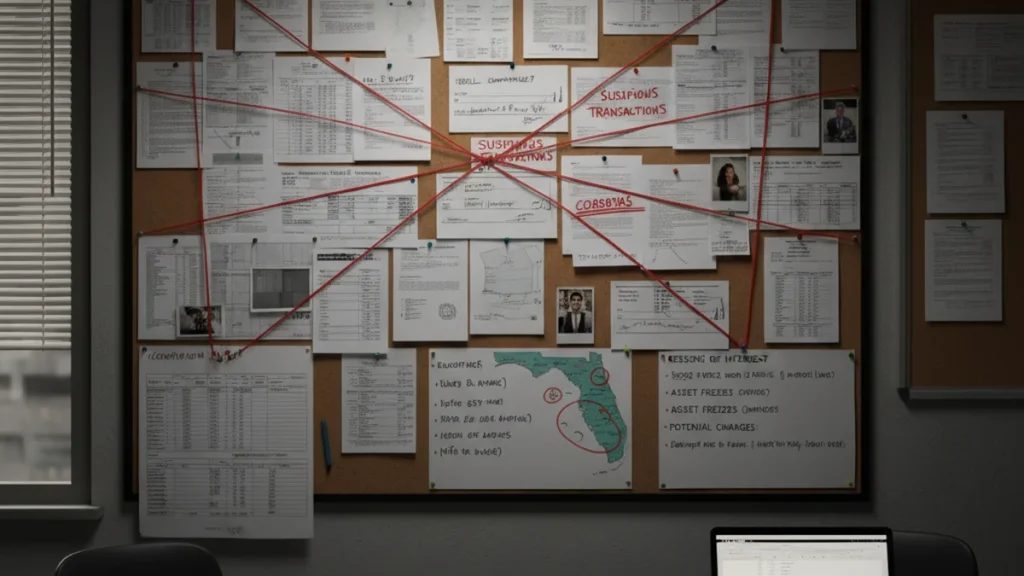
Florida business fraud evidence board with connected financial documents
Documenting the fraud trail early strengthens both civil and potential criminal claims.

Frequently Asked Questions

Question Answer
Can I sue for business fraud without a police report? Yes. Civil fraud claims are independent of criminal prosecution and often proceed faster.
What is the statute of limitations for fraud in Florida? Generally 4 years from discovery, but complex fraud cases may have different timelines.
Can I get attorney fees in a fraud case? Yes, under Florida’s civil theft statute and RICO — if those claims succeed.
What if the fraudster has no assets? A judgment can be enforced against future assets, bank accounts, and wages. Asset tracing is also available.
Should I call the police or a lawyer first? Call a lawyer first to preserve evidence and strategy. Criminal and civil routes can run simultaneously.

Fraud Doesn’t Fix Itself — Legal Action Does

If you suspect business fraud in Florida, acting quickly preserves your evidence and your remedies. Feinstein Real Estate Litigation & Business Law handles business fraud, breach of fiduciary duty, and civil theft claims throughout South Florida. Call (954) 767-9662 or visit our contact page to schedule a consultation.

About Feinstein Real Estate Litigation & Business Law

A South Florida litigation firm with 37+ years handling business fraud, civil theft, fiduciary duty breaches, and commercial disputes. Serving Broward, Miami-Dade, and Palm Beach Counties.

By : Michael Feinstein | April 25, 2026 | Business Litigation

Partnership Dissolution in Florida: What Happens When Business Partners Split

Florida business partners discussing dissolution with attorneys at conference table

Partnership dissolution in Florida is one of the most contentious and legally complex events a business can face. When partners disagree about the direction of a company, one wants out, or misconduct surfaces, the process of unwinding the relationship touches on contracts, fiduciary duties, asset valuation, and litigation — all at once. Whether you are the partner exiting or the one staying, understanding how Florida partnership dissolution works is essential to protecting what you’ve built.

What Triggers Partnership Dissolution in Florida?

Voluntary Dissolution by Agreement

Partners can agree to dissolve at any time. Most partnership agreements include a dissolution procedure — notice requirements, buy-out formulas, and asset distribution rules. If your agreement is well-drafted, this process is relatively orderly. If not, you default to the Florida Revised Uniform Partnership Act (Florida Statute Chapter 620), which fills the gaps but may not align with what the partners expected.

Involuntary Dissolution

A partner can petition a Florida court for judicial dissolution when:

  • Another partner engaged in wrongful conduct that materially harmed the business
  • A partner willfully breached the partnership agreement or fiduciary duties
  • The business can no longer operate economically or equitably
  • A partner is incapacitated or deceased without a succession plan

Judicial dissolution is the nuclear option — it places the process under court supervision and can result in a forced sale of partnership assets. A business litigation attorney in Fort Lauderdale can often negotiate a buyout or structured exit that avoids going to court.

Dissolution Type Trigger Court Involved? Timeline
Voluntary by agreement Partner consensus No Weeks to months
Voluntary per agreement terms Triggering event in agreement No Per agreement
Judicial dissolution Misconduct, deadlock, or impossibility Yes 6–18+ months
Dissociation without dissolution One partner exits; others continue Sometimes Varies

Fiduciary Duties During Dissolution

Partners Still Owe Each Other Duties While Winding Down

Even during dissolution, Florida law requires partners to continue acting in good faith toward each other and the partnership. Self-dealing — diverting business opportunities, transferring assets to yourself at below-market value, or soliciting the partnership’s clients before dissolution is complete — constitutes a breach of fiduciary duty that can result in damages, disgorgement of profits, and personal liability.

The Duty to Wind Down Properly

Dissolution does not mean the partnership immediately ceases to exist. Partners have a legal duty to wind down business affairs in an orderly way — completing pending contracts, paying debts, notifying customers and creditors, and distributing remaining assets. Rushing this process or doing it unilaterally exposes partners to personal liability.

How Assets Are Divided in a Florida Partnership Dissolution

  • Partnership debts are paid first — before any distributions to partners
  • Remaining assets are distributed per the partnership agreement
  • If no agreement, Florida law requires equal distribution unless capital contributions differed
  • Disputes over asset valuation require an independent appraisal or forensic accounting
  • Goodwill — especially for professional practices — is frequently the most contested asset

The Florida Bar’s business section notes that valuation disputes in professional partnerships — medical practices, law firms, accounting groups — are the most litigated aspect of partnership dissolutions in South Florida.

What If There’s No Partnership Agreement?

Many informal partnerships operate on a handshake. When they dissolve, Chapter 620 controls. By default, Florida law treats all partners as equal — equal shares, equal votes, equal liability. This often produces an outcome nobody wanted. If you are in a business partnership without a written agreement and a dispute is emerging, contact a partnership litigation attorney immediately before informal negotiations solidify positions that are hard to undo.

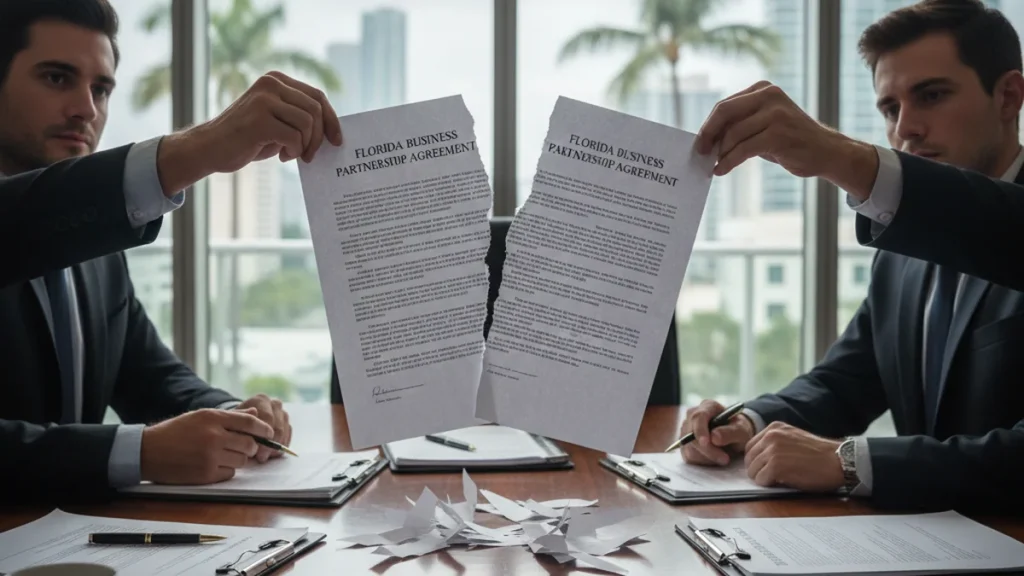
Florida partnership dissolution documents being reviewed by attorneys
Partnership dissolutions often require court intervention when buyout terms cannot be agreed upon.

Frequently Asked Questions

Question Answer
Can one partner force a dissolution in Florida? Yes, through a judicial dissolution petition if grounds exist under Chapter 620.
What happens to personal guarantees when a partnership dissolves? They survive dissolution. Personal guarantors remain liable to creditors regardless.
Can I leave a partnership without dissolving it? Yes — this is called dissociation. You exit, but the partnership may continue with remaining partners.
How is goodwill valued in a Florida partnership dissolution? By an independent business valuator, often using income, market, or asset-based approaches.
What if my partner took assets before dissolution was complete? This may constitute conversion, breach of fiduciary duty, or fraud — all actionable in Florida court.

Protect Your Stake Before the Split Gets Complicated

The earlier you bring legal counsel into a Florida partnership dissolution, the more options you have. Waiting until the other side has already moved assets or poisoned the relationship limits your remedies. Feinstein Real Estate Litigation & Business Law handles partnership disputes and business dissolutions throughout South Florida. Call (954) 767-9662 or reach us at our contact page.

About Feinstein Real Estate Litigation & Business Law

A South Florida business and real estate litigation firm with 37+ years of experience. Handling partnership disputes, shareholder conflicts, breach of fiduciary duty, and business dissolutions throughout Broward, Miami-Dade, and Palm Beach Counties.

By : Michael Feinstein | April 24, 2026 | Business Litigation

What Is a Lis Pendens in Florida Real Estate? A Practical Guide

Florida courthouse property records filing room — lis pendens documents

A lis pendens in Florida is a recorded legal notice that a lawsuit involving a specific property is pending. The term is Latin for “suit pending,” and its effect is immediate and serious: anyone who purchases or lends against that property after the notice is recorded takes it subject to the outcome of the litigation. Understanding a Florida lis pendens matters whether you are buying, selling, refinancing, or involved in a dispute over real estate.

How a Lis Pendens Works in Florida

Recording and Effect

A lis pendens is recorded in the public property records of the county where the property sits. Once recorded, it attaches to the title and shows up in any subsequent title search. Under Florida Statute § 48.23, a lis pendens is effective from the date of filing — not the date a buyer or lender searches the title. This means no good-faith buyer defense is available once the notice is recorded.

Who Can File a Lis Pendens?

Any party to a lawsuit that directly affects title to real property can file a lis pendens. Common filers include:

  • Foreclosing lenders
  • Buyers seeking specific performance of a purchase contract
  • Parties asserting ownership interests or adverse possession claims
  • Contractors with construction lien claims
  • Divorcing spouses asserting an interest in marital real estate

Filing a lis pendens without a lawsuit that directly affects title — or filing one frivolously — can result in sanctions and liability for the filer. A Fort Lauderdale real estate litigation attorney can assess whether your situation justifies filing or challenge a lis pendens filed against your property.

Scenario Can File Lis Pendens? Notes
Foreclosure by lender Yes Standard in all foreclosure actions
Buyer suing for specific performance Yes Directly affects title to specific parcel
Breach of contract (no title claim) No Must directly affect title, not just monetary damages
Divorce — marital home Yes Protects both spouses’ interests during proceedings
Construction lien claim Yes via lien Governed by separate construction lien statute

Impact on Buyers and Sellers

For Buyers

A lis pendens on a property you are under contract to purchase is a serious red flag. You take the property subject to the litigation result — meaning if the plaintiff wins, you could lose the property or have title clouded despite paying for it. Most buyers should walk away or demand the notice be discharged before closing. Your title insurance commitment should flag this, but title insurance does not cover known litigation risks at closing.

For Sellers

A lis pendens on your property effectively freezes your ability to sell or refinance until it is resolved. You must disclose it to buyers, and most lenders will not fund a purchase or refinance on a property with an active lis pendens. Clearing it requires either resolving the underlying lawsuit or successfully moving to discharge the notice in court — a process governed by § 48.23(3).

How to Remove a Lis Pendens in Florida

  • Resolve the underlying lawsuit — dismissal or settlement triggers automatic discharge
  • Motion to discharge — file in court showing the lis pendens was improperly filed or the claim lacks merit
  • Post a bond — in some cases, the property owner can post a bond to substitute for the property and allow the sale to proceed
  • Negotiate a release — the filer agrees to remove it as part of a settlement

According to the Florida Bar, an improperly filed lis pendens can be challenged on an expedited basis, allowing a property owner to get relief quickly if the filing was abusive or without legal basis.

Lis Pendens vs. Lien: What’s the Difference?

A lien (like a contractor’s lien or mortgage lien) gives the holder a direct financial claim against the property. A lis pendens is a notice of pending litigation — it does not itself create a financial claim. However, both cloud title and both must be resolved before a clean sale can occur. An active mechanic’s lien dispute will often be accompanied by a lis pendens if litigation has been filed.

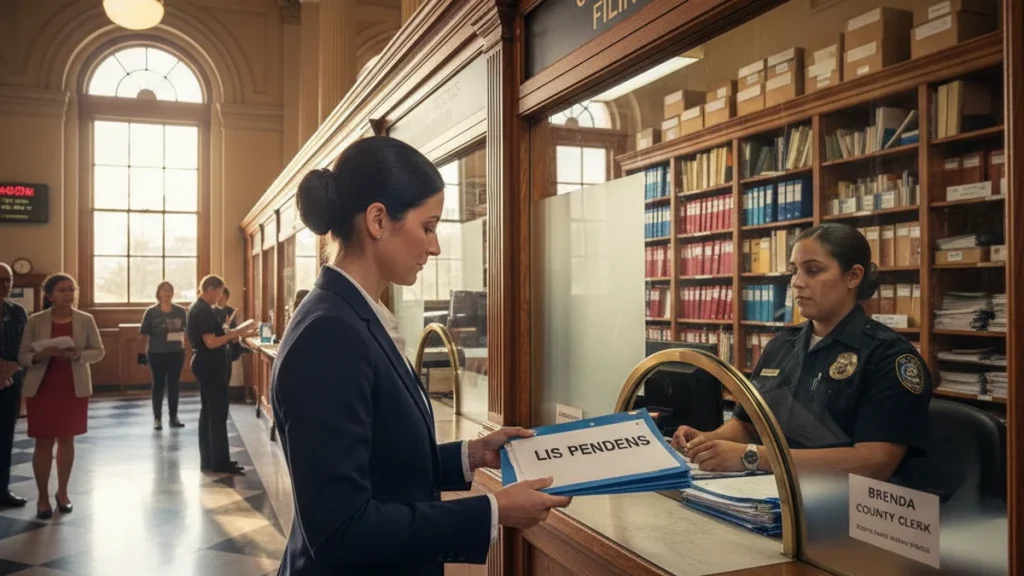
Attorney filing lis pendens notice at Florida county clerk windowFiling a lis pendens puts all subsequent buyers and lenders on notice of the dispute.
Frequently Asked Questions

Question Answer
How long does a lis pendens last in Florida? It remains effective until the lawsuit is resolved or the court orders its discharge.
Can I sell my property with a lis pendens on it? Technically yes, but buyers take subject to the litigation result and most lenders won’t fund.
Can a lis pendens be filed without a lawsuit? No — it must accompany an active lawsuit directly affecting title to the property.
Who removes the lis pendens after a case is resolved? The prevailing party or their attorney files a satisfaction or release in the property records.
What happens if someone files a lis pendens against me wrongfully? You can file a motion to discharge and seek damages for abuse of process or wrongful filing.

A Lis Pendens Demands Immediate Legal Attention

Whether one has been filed against your property or you need to file one to protect your claim, a lis pendens in Florida real estate is not something to navigate alone. Feinstein Real Estate Litigation & Business Law handles lis pendens filings, discharges, and the underlying litigation in South Florida. Call (954) 767-9662 or contact us at our contact page.

About Feinstein Real Estate Litigation & Business Law

A South Florida real estate and business litigation firm with 37+ years of experience. Serving Fort Lauderdale, Broward County, Miami-Dade, and Palm Beach.

By : Michael Feinstein | April 23, 2026 | Real Estate Law

Landlord-Tenant Disputes in Florida: Rights on Both Sides

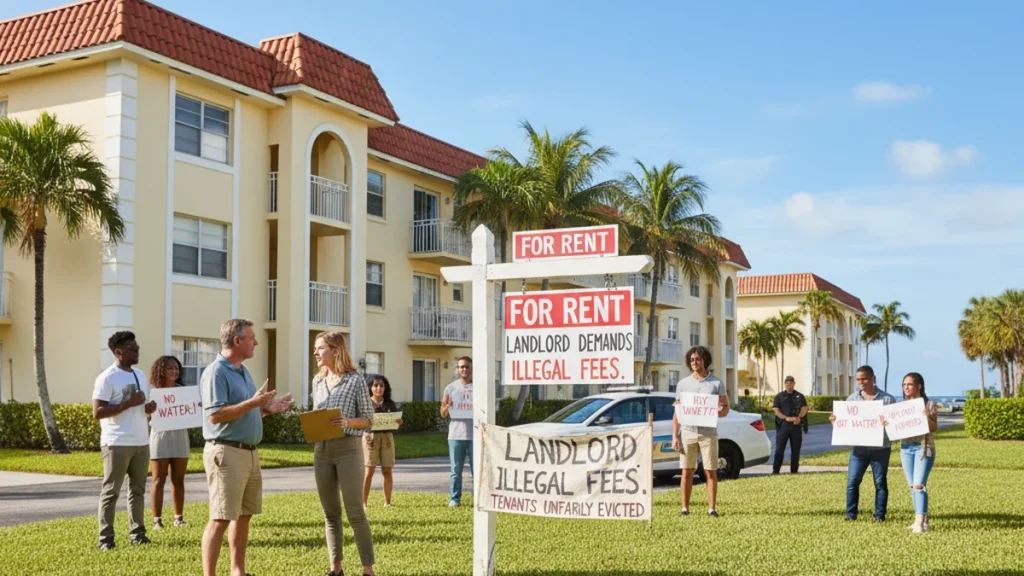
Florida apartment building exterior — landlord tenant dispute concept

Landlord-tenant disputes in Florida can escalate from a minor disagreement into a full legal battle within days. Whether you are a landlord dealing with a non-paying tenant or a tenant facing an unlawful eviction, Florida’s residential tenancy laws set clear rules — and violating them has real consequences. Understanding where Florida landlord-tenant law draws the line protects both sides before a dispute lands in court.

Florida’s Landlord-Tenant Law: The Basics

The Florida Residential Landlord and Tenant Act

The primary statute governing residential leases is Florida Statute Chapter 83. It covers everything from lease termination to security deposit handling, habitability requirements, and eviction procedures. Neither landlords nor tenants can waive many of these protections — lease clauses that attempt to do so are often unenforceable.

Security Deposit Rules

Florida law gives landlords strict deadlines for handling security deposits. After a tenant vacates, the landlord must either return the deposit within 15 days or send written notice of intent to claim within 30 days. Missing these deadlines — even by one day — can forfeit the landlord’s right to keep any portion of the deposit. Tenants who do not object to a timely claim within 15 days waive their right to dispute it. A real estate litigation attorney can help either party navigate these tight windows.

Issue Landlord Obligation Tenant Right
Security deposit return Return within 15 days or claim within 30 Object within 15 days of notice of claim
Habitability Maintain premises in good repair Withhold rent after proper notice in some cases
Entry notice 12 hours advance notice required Refuse entry without proper notice
Eviction process Court order required; self-help evictions are illegal Challenge eviction in court within 5 days of notice
Retaliation Cannot retaliate for complaints or code reports Affirmative defense against retaliatory eviction

The Florida Eviction Process

Proper Notice Is Required First

Before filing an eviction lawsuit, a Florida landlord must serve the tenant with the appropriate written notice. For non-payment of rent, this is a 3-day notice to pay or vacate. For lease violations, it is a 7-day notice to cure or vacate. For month-to-month tenancies with no violation, the landlord must give 15 days’ notice before the end of the rental period.

Self-Help Evictions Are Illegal

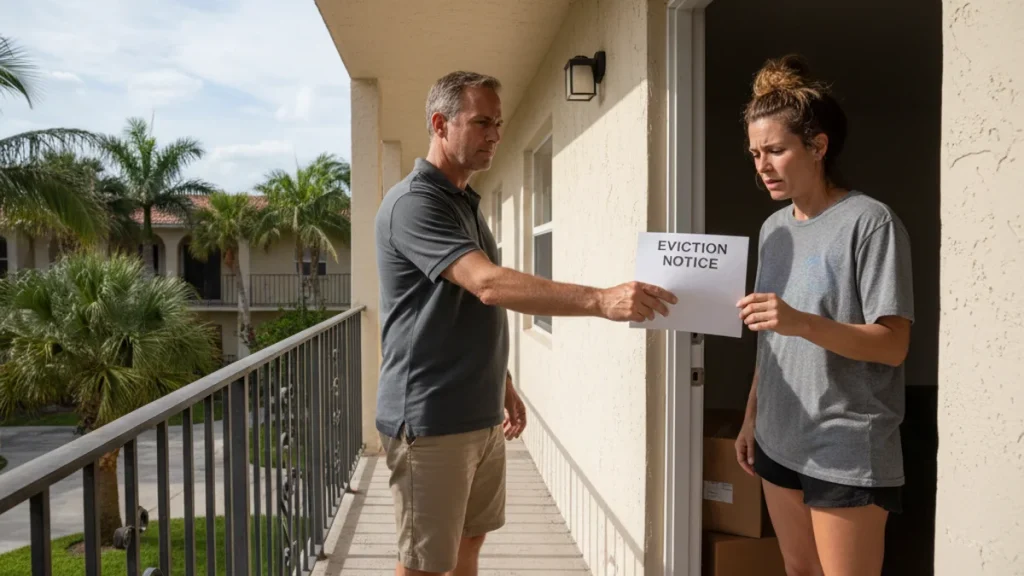
Florida prohibits landlords from removing a tenant by changing locks, removing doors, or shutting off utilities without a court order. Self-help evictions expose the landlord to liability for the tenant’s actual damages plus attorney fees. The Florida Courts system processes residential evictions quickly — usually within 2–4 weeks — making the legal route faster than most landlords expect.

Tenant Habitability Rights

Florida landlords must maintain rental properties in a structurally sound, pest-free, and functional condition. This includes working plumbing, electrical systems, heating, and a secure roof. When a landlord fails to make required repairs after proper written notice, tenants in Florida have limited remedies — including withholding rent under specific procedures or terminating the lease in severe cases. This area of law is highly procedural; tenants who skip the notice requirements often lose rights they would otherwise have had.

  • Repair requests must be in writing to preserve legal rights
  • Landlord has 7 days to begin repairs for essential services after notice
  • Tenants cannot unilaterally withhold rent without following the statutory process
  • Code enforcement complaints are protected — retaliation is a recognized defense

The Florida Bar advises both landlords and tenants to document everything in writing and to understand the notice requirements before taking any unilateral action.

Commercial Lease Disputes Are Different

Florida’s Chapter 83 residential protections do not apply to commercial leases. Commercial tenants have fewer automatic protections, and lease terms govern almost everything. If you are involved in a Florida commercial lease dispute, the analysis is different and legal counsel is even more critical.

Florida tenant receiving eviction notice at apartment doorEviction disputes require strict procedural compliance from landlords under Florida law.


Frequently Asked Questions

Question Answer
How long does an eviction take in Florida? Typically 3–5 weeks from notice to writ of possession if uncontested; longer if the tenant fights it.
Can a landlord enter without notice in Florida? Only in a genuine emergency. Otherwise 12 hours advance notice is required.
What if my landlord won’t fix a mold problem? Put the request in writing first. If ignored, you may have grounds to terminate the lease or pursue legal action.
Can I be evicted for reporting code violations? No — retaliatory eviction is illegal in Florida. It is an affirmative defense in eviction proceedings.
Is a verbal lease enforceable in Florida? Yes for month-to-month tenancies, but written leases are strongly preferred for documentation.

Know the Law Before the Dispute Gets Out of Hand

Whether you are a landlord protecting your investment or a tenant defending your home, Florida landlord-tenant disputes move fast and the procedural rules are unforgiving. Feinstein Real Estate Litigation & Business Law handles both sides of residential and commercial tenancy disputes. Call (954) 767-9662 or visit our contact page.

About Feinstein Real Estate Litigation & Business Law

A South Florida firm with over 37 years of experience in real estate litigation, landlord-tenant disputes, commercial lease conflicts, and business law. Serving Fort Lauderdale, Miami, Boca Raton, and throughout South Florida.

By : Michael Feinstein | April 22, 2026 | Real Estate Law

Florida Real Estate Closing Disputes: What Can Go Wrong and How to Fix It

Florida real estate closing table with attorneys reviewing disputed contracts

Florida real estate closing disputes happen more often than buyers and sellers expect. After weeks of negotiation, inspections, and financing, the closing table is supposed to be a formality — but title defects, last-minute financing failures, undisclosed liens, and seller walk-outs can derail even the most well-prepared transaction. Understanding where real estate closings go wrong in Florida helps you protect yourself before the deal collapses.

Most Common Causes of Florida Closing Disputes

Title Defects and Unpaid Liens

One of the most common closing surprises is a title defect discovered during the final title search. Unpaid contractor liens, IRS federal tax liens, or prior mortgages that were never properly released can block a clear title transfer. Under Florida lien law, certain liens attach automatically and must be satisfied before the deed can transfer free and clear. A Fort Lauderdale real estate attorney can identify and resolve most title defects before closing day.

Financing Fall-Through at the Last Minute

Buyers sometimes lose financing after contracts are signed — job loss, credit changes, or appraisal gaps are common culprits. Whether the buyer forfeits their deposit depends on the contract’s financing contingency language. Florida contracts are not uniform, and what one clause says about forfeiture can differ dramatically from another. If a financing dispute arises, both parties need legal counsel quickly.

Seller Refusing to Close

When a seller backs out after a contract is signed, the buyer has legal remedies including specific performance — a court order forcing the seller to complete the sale. Florida courts have consistently upheld specific performance in real estate cases because every parcel of land is considered legally unique. A business litigation attorney can file for specific performance or negotiate a settlement that protects your position.

Dispute Type Common Cause Legal Remedy
Title defect Old lien or deed error Quiet title action or negotiated payoff
Seller walk-out Better offer received Specific performance lawsuit
Buyer financing failure Credit change or appraisal gap Deposit dispute / contract interpretation
Undisclosed defects Seller concealment Fraud or breach of contract claim
Survey discrepancy Boundary error Contract rescission or price adjustment

Undisclosed Property Defects After Closing

Florida’s Seller Disclosure Requirements

Florida law requires sellers to disclose known material defects that are not readily observable. The landmark Johnson v. Davis case established this duty, and courts have consistently enforced it. If a seller conceals a leaky roof, mold, foundation cracks, or flood history, the buyer may have claims for fraud, negligent misrepresentation, or breach of contract even after the deal closes. The Florida Bar notes that post-closing disclosure disputes are among the fastest-growing areas of real estate litigation.

What You Can Recover

  • Cost to repair the undisclosed defect
  • Diminution in property value
  • Out-of-pocket losses from relying on false disclosures
  • Attorney fees in fraud cases under Florida’s litigation fee statute

Deposit Disputes: Who Keeps the Escrow?

When a deal falls apart, the buyer’s deposit often becomes a battleground. Most Florida contracts specify that the deposit goes to the seller if the buyer defaults and to the buyer if the seller defaults or if a contingency is not met. But “default” is a term that requires legal interpretation. Escrow agents cannot release disputed deposits without written agreement from both parties or a court order — which means disputes can drag on for months without resolution. Early legal intervention speeds up the process significantly.

According to Florida Realtors, escrow disputes are one of the top reasons real estate transactions require attorney involvement post-closing.

How to Protect Yourself Before and During Closing

  • Review the title commitment carefully before closing day — not after
  • Understand every contingency in your contract and its deadline
  • Do a final walkthrough within 24 hours of closing
  • Confirm all agreed repairs were completed and documented
  • Get written confirmation of lien payoffs from the closing agent

A real estate litigation attorney reviewing your contract before you sign is the single most effective way to prevent closing disputes.

Florida real estate attorney identifying problem clause in purchase contractClosing disputes often hinge on ambiguous contract language — legal review is critical.

Frequently Asked Questions

Question Answer
Can I back out of a Florida real estate contract? Only if a valid contingency applies. Otherwise you may forfeit your deposit or face a lawsuit.
What is specific performance in a real estate dispute? A court order forcing a party to complete the sale as contracted, because land is considered legally unique.
How long do I have to sue after closing? Fraud claims: 4 years. Contract claims: 5 years from breach. Concealment of defects can extend these timelines.
Who decides who gets the deposit? The escrow agent cannot decide — parties must agree in writing or a court must order the release.
Do I need an attorney for a closing dispute? Yes. These disputes involve contract law, property law, and litigation strategy that agents cannot handle.

When a Closing Turns Into a Legal Fight, Be Ready

If your Florida real estate closing dispute has already started — or you want to prevent one — Feinstein Real Estate Litigation & Business Law is ready to help. Call (954) 767-9662 or contact us through our contact page today.

About Feinstein Real Estate Litigation & Business Law

A South Florida firm with 37+ years of experience in real estate closings, contract disputes, title litigation, and business law. Serving Broward, Miami-Dade, and Palm Beach Counties.

By : Michael Feinstein | April 21, 2026 | Real Estate Contracts
Call Now