





 954-767-9662
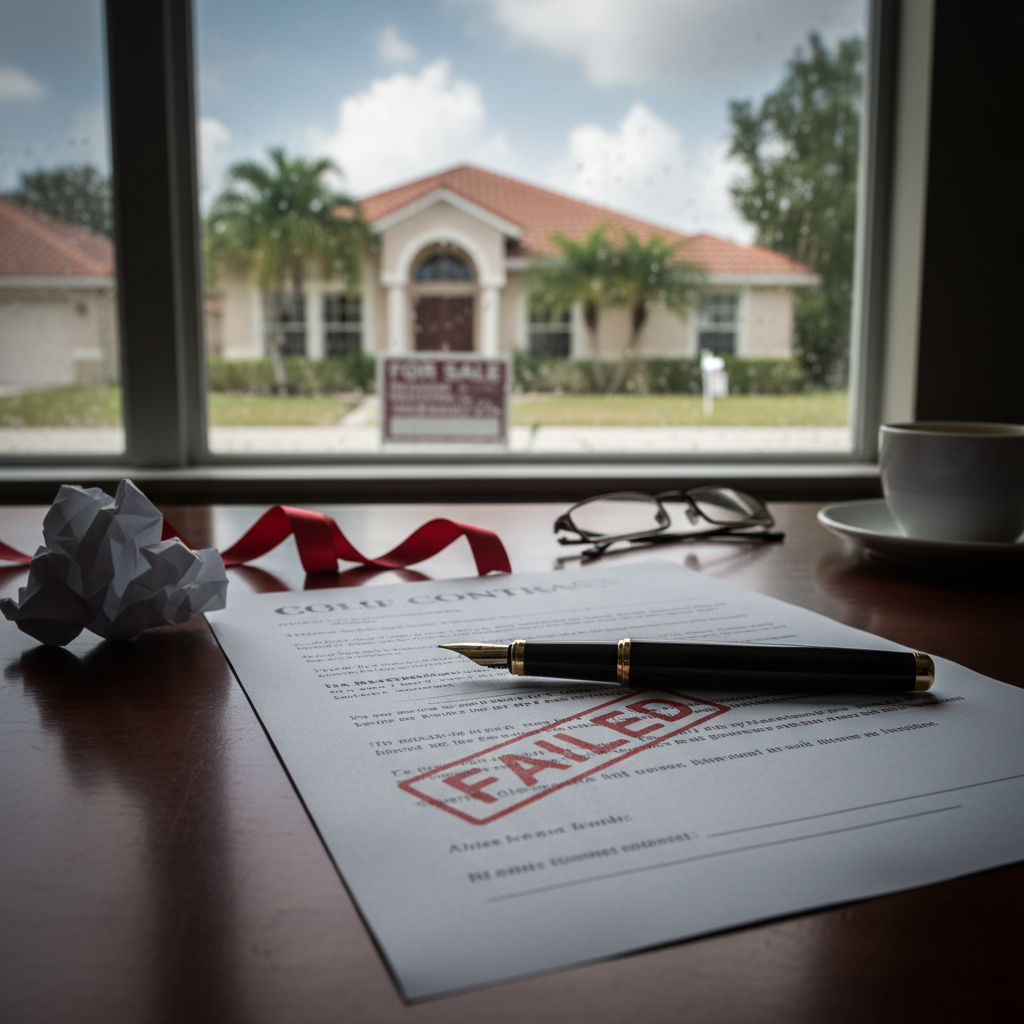
When a real estate contract falls through in Florida, the fallout depends almost entirely on why it happened and who bears the legal responsibility. You might be a buyer who lost your financing, a seller whose property failed inspection, or one party who simply changed their mind — and the answer to “what happens now?” is completely different in each scenario. Florida real estate contract failures trigger specific legal rights and obligations that begin the moment the deal collapses. Here’s what actually happens next and what your options are.
Florida Statute §44.102 provides the legal framework for these disputes.
Who’s in Default Determines Everything
Learn more at Florida Statute §44.102. Florida Statute §689.02 (real estate contracts) Florida Statute §83.131 (earnest money handling)
The First Question in Every Failed Florida Deal
Before anything else — before demand letters, before escrow disputes, before anyone threatens to sue — the threshold question is: who defaulted? Under Florida contract law, the party who fails to perform without legal justification is in default. The non-defaulting party then has remedies. But if both parties had legitimate grounds for not closing, the analysis gets more complicated. A Florida contract dispute attorney evaluates this question first in every failed transaction.
Legitimate Reasons a Buyer Can Walk Away
- Inspection contingency — discovered defects and properly invoked the right to cancel within the window
- Financing contingency — loan was denied despite good faith efforts, properly documented
- Appraisal contingency — property appraised below purchase price and the gap wasn’t bridged
- Title issues — unmarketable title that seller can’t cure within the required period
- Seller breach — seller failed to disclose known defects or couldn’t deliver the property as contracted
- Florida Statute Chapter 83 — governs earnest money deposits and contract performance
When a Buyer Is in Default
If the buyer walks without a valid contingency — or after all contingencies were waived — they’re in default. At that point, the seller has two main options: keep the deposit as liquidated damages (if the contract permits), or sue for specific performance or actual damages exceeding the deposit. Which option makes more sense depends on the property, the market, and what the contract says.
The Earnest Money Deposit — Who Gets It?
Florida’s Escrow Rules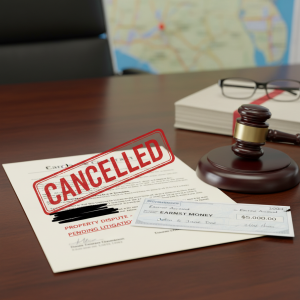
The earnest money in a Florida real estate transaction is held in escrow by the title company, broker, or attorney. When a deal falls apart, the escrow agent cannot simply release it without either a written agreement from both parties or a court order. If there’s a genuine dispute, the escrow agent will typically interplead the funds — depositing them with the court and letting both sides fight for it. Florida’s real estate broker statute (Chapter 475) governs escrow obligations and dispute procedures.
How the Contract Language Controls the Outcome
Under Florida Statute §44.102 on contract law,
| Scenario | Likely Outcome on Deposit |
|---|---|
| Buyer defaults, contract has liquidated damages clause | Seller keeps deposit as full remedy — no further damages claim |
| Buyer defaults, no liquidated damages clause | Seller can claim deposit plus additional damages if losses exceeded it |
| Seller defaults | Buyer gets deposit back plus may pursue specific performance or damages |
| Both parties dispute fault | Escrow interpleaded — court or mediation determines who gets it |
| Valid contingency triggered | Deposit returned to buyer — no default by either party |
Specific Performance — Forcing the Deal to Close
When Money Isn’t Enough
Florida courts recognize that every piece of real property is legally unique. That means a buyer whose seller backed out doesn’t have to accept a damages payment — they can ask the court to order the seller to actually close the deal. This remedy, called specific performance, is commonly sought in Florida when a seller gets a better offer after going under contract or when the buyer has already committed financing and relocation plans. Courts look at whether the contract is clear, whether the buyer performed their obligations, and whether specific performance is practical. A Florida real estate litigation attorney files these cases on an expedited basis when a closing is imminent.
What Happens to the Financing When a Deal Collapses
Lender Involvement and Your Obligations
If you had a mortgage commitment and the deal dies, your lender’s rate lock typically expires within days. If you’ve already paid for an appraisal, inspection, and application fees — those costs are usually not refundable regardless of who was at fault in the failed deal. Some buyers include these costs in a damages claim against the defaulting seller. Keep all documentation of every out-of-pocket expense from the transaction. The CFPB’s guidance on failed real estate transactions covers what happens to mortgage applications when deals collapse.
Frequently Asked Questions
For more information, see National Association of REALTORS Research.
For more information, see Florida Statute §689.20.
| Question | Answer |
|---|---|
| Can a Florida seller back out after signing a contract? | Only with legal justification — buyer default, a valid contingency in their favor, or mutual agreement. Backing out without cause makes the seller the defaulting party. |
| How long does a Florida escrow dispute take to resolve? | If both parties agree on release, days. If disputed and interpleaded, months — though mediation often resolves it faster. |
| Can I sue for more than the deposit if a buyer defaults? | Depends on the contract. If it has a liquidated damages clause limiting your remedy to the deposit, you generally cannot claim more. |
When Your Florida Real Estate Deal Falls Apart, Know Where You Stand
A failed transaction doesn’t have to mean a financial loss. Feinstein Law represents buyers and sellers in Florida real estate contract disputes and litigation throughout South Florida. Call (954) 767-9662 or visit our contact page.
About Feinstein Law: Feinstein Law is a Fort Lauderdale firm focused on real estate litigation, contract disputes, and business law throughout Broward, Miami-Dade, and Palm Beach counties.
