Phone

How to Handle a Broker Commission Dispute in Florida

What Is a Lis Pendens in Florida Real Estate?

Breach of Fiduciary Duty in Florida Real Estate Transactions

Breach of Fiduciary Duty in Florida Real Estate Transactions

Real Estate Litigation in Fort Lauderdale: What to Expect

What Happens When a Real Estate Contract Falls Through in Florida

What Does a Broker Commission Dispute Lawyer Do?

Understanding Commercial Real Estate Disputes in Broward County

Florida Luxury Home Buyers: Why You Need a Real Estate Attorney at Closing

How Mediation Works in Florida Real Estate Disputes

Call Now Email12
Florida's Business Law Firm
Fort Lauderdale Phone954-767-9662

How to Handle a Broker Commission Dispute in Florida

Florida real estate broker commission agreement and earnest money

If you’re a real estate agent who completed a transaction and isn’t getting paid, or a seller who believes a broker didn’t earn the commission they’re claiming — you’re dealing with a broker commission dispute in Florida, and the outcome depends heavily on what your listing agreement or buyer’s broker agreement actually says. Florida broker commission disputes became more contentious after NAR’s 2024 settlement changed how buyer’s agent compensation is disclosed and negotiated. Whether you’re a broker trying to collect or a party trying to avoid paying, here’s what you’re actually dealing with.

How Real Estate Commissions Work in Florida

Commissions Are Always Negotiable

There is no standard commission rate in Florida. The rate is negotiated between the broker and the client and documented in a written listing agreement or buyer’s broker agreement. Commissions are typically paid at closing from the sale proceeds — but a broker’s right to a commission can exist even if a deal doesn’t close, depending on the contract language. Understanding what your agreement says about when a commission is earned is the foundation of any Florida commission dispute.

The Three-Part Test for Earning a Commission

Under Florida common law, a real estate broker typically earns a commission when they:

  • Are the procuring cause of the sale — they introduced the buyer and seller, or their efforts were the dominant reason the deal happened
  • Had a valid written brokerage agreement in place at the time of the transaction under § 475.42
  • Had a buyer who was ready, willing, and able to purchase on the agreed terms

If a seller cancels a deal after the broker produced a buyer who was ready and willing — the broker may still be owed their commission even though no closing occurred.

Florida real estate mediation conference — neutral mediator between parties

The Most Common Florida Broker Commission Disputes

Seller Refuses to Pay After Deal Falls Through

This is the most frequent dispute. The broker produced a qualified buyer, the seller accepted the offer, and then something went wrong — the seller got cold feet, accepted a higher offer from another buyer, or claimed the first buyer wasn’t truly qualified. Whether the broker is owed a commission depends on the listing agreement language and whether the broker was truly the procuring cause. A Florida real estate litigation attorney can evaluate the specific agreement and facts quickly.

Co-Brokerage and Buyer’s Agent Disputes

When two brokerages are involved — a listing agent and a buyer’s agent — disputes arise over the agreed co-brokerage split. After NAR’s 2024 settlement, buyer’s agent compensation must now be documented separately and is no longer automatically offered through the MLS. If the buyer’s broker agreement or seller’s agreement doesn’t clearly establish the co-brokerage arrangement, disputes are almost guaranteed.

Dual Agency and Undisclosed Conflicts

Florida brokers who represent both buyer and seller in the same transaction as a dual agent must have written consent from both parties under § 475.278. Brokers who fail to get that consent — or who don’t fully disclose the conflict — can forfeit their commission entirely, even if the deal closed and they did real work. Courts take these disclosure requirements seriously.

What Florida Courts Look at in Commission Disputes

Factor Why It Matters
Written agreement language The contract controls — courts look at when the commission is earned, what triggers payment, and any conditions
Procuring cause Was the broker actually the dominant reason the buyer and seller connected? Multiple brokers claiming the same deal creates disputes.
Licensing status Florida requires brokers to be properly licensed to sue for a commission — unlicensed activity voids the right to collect
Disclosure compliance Failure to make required disclosures (dual agency, referral fees) can forfeit the commission entirely

Frequently Asked Questions

Question Answer
Can a Florida real estate broker sue for commission without a written contract? Generally no. Florida Statute § 475.42 requires a written brokerage agreement for a broker to sue for a commission.
What if I sold my property directly after the listing expired? Check your listing agreement. Many include a safety clause — protecting the broker’s commission for a period after expiration if the buyer was introduced during the listing term.
Can a buyer’s agent sue a seller for commission in Florida? Yes — if there’s a co-brokerage agreement or the seller’s listing agreement promised a buyer’s agent commission and the broker was the procuring cause.

Florida Broker Commission Disputes Require Specific Legal Knowledge to Win

Whether you’re owed a commission or disputing one, Feinstein Law handles Florida broker commission disputes and real estate contract litigation throughout South Florida. Call (954) 767-9662 or reach us at our contact page.

About Feinstein Law: Feinstein Law is a Fort Lauderdale firm handling real estate litigation, business disputes, and contract matters throughout Broward, Miami-Dade, and Palm Beach counties.

By : Michael Feinstein | April 8, 2026 | Broker Commission Disputes

What Is a Lis Pendens in Florida Real Estate?

Florida lis pendens — real estate litigation property filing

A lis pendens in Florida is one of the most powerful — and most disruptive — legal tools in real estate disputes. If one has just been recorded against your property, you’re probably finding out because a title company flagged it, a buyer walked away, or a lender declined your refinance. A Florida lis pendens tells the world that your property is tied up in pending litigation. Understanding what it means, whether it’s valid, and how to fight it is the difference between getting your transaction back on track quickly — or watching it sit frozen for months.

What Exactly Is a Lis Pendens?

The Legal Meaning

Lis pendens is Latin for “suit pending.” Under Florida Statute § 48.23, it’s a recorded notice in the public property records warning potential buyers and lenders that the property is subject to active litigation. Once recorded in the county where the property sits, it becomes visible to any title search — and most buyers and lenders will not close on a property carrying one.

Who Files It and Why

Anyone with a lawsuit that directly affects title or possession of a specific piece of real property can file a Florida lis pendens. Common situations include:

  • Mortgage foreclosure actions — the lender puts the world on notice before the foreclosure sale
  • Partition actions — co-owners seeking to force a sale or divide jointly held property
  • Breach of contract claims — a buyer or seller asserting rights to a specific deal
  • Specific performance suits — demanding a court force a sale to proceed
  • Construction lien foreclosures — contractors enforcing unpaid lien claims

If someone filed one against your property and you’re not sure why, a Florida real estate litigation attorney can pull the underlying case and tell you exactly what you’re dealing with within hours.

How a Lis Pendens Kills a Real Estate Transaction

Title Companies Won’t Insure It

This is the practical problem. A title company runs a search before any closing. The moment they see a recorded lis pendens, they will either decline to issue title insurance entirely or exclude the lis pendens-related claims from coverage. Without title insurance, no lender closes. And most cash buyers walk too — because they’d be taking a property subject to whatever the lawsuit decides.

The Buyer Could Lose Everything

If a court ultimately rules in favor of the claimant after a sale went through, that ruling can unwind the transaction or subordinate the buyer’s interest. Florida courts have voided sales that happened with knowledge of a recorded lis pendens. That’s why even sophisticated buyers won’t touch a property with an active notice.

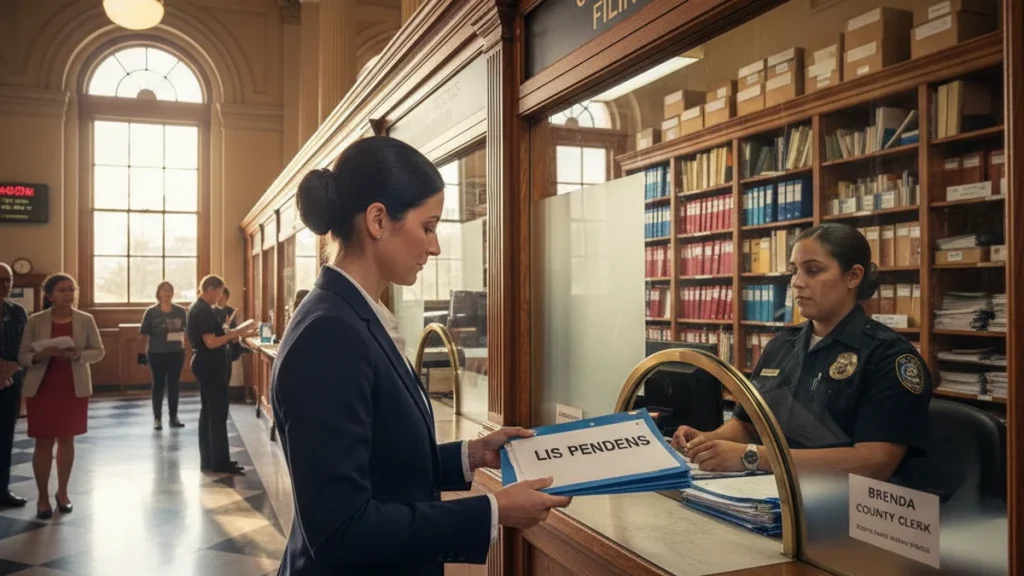
Attorney filing lis pendens notice at Florida county clerk window

A lis pendens clouds the title and can stop a sale in its tracks until the dispute is resolved.

How to Challenge a Florida Lis Pendens

Motion to Discharge

The most direct route is asking the court to discharge the lis pendens. You file a motion arguing that the underlying lawsuit doesn’t directly affect title or possession — or that the claimant can’t show a fair nexus between the property and their claim. Florida courts have discharged lis pendens filings where the connection to the property was too indirect. If successful, the notice is removed from the records and your title clears.

Requiring a Lis Pendens Bond

Even when the claim has merit, Florida courts can require the claimant to post a lis pendens bond — cash or surety — to protect you from damages if their lawsuit ultimately fails. This creates real financial pressure on claimants who don’t have a strong case. It’s a powerful negotiating tool in the right circumstances.

Serving a Demand to Commence Action

If the lien is tied to a contractor or creditor claim, you can serve a written demand requiring them to file suit within 60 days. If they don’t, the lis pendens is extinguished by operation of law. This is a standard tactic used by Florida construction litigation attorneys to clear title when a contractor recorded a lien but hasn’t followed through with a foreclosure action.

Lis Pendens vs. Related Concepts

Term What It Means Effect on Property
Lis Pendens The pending lawsuit affecting the property Clouds title, blocks sales and refinancing
Notice of Lis Pendens The recorded document filed in public records Gives constructive notice to all future buyers
Lis Pendens Bond Security posted by the claimant Protects owner from damages if claim fails
Discharge of Lis Pendens Court order removing the notice Clears title — transaction can proceed
Transfer to Bond Lien moved from property to cash/surety bond Frees property while dispute continues

Frequently Asked Questions

Question Answer
How long does a lis pendens stay on my Florida property? Until the lawsuit resolves, the court discharges it, or the claimant voluntarily releases it. There’s no automatic expiration.
Can I sell my property with a lis pendens in Florida? Technically yes — but practically no. Most buyers and title companies will refuse to close until it’s resolved or transferred to bond.
Can I get attorney fees if the lis pendens was wrongfully filed? Yes. Florida courts can award fees and damages against a party who filed a lis pendens without a legitimate basis. See § 48.23(3).
Does a lis pendens affect my credit? Not directly — it affects your property’s title, not your credit report. But if it leads to a judgment or foreclosure, that’s a different story.

Act Fast — A Lis Pendens Gets More Expensive the Longer It Sits

Every day a Florida lis pendens stays on your property is another day a deal can fall apart or carrying costs pile up. Feinstein Law handles real estate litigation including lis pendens challenges and contract disputes throughout South Florida. Call (954) 767-9662 or reach us through our contact page.

About Feinstein Law: Feinstein Law is a Fort Lauderdale firm handling real estate, business, and construction litigation throughout Broward, Miami-Dade, and Palm Beach counties.

By : Michael Feinstein | April 7, 2026 | Real Estate Law

Breach of Fiduciary Duty in Florida Real Estate Transactions

Florida attorney consulting client about property fiduciary breach

If you suspect a real estate agent, property manager, or transaction professional in Florida violated your trust — took a deal that should have been yours, failed to disclose a conflict of interest, or put their own financial interests above your legal interests — you may be dealing with a breach of fiduciary duty in Florida real estate. Florida real estate fiduciary duty violations are legally actionable, and the damages can be substantial. But these cases require understanding exactly who owed you a duty, what that duty required, and how they fell short.

Who Owes a Fiduciary Duty in Florida Real Estate Transactions

It’s Not Everyone in the Deal

The existence of a fiduciary duty in Florida real estate depends on the specific relationship — not every party to a transaction has one. Understanding who owes you a fiduciary duty is the threshold question in any potential claim.

  • Florida real estate brokers and agents — owe fiduciary duties to their clients under § 475.278, including loyalty, confidentiality, obedience, full disclosure, and accounting
  • Attorneys representing you at closing — owe fiduciary duties as your legal representative
  • Property managers — owe fiduciary duties to property owners for the funds and property they manage
  • Trustees handling real property — owe the full fiduciary duty to trust beneficiaries
  • The other party’s agent — owes duties only to their client, NOT to you unless they’re acting as a transaction broker

Transaction Broker vs. Single Agent

Florida uses a unique designation system. A single agent owes you full fiduciary duties including undivided loyalty. A transaction broker has a lower standard — they facilitate the deal but don’t owe you the same loyalty. If your agent switched from single agent to transaction broker without proper written disclosure, that’s a potential violation of Florida real estate law.

What Breach of Fiduciary Duty Looks Like in Florida Real EstateFlorida real estate attorney reviewing fiduciary duty breach documents with client

Common Violations by Agents and Brokers

  • Failing to disclose a known material defect the agent learned during the transaction
  • Representing both buyer and seller without proper dual agency disclosure and consent
  • Steering a client away from a better deal to protect the agent’s commission or relationship with the other side
  • Disclosing a buyer’s maximum budget or urgency to the seller without authorization
  • Recommending a specific inspector, lender, or attorney who pays the agent referral fees without disclosure
  • Usurping a client’s opportunity — buying a property the agent learned about through the agency relationship

If any of these patterns match your situation, a Florida real estate litigation attorney can evaluate whether the conduct crossed the line from poor service into actionable breach.

What You Have to Prove in a Florida Real Estate Fiduciary Duty Case

Element What It Requires
Fiduciary relationship Prove the defendant owed you a fiduciary duty — not just a general duty of care
Breach The defendant’s conduct violated the specific duties owed to you
Causation The breach directly caused your harm — not just that they acted badly
Damages Quantifiable financial loss resulting from the breach

Evidence That Matters Most

Email communications between the agent and the other party, text messages, MLS activity records showing when the agent knew what, and financial records showing undisclosed referral fees or commissions are the most powerful evidence in these cases. Preserve everything before you confront the agent or make any formal complaint. Filing a complaint with the Florida Real Estate Commission (FREC) is a separate process from a civil lawsuit and can proceed simultaneously.

Damages Available for Florida Real Estate Fiduciary Duty Violations

  • Compensatory damages — financial losses directly caused by the breach
  • Disgorgement — commissions or fees earned through the breach can be forfeited
  • Rescission — in serious cases, the transaction itself can be unwound
  • Punitive damages — available when conduct was intentional and egregious
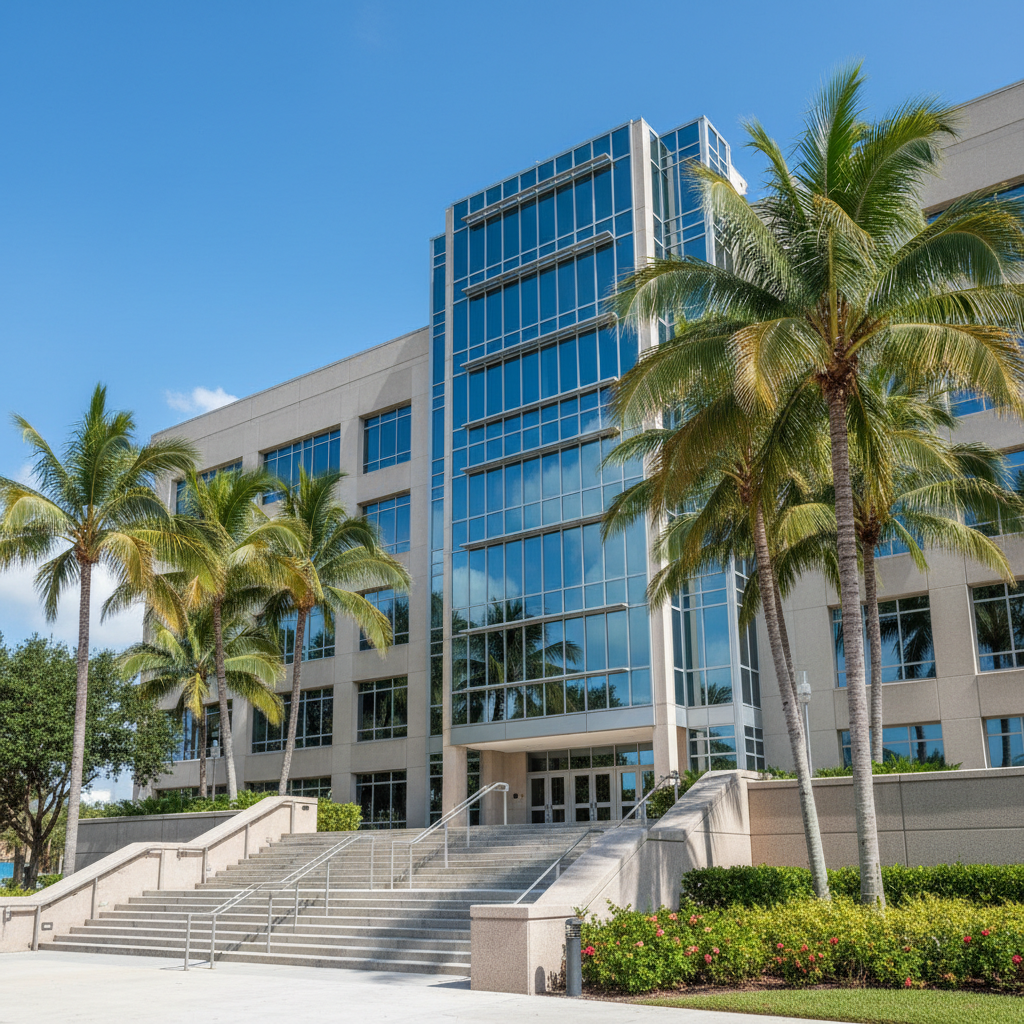
South Florida luxury waterfront real estate property — high asset real estate disputeHigh-value real estate disputes require attorneys experienced in luxury market transactions.

Frequently Asked Questions

Question Answer
Can I sue a real estate agent for not disclosing a property defect in Florida? Yes — if the agent knew about the defect and failed to disclose it, they can be personally liable separate from the seller.
Does a transaction broker in Florida owe me fiduciary duties? No — a transaction broker owes limited duties, not full fiduciary duties. That’s why the single agent vs. transaction broker distinction matters at the start of every relationship.
How long do I have to sue a real estate agent in Florida? 4 years from when the breach was discovered or reasonably should have been discovered.

A Real Estate Fiduciary Duty Breach in Florida Is Legally Actionable — Act Quickly

Feinstein Law represents buyers, sellers, and investors in Florida real estate fiduciary duty claims and real estate litigation throughout South Florida. Call (954) 767-9662 or visit our contact page.

About Feinstein Law: Feinstein Law is a Fort Lauderdale litigation firm handling real estate, business, and contract disputes throughout Broward, Miami-Dade, and Palm Beach counties.

By : Michael Feinstein | April 6, 2026 | Real Estate Litigation

Breach of Fiduciary Duty in Florida Real Estate Transactions

Florida real estate attorney reviewing fiduciary duty breach documents with client

A breach of fiduciary duty in a Florida real estate transaction occurs when someone entrusted to act in your best interest — an agent, broker, attorney, property manager, or partner — puts their own interests ahead of yours and causes you financial harm. This is one of the most serious claims in Florida property law because it involves a fundamental violation of trust. Understanding what a fiduciary duty means in the context of real estate, who owes it, and what happens when it is broken helps buyers, sellers, and investors protect themselves from a type of harm that often goes unrecognized until significant damage is done.

Florida real estate transactions involve multiple parties who hold positions of trust. Real estate agents, brokers, attorneys acting as closing agents, property managers, and co-owners in joint ventures all carry fiduciary obligations that go beyond ordinary business conduct. These obligations — loyalty, confidentiality, obedience, disclosure, accounting, and reasonable care — define the standard of conduct Florida courts use to evaluate whether a fiduciary acted properly.


When any of those duties is violated, the party who was harmed has the right to file a breach of fiduciary duty claim in Florida court. These cases are distinct from ordinary contract claims — the damages can be broader, and courts have specific equitable remedies available that do not apply in standard breach of contract litigation.

Florida courtroom interior — preliminary injunction business dispute

Who Owes a Fiduciary Duty in Florida Real Estate?

Party Fiduciary Duty Owed To Key Obligations
Real Estate Broker / Agent Their principal (buyer or seller) Loyalty, disclosure, confidentiality, accounting
Property Manager Property owner Honest accounting, proper maintenance, no self-dealing
Real Estate Attorney (closing agent) Client Competent representation, no conflicts of interest
Title Agent Lender and parties Proper handling of escrow funds
LLC Managing Member / Partner Other members No self-dealing, fair distribution, transparent decision-making

Common Examples of Fiduciary Duty Breaches in Florida Real Estate

  • Dual agency without disclosure: An agent representing both buyer and seller without informing both parties in writing
  • Withholding material information: A broker who knows about a competing offer or property defect and fails to disclose it to their client
  • Self-dealing by a property manager: A manager who directs repair contracts to their own company at inflated prices without the owner’s informed consent
  • Misappropriation of escrow funds: A closing agent who diverts funds held in trust for their own use

Each of these scenarios involves someone in a trusted position using that position for personal gain at the expense of the person they were supposed to protect. Florida courts take these violations seriously — especially when the breach involves real estate transactions involving large sums of money.

What Damages Are Available for Breach of Fiduciary Duty in Florida?Florida business partner breach of contract — litigation attorney

Florida law provides several remedies for breach of fiduciary duty in real estate:

  • Compensatory damages: Recovery of all financial losses directly caused by the breach
  • Disgorgement: The fiduciary must give back any profits they made from the breach
  • Constructive trust: A court can impose a trust over property or funds wrongfully obtained by the fiduciary
  • Punitive damages: Available when the breach involved intentional misconduct or fraud
  • Attorney’s fees: Courts may award fees in egregious cases

The disgorgement remedy is particularly powerful in real estate cases — it means the fiduciary cannot profit from their betrayal even if the plaintiff suffered no measurable financial loss. Courts focus on the wrongdoer’s unjust gain, not just the victim’s documented harm.

How to Prove Breach of Fiduciary Duty in Florida Real Estate Cases

Florida courts require three essential elements to establish a breach of fiduciary duty:

Element What Must Be Proven
Fiduciary Relationship A legal or factual relationship where one party owed a duty of loyalty and care to the other
Breach of Duty The fiduciary failed to perform that duty or acted in conflict with the beneficiary’s interests
Damages The breach caused measurable financial harm or unjust enrichment to the beneficiary

Real estate contract disputes involving fiduciaries often require expert testimony on industry standards, market value, and the scope of fiduciary obligations under Florida law. An experienced real estate litigation attorney can build this case and present it effectively to a jury or judge.

Frequently Asked Questions: Fiduciary Duty in Florida Real Estate

Question Answer
How do I prove breach of fiduciary duty in Florida? You must show: (1) a fiduciary relationship existed, (2) the duty was breached, and (3) you suffered damages as a result.
Is a real estate agent always a fiduciary in Florida? Yes — licensed agents and brokers owe fiduciary duties to their principals under Florida real estate law.
What is the statute of limitations for fiduciary duty claims in Florida? Generally 4 years from when the breach was discovered or should have been discovered.
Can I sue both the agent and their broker? Yes — brokers are vicariously liable for the fiduciary violations of their licensed agents under Florida law.

Protect Your Real Estate Investment From Fiduciary Breaches

A breach of fiduciary duty in Florida real estate is a serious legal violation with real financial consequences. If you believe someone you trusted in a property transaction acted in their own interest at your expense, Feinstein Law can evaluate your claim. We handle Florida real estate litigation involving fiduciary breaches, Broward County property disputes, and complex fraud cases for clients throughout South Florida. Call (954) 767-9622 or use our contact page.

About Feinstein Law

Feinstein Law is a Fort Lauderdale real estate and business litigation firm handling fiduciary duty claims, fraud cases, and complex property disputes throughout South Florida.

By : Michael Feinstein | April 6, 2026 | Real Estate Litigation

Real Estate Litigation in Fort Lauderdale: What to Expect

Fort Lauderdale real estate litigation — Broward County courthouse

If you’re dealing with a real estate litigation matter in Fort Lauderdale, you’re probably wondering how long this takes, what it actually costs, and whether going to court is even worth it. Fort Lauderdale real estate litigation runs through Broward County’s 17th Judicial Circuit — one of the busiest court systems in Florida — and the process looks very different depending on whether you’re in a contract dispute, a title fight, or a construction defect case. Here’s what the process actually looks like from start to finish.

Florida Statute §44.102 provides the legal framework for these disputes.

How Fort Lauderdale Real Estate Litigation Starts

Learn more at Florida Business Corporation Act. Florida Rules of Civil Procedure (real estate litigation)

Pre-Suit Demand and Notice Requirements

Most Fort Lauderdale real estate disputes begin with a formal demand letter — a written notice from one party’s attorney setting out the legal basis for the claim and what remedy they’re seeking. In some cases, like Florida construction defect claims, a statutory pre-suit notice under Chapter 558 is legally required before filing. Missing that step can result in a dismissal. In standard contract disputes, there’s no mandatory pre-suit notice — but sending one creates a record and often resolves the matter without court involvement.

Side view of the Broward County Courthouse in Fort Lauderdale with palm trees

Filing in Broward County’s 17th Circuit

Civil real estate cases in Fort Lauderdale are filed in the Broward County 17th Judicial Circuit Court. Claims over $30,000 go to circuit court; smaller claims go to county court. The filing fee, service of process, and initial case management conference set the litigation timeline. Broward’s circuit judges are experienced with commercial and real estate matters — but their dockets are full, which means cases move on the court’s schedule, not yours.

The Litigation Timeline in Broward Circuit Court

Phase What Happens Typical Duration
Filing & service Complaint filed, defendant has 20 days to respond Week 1–4
Case management Judge sets discovery deadlines, mediation date, and trial date Month 1–2
Discovery Depositions, document requests, expert designations Months 3–10
Mediation Required before trial — most cases settle here Months 6–12
Motions Summary judgment, motions in limine to exclude evidence Months 10–18
Trial Jury or bench trial — most cases never get here Months 18–30+

Why Most Cases Settle Before Trial

Broward County courts require mediation in virtually all civil cases before trial. The combination of mediation costs, expert witness fees, and attorney time means most Fort Lauderdale real estate litigation resolves before trial — often because both sides do the math and realize settlement makes more financial sense. A realistic Fort Lauderdale real estate litigation attorney will map out that math for you early.

Types of Real Estate Cases Filed in Fort Lauderdale Courts

What Broward Circuit Court Sees Most

  • Breach of purchase contract — failed closings, deposit disputes, specific performance claims
  • Seller non-disclosure claims — concealed defects on residential and commercial properties
  • Commercial lease disputes — eviction, rent disputes, CAM reconciliation fights
  • Construction defect litigation — defective work by contractors, subcontractors, or developers
  • Quiet title actions — resolving competing ownership claims or clearing title clouds
  • Partition actions — co-owners forcing a sale when they can’t agree

Costs of Fort Lauderdale Real Estate LitigationBusiness professionals reviewing litigation documents in Fort Lauderdale office

What You Should Budget For

  • Attorney fees — $300–$600/hour for experienced Fort Lauderdale real estate litigators
  • Expert witnesses — appraisers, engineers, contractors at $200–$500/hour; required for most defect and valuation disputes
  • Deposition costs — court reporter, transcript, and preparation time add up quickly
  • Mediation fees — typically $600–$2,000 per party split equally
  • Trial costs — contested trials add significant attorney time, jury fees, and exhibit costs
  • Florida Civil Procedure Rules — governs Broward County Circuit Court litigation

Florida’s prevailing party attorney fee statute means that if your contract has a fee clause — which most real estate contracts do — the winner can recover those costs. That changes the risk calculus significantly. The Florida attorney fees statute (§ 57.105) also allows fee awards for frivolous claims and defenses.

Frequently Asked Questions

For more information, see Broward County Clerk Court Information.

For more information, see Florida Courts System.

Question Answer
How long does real estate litigation take in Fort Lauderdale? Simple disputes resolved at mediation: 3–6 months. Contested cases that go through full discovery and trial: 18–30+ months.
Can I recover attorney fees if I win my real estate case in Broward? Yes — if your contract has a prevailing party fee provision, which most Florida real estate contracts do. Courts enforce them strictly.
Do I have to go to mediation before trial in Broward County? Yes. The 17th Circuit requires it in virtually all civil cases. Most attorneys treat it as the primary resolution opportunity.

Fort Lauderdale Real Estate Disputes Require Local Knowledge and Litigation Experience

Feinstein Law handles Fort Lauderdale real estate litigation in Broward’s 17th Circuit for buyers, sellers, landlords, tenants, and investors. Call (954) 767-9662 or reach us at our contact page.

About Feinstein Law: Feinstein Law is a Fort Lauderdale firm handling real estate litigation, business disputes, and construction law throughout Broward, Miami-Dade, and Palm Beach counties.

By : Michael Feinstein | April 1, 2026 | Real Estate Litigation

What Happens When a Real Estate Contract Falls Through in Florida

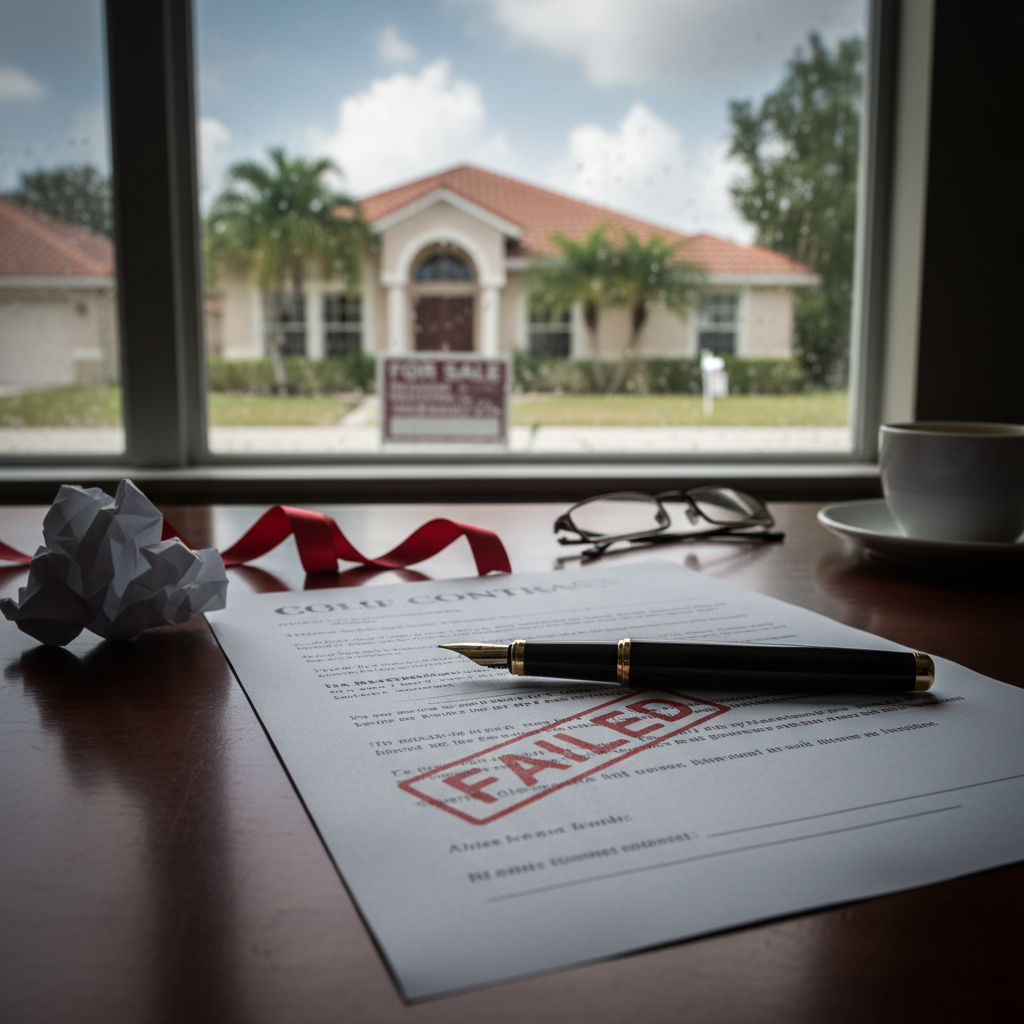
Florida real estate contract falls through — deposit and legal remedies

When a real estate contract falls through in Florida, the fallout depends almost entirely on why it happened and who bears the legal responsibility. You might be a buyer who lost your financing, a seller whose property failed inspection, or one party who simply changed their mind — and the answer to “what happens now?” is completely different in each scenario. Florida real estate contract failures trigger specific legal rights and obligations that begin the moment the deal collapses. Here’s what actually happens next and what your options are.

Florida Statute §44.102 provides the legal framework for these disputes.

Who’s in Default Determines EverythingFlorida real estate contract falls through — deposit and legal remedies

Learn more at Florida Statute §44.102. Florida Statute §689.02 (real estate contracts) Florida Statute §83.131 (earnest money handling)

The First Question in Every Failed Florida Deal

Before anything else — before demand letters, before escrow disputes, before anyone threatens to sue — the threshold question is: who defaulted? Under Florida contract law, the party who fails to perform without legal justification is in default. The non-defaulting party then has remedies. But if both parties had legitimate grounds for not closing, the analysis gets more complicated. A Florida contract dispute attorney evaluates this question first in every failed transaction.

Legitimate Reasons a Buyer Can Walk Away

  • Inspection contingency — discovered defects and properly invoked the right to cancel within the window
  • Financing contingency — loan was denied despite good faith efforts, properly documented
  • Appraisal contingency — property appraised below purchase price and the gap wasn’t bridged
  • Title issues — unmarketable title that seller can’t cure within the required period
  • Seller breach — seller failed to disclose known defects or couldn’t deliver the property as contracted
  • Florida Statute Chapter 83 — governs earnest money deposits and contract performance

When a Buyer Is in Default

If the buyer walks without a valid contingency — or after all contingencies were waived — they’re in default. At that point, the seller has two main options: keep the deposit as liquidated damages (if the contract permits), or sue for specific performance or actual damages exceeding the deposit. Which option makes more sense depends on the property, the market, and what the contract says.

The Earnest Money Deposit — Who Gets It?

Florida’s Escrow RulesFlorida real estate contract cancelled — deposit dispute concept

The earnest money in a Florida real estate transaction is held in escrow by the title company, broker, or attorney. When a deal falls apart, the escrow agent cannot simply release it without either a written agreement from both parties or a court order. If there’s a genuine dispute, the escrow agent will typically interplead the funds — depositing them with the court and letting both sides fight for it. Florida’s real estate broker statute (Chapter 475) governs escrow obligations and dispute procedures.

How the Contract Language Controls the Outcome

Under Florida Statute §44.102 on contract law,

Scenario Likely Outcome on Deposit
Buyer defaults, contract has liquidated damages clause Seller keeps deposit as full remedy — no further damages claim
Buyer defaults, no liquidated damages clause Seller can claim deposit plus additional damages if losses exceeded it
Seller defaults Buyer gets deposit back plus may pursue specific performance or damages
Both parties dispute fault Escrow interpleaded — court or mediation determines who gets it
Valid contingency triggered Deposit returned to buyer — no default by either party

Specific Performance — Forcing the Deal to Close

When Money Isn’t Enough

Florida courts recognize that every piece of real property is legally unique. That means a buyer whose seller backed out doesn’t have to accept a damages payment — they can ask the court to order the seller to actually close the deal. This remedy, called specific performance, is commonly sought in Florida when a seller gets a better offer after going under contract or when the buyer has already committed financing and relocation plans. Courts look at whether the contract is clear, whether the buyer performed their obligations, and whether specific performance is practical. A Florida real estate litigation attorney files these cases on an expedited basis when a closing is imminent.

What Happens to the Financing When a Deal Collapses

Lender Involvement and Your Obligations

If you had a mortgage commitment and the deal dies, your lender’s rate lock typically expires within days. If you’ve already paid for an appraisal, inspection, and application fees — those costs are usually not refundable regardless of who was at fault in the failed deal. Some buyers include these costs in a damages claim against the defaulting seller. Keep all documentation of every out-of-pocket expense from the transaction. The CFPB’s guidance on failed real estate transactions covers what happens to mortgage applications when deals collapse.

Frequently Asked Questions

For more information, see National Association of REALTORS Research.

For more information, see Florida Statute §689.20.

Question Answer
Can a Florida seller back out after signing a contract? Only with legal justification — buyer default, a valid contingency in their favor, or mutual agreement. Backing out without cause makes the seller the defaulting party.
How long does a Florida escrow dispute take to resolve? If both parties agree on release, days. If disputed and interpleaded, months — though mediation often resolves it faster.
Can I sue for more than the deposit if a buyer defaults? Depends on the contract. If it has a liquidated damages clause limiting your remedy to the deposit, you generally cannot claim more.

When Your Florida Real Estate Deal Falls Apart, Know Where You Stand

A failed transaction doesn’t have to mean a financial loss. Feinstein Law represents buyers and sellers in Florida real estate contract disputes and litigation throughout South Florida. Call (954) 767-9662 or visit our contact page.

About Feinstein Law: Feinstein Law is a Fort Lauderdale firm focused on real estate litigation, contract disputes, and business law throughout Broward, Miami-Dade, and Palm Beach counties.

By : Michael Feinstein | March 24, 2026 | Real Estate Contracts

What Does a Broker Commission Dispute Lawyer Do?

real-estate-commission-dispute-lawyer

What Does a Broker Commission Dispute Lawyer Do—and Do You Need One?

Are you facing a disagreement over a broker commission and wondering, What a broker commission dispute lawyer does—and if you should hire one? Broker commission disputes can quickly become complex, involving legal contracts, industry regulations, and significant financial stakes. In this guide, we answer this essential question, explore how a specialized attorney can help, and provide actionable steps for anyone dealing with a commission conflict in real estate, finance, insurance, or securities.Broker Commission Disputes in Fort Lauderdale

What Is a Broker Commission Dispute?

Broker commission disputes occur when parties disagree about the payment, amount, or entitlement of commissions earned by brokers or agents. These issues commonly arise in industries such as:

  • Real Estate
  • Financial Services
  • Insurance Brokerage
  • Securities and Stock Trading

Disputes typically involve:

How Can a Broker Commission Dispute Lawyer Help?

A broker commission dispute lawyer is an attorney with expertise in resolving disputes about broker commissions. Their role includes:

  • Reviewing commission agreements and contracts for legal validity and clarity
  • Advising on rights and obligations under state and federal law
  • Negotiating settlements to avoid costly litigation
  • Representing clients in mediation, arbitration, or court proceedings
  • Ensuring compliance with industry and regulatory standards

In many cases, hiring a lawyer early can save time, money, and stress by facilitating a faster, fairer resolution.

Common Broker Commission Dispute Scenarios

Scenario Description Potential Legal Solution
Disagreement on Commission Split Two brokers or agents dispute how to divide a commission after a transaction. Contract analysis, negotiation, or arbitration.
Nonpayment of Commission A broker claims they were not paid after closing a deal. Breach of contract claim or court enforcement.
Unauthorized Commission Claims One party seeks a commission without a valid contract or agreement. Legal defense and challenge of entitlement.
Regulatory Violations Disputes involving industry rules or ethics violations. Regulatory compliance review and defense before regulatory bodies.

What Steps Should You Take in a Broker Commission Dispute?Rea-Estate-Broker-Commission-Disputes

  1. Review All Agreements: Carefully examine your contracts, commission schedules, and related documents.
  2. Gather Evidence: Collect emails, transaction records, and communications relevant to the dispute.
  3. Attempt Direct Resolution: Try to negotiate with the other party before escalating the matter.
  4. Consult a Broker Commission Dispute Lawyer: Seek legal advice to understand your rights and options.
  5. Consider Mediation or Arbitration: Alternative dispute resolution methods can be faster and less expensive than court.
  6. Litigate as a Last Resort: If other methods fail, your lawyer can help you file a lawsuit for enforcement.
If you’re caught in a broker commission dispute, consulting a specialized lawyer can make a true difference. Don’t leave your financial interests to chance—seek professional legal guidance to protect your rights and achieve a fair resolution.

About Michael L. Feinstein

Michael L. Feinstein is a seasoned attorney with over three decades of experience in business litigation, real estate law, and dispute resolution. As the founding attorney of Feinstein Law, Michael has represented clients throughout Florida in complex broker commission disputes, contract matters, and fiduciary duty cases. He is known for his strategic approach, deep understanding of industry regulations, and commitment to achieving favorable outcomes for his clients. Michael L. Feinstein’s expertise and client-focused service have made him a trusted advocate for brokers, agents, and businesses dealing with contentious commission conflicts.

By : Michael Feinstein | March 10, 2026 | Broker Commission Disputes

Understanding Commercial Real Estate Disputes in Broward County

Commercial real estate attorney Broward County — office building dispute

Commercial real estate disputes in Broward County move fast and cost more than most business owners expect. Whether you’re a landlord dealing with a tenant who stopped paying, a buyer whose deal fell apart after due diligence, or a business owner in a lease dispute with a landlord who won’t make repairs — commercial real estate litigation in Broward County is driven almost entirely by what’s in your contract and how quickly you act. Here’s what these cases actually look like and what your options are.

Why Commercial Real Estate Disputes in Broward County Are Different

The Law Heavily Favors What Your Lease Says

Florida’s commercial landlord-tenant law under Chapter 83, Part I provides minimal statutory protections compared to residential law. Your written lease is essentially the rulebook. Courts in Broward enforce commercial lease terms strictly — including penalty clauses, personal guarantees, and acceleration provisions that can make a single missed month of rent trigger liability for the entire remaining term.

The South Florida Commercial Market Creates Unique Friction

Broward County’s commercial market — from Fort Lauderdale’s downtown core to Deerfield Beach, Pompano Beach, and Miramar — spans industrial, retail, and office segments with different market dynamics. Rising rents, tight inventory, and high-stakes redevelopment deals mean more disputes over lease renewals, tenant improvement allowances, and co-tenancy clauses. A Broward County real estate litigation attorney familiar with local market conditions and Broward circuit court procedures is a real advantage in these cases.

Real-Estate-Contract-Disputes-Attorney

The Most Common Commercial Real Estate Disputes in Broward County

Non-Payment and Eviction

The commercial eviction process in Florida requires a proper three-day notice to pay or vacate before any court filing. That notice must comply exactly with § 83.20 — the wrong form or improper service restarts the clock. Done correctly, uncontested commercial evictions in Broward can wrap up in 4–6 weeks. Contested evictions with counterclaims take significantly longer.

Breach of Lease Terms

These disputes go both ways. Landlords claim tenants violated permitted use clauses, subletting restrictions, or maintenance obligations. Tenants claim landlords failed to deliver promised build-outs, maintain common areas, or honor renewal options. The key in every case is: what does the lease actually say, and who breached first? A Florida contract dispute attorney reviews the lease language before anything else.

Purchase and Sale Disputes

Commercial purchase contracts in South Florida routinely involve:

  • Due diligence disputes — what was discovered and whether it justified cancellation
  • Environmental contingency issues — Phase I or Phase II findings that affect financing or value
  • Title defects discovered late — liens, easements, or encroachments that cloud the transfer
  • Failed 1031 exchanges — timing issues that blow the tax-deferred structure
  • Breach by seller — failure to disclose known material conditions affecting the property

Broward County Courts and How These Cases Move

Case Type Court Typical Timeline
Commercial eviction (uncontested) Broward County Court 4–6 weeks from proper notice
Lease breach / damages claim under $30K Broward County Court 3–6 months
Complex commercial lease or sale dispute Broward Circuit Court (17th Judicial) 12–24 months to trial
Emergency injunction Circuit Court Days to weeks depending on urgency

Mediation Before Trial

Broward’s 17th Judicial Circuit requires mediation in most civil cases before trial. Most commercial real estate disputes settle at mediation — both parties have incentive to avoid the cost and unpredictability of trial. An experienced Broward commercial litigation attorney treats mediation as a serious strategic event, not a formality. The 17th Judicial Circuit Court of Florida handles all major commercial disputes in Broward County.

Damages Available in Broward Commercial Real Estate Cases

  • Unpaid rent and acceleration — full remaining lease term if the lease permits it
  • Repair and restoration costs — damage beyond normal wear and tear
  • Lost profits — for tenants wrongfully evicted or denied access to their space
  • Consequential damages — business interruption, relocation costs, lost customer revenue
  • Attorney fees — most commercial leases include prevailing party fee provisions

Frequently Asked Questions

Question Answer
Can a Broward commercial landlord lock out a tenant for non-payment? No. Self-help eviction is illegal in Florida regardless of what the lease says. The landlord must go through the court process.
What if my commercial lease has a personal guarantee? The guarantor is personally liable for the tenant’s obligations — even after the business closes. Personal guarantees in Broward commercial leases are strictly enforced.
How do I choose between settling and litigating? The answer depends on the strength of your contract language, the amount at stake, and the cost of litigation relative to what you can recover. A candid attorney evaluation helps make that call clearly.

Broward County Commercial Real Estate Disputes Need Experienced Local Counsel

Feinstein Law handles commercial real estate disputes in Broward County for landlords, tenants, buyers, and sellers. Call (954) 767-9662 or reach us at our contact page.

About Feinstein Law: Feinstein Law is a Fort Lauderdale litigation firm handling real estate, business, and contract disputes throughout Broward, Miami-Dade, and Palm Beach counties.

By : Michael Feinstein | March 5, 2026 | Commercial Real Estate

Florida Luxury Home Buyers: Why You Need a Real Estate Attorney at Closing

Florida luxury home closing attorney reviewing purchase documents

Buying a luxury home in Florida without a real estate attorney at closing is one of the most expensive risks a buyer can take. The closing table on a high-value Florida transaction is where deals unravel, title defects surface, and contract terms you agreed to months ago suddenly have real consequences. Florida luxury home buyers face a closing process that is more complex than standard residential transactions — more money at stake, more sophisticated sellers, and more ways for something to go wrong at the last moment. Here’s what you need an attorney handling before you sign anything.

Florida Statute §689.261 provides the legal framework for these disputes.

Why Luxury Real Estate Closings in Florida Are Different

Learn more at Florida Statute §689.261. National Association of Realtors (NAR)

The Stakes Change Everything

A $200,000 home closing gone wrong costs tens of thousands to fix. A $3 million waterfront closing gone wrong costs hundreds of thousands — and can take years to resolve in Florida real estate litigation. The contracts are longer, the inspection findings are more complex, the title history is often messier, and the financial arrangements — bridge loans, 1031 exchanges, entity purchases — require legal review that a title agent simply isn’t equipped to provide.

What an Attorney Reviews That a Title Agent Doesn’t

  • Contract contingencies and whether they’ve been properly waived or extended
  • Seller disclosure accuracy — comparing disclosures to inspection findings and property history
  • HOA documents — pending litigation, reserve adequacy, special assessments, restrictions on use
  • Survey issues — encroachments, easements, setback violations on improvements
  • Permit history — unpermitted additions, open permits, code enforcement violations
  • Entity structuring — purchases in LLC or trust require specific deed and title insurance language
  • Florida Statute §689.261 — seller disclosure requirements for real property

The Most Common Legal Problems at Florida Luxury Closings

Title Defects That Surface LateFlorida luxury real estate closing table — title documents and keys

Title searches in South Florida sometimes reveal old liens, unresolved estate issues, or prior deed irregularities that weren’t caught until days before closing. A Florida real estate contract attorney knows how to resolve these quickly — through lien releases, quiet title actions, or affidavits of survivorship — without blowing the deal. A buyer who doesn’t have an attorney often panics and either walks away from a good deal or closes with an unresolved defect.

Last-Minute Contract Disputes

Sellers who want to keep fixtures, repair credits that don’t match the inspection report, or closing costs that don’t match the loan estimate are common last-minute friction points. Having an attorney at the table — rather than just a real estate agent — changes the dynamic. Agents can’t give legal advice. An attorney can tell you what your contract actually says and enforce it.

Wire Fraud at Closing

Wire fraud targeting real estate closings has become the single fastest-growing financial crime in Florida. Criminals intercept email threads and send fraudulent wiring instructions redirecting your funds. The FBI’s Internet Crime Complaint Center consistently reports Florida as one of the highest-loss states for real estate wire fraud. Always verify wiring instructions by phone — using a number you independently confirmed, never from an email.

Key Contract Terms Luxury Buyers Must Understand Before Closing

Under Florida Statute §689.261 on seller disclosure,

Contract Term What It Means for You
Inspection contingency Your right to cancel or renegotiate based on inspection findings — timing is strict, missing it waives the right
Financing contingency Protects your deposit if your loan falls through — must be properly documented to be enforceable
AS-IS rider Does NOT eliminate seller’s disclosure duty — sellers must still disclose known defects even in AS-IS sales
Liquidated damages clause Caps the seller’s remedy at your deposit if you default — or eliminates that cap depending on how it’s drafted
Personal property inclusion Fixtures, appliances, and custom items need to be specifically listed — disputes over what conveys are common

Frequently Asked Questions

For more information, see ABA Real Property Law Section.

For more information, see Florida Statute §409.103.

Question Answer
Is a real estate attorney required at closing in Florida? Not legally required — but for a luxury transaction, it’s a practical necessity. The complexity justifies the cost many times over.
What does an AS-IS sale mean for a luxury buyer in Florida? You accept the property in its current condition — but the seller still must disclose known material defects. AS-IS does not equal no liability.
Can I back out of a luxury purchase if I find defects during inspection? Only if your inspection contingency is still active and properly invoked. Missing the deadline waives the right — which is why attorney oversight of your timeline matters.

Protect Your Investment Before You Sign at the Closing Table

Feinstein Law represents Florida luxury home buyers through the closing process and in post-closing disputes throughout South Florida. Call (954) 767-9662 or reach us at our contact page.

About Feinstein Law: Feinstein Law is a Fort Lauderdale firm focused on real estate litigation, business disputes, and construction law throughout Broward, Miami-Dade, and Palm Beach counties.

By : Michael Feinstein | February 26, 2026 | Real Estate Law

How Mediation Works in Florida Real Estate Disputes

Florida real estate mediation attorney — parties in conference room

If you’re in a Florida real estate dispute and someone just mentioned mediation, you might be wondering whether it’s worth your time or just a delay tactic before the real fight begins. Mediation in Florida real estate disputes is not optional in most cases — it’s required before trial under both standard contract clauses and court rules. But more importantly, it works. The majority of Florida real estate cases that reach mediation settle there, avoiding months of discovery and the unpredictability of a jury. Here’s how the process actually operates and how to use it strategically.

Why Florida Requires Mediation Before Trial

It’s Built Into Most Contracts

The standard FAR/BAR residential contract used throughout Florida contains a mandatory mediation clause. Commercial contracts frequently do too. This means if you signed a Florida real estate contract — as a buyer, seller, landlord, or tenant — you almost certainly agreed to mediate before filing a lawsuit. Courts also independently order mediation in most civil cases under Florida’s civil procedure rules. Skipping it can get your case dismissed or delay it significantly.

What the Court Actually Requires

Once a case is filed in Florida circuit court, the judge will typically enter a case management order setting a mediation deadline — often within 90–120 days of the case being at issue. The parties share the mediator’s fee equally unless agreed otherwise. Failure to participate in good faith can result in sanctions. An experienced Florida real estate litigation attorney treats mediation as a serious strategic opportunity, not a box to check.

How a Florida Real Estate Mediation Actually Works

Choosing the MediatorFlorida business mediation — attorney presenting settlement terms

The parties typically agree on a certified Florida mediator — often a retired judge or experienced attorney who specializes in real estate contract disputes. If the parties can’t agree, the court appoints one. In South Florida, mediators with specific real estate expertise are available and worth the slightly higher rate. Their credibility with both sides moves cases toward settlement faster.

The Day of Mediation — What to Expect

  • Opening joint session — both sides present their positions briefly to the mediator
  • Separate caucuses — mediator shuttles between rooms, conveying offers and testing positions privately
  • Reality testing — the mediator pushes each side to honestly evaluate their risks at trial
  • Settlement negotiation — once both sides move toward a range, terms are drafted and signed same day
  • Impasse — if no agreement, the mediator declares impasse and the case proceeds to litigation

Sessions typically run 3–6 hours. Having your Florida litigation attorney present — not just on the phone — makes a measurable difference in outcomes.

Common Florida Real Estate Disputes That Resolve at Mediation

Where Mediation Has the Highest Success Rate

Dispute Type Why Mediation Works Well
Earnest money deposit disputes Both sides know trial costs could exceed the deposit amount — settlement math is obvious
Seller non-disclosure claims Sellers want to avoid public record of concealed defects; buyers want money, not a trial
Commercial lease disputes Both landlord and tenant need to maintain functional business relationships or exit cleanly
Construction defect claims Expert witnesses are expensive — settlement almost always beats paying for trial experts
Partition actions Co-owners often reach buyout agreements at mediation rather than forcing a court-ordered sale

When Mediation Doesn’t Resolve the Case

Mediation fails when one side has unrealistic expectations, is using the process to delay, or when the legal issues are genuinely novel and need a court ruling. An impasse isn’t a failure — it clarifies the issues and often produces partial agreements that narrow what goes to trial. The American Bar Association’s mediation resources outline how courts evaluate good-faith participation.

What Makes Mediation Succeed in Florida Real Estate Cases

Preparation Is Everything

Parties who walk into mediation without a mediation statement, without a clear damages calculation, and without a realistic settlement range waste everyone’s time — including their own. Your attorney should prepare a concise mediation brief that lays out your strongest points, the weaknesses in your case, and a realistic bottom line. Mediators use these to move the other side.

Authority to Settle

The person at the table needs actual authority to agree to a settlement number on the spot. If every offer has to be run by an absent decision-maker, the session stalls. Florida courts can sanction parties who attend mediation without proper settlement authority.

Costs and ConfidentialityFlorida mediation vs litigation — attorneys presenting resolution options

What Florida Mediation Costs

  • Certified Florida mediators typically charge $200–$500/hour depending on specialty and experience
  • Sessions run 3–6 hours on average; complex cases may require multiple sessions
  • Total cost split equally: typically $600–$1,500 per party for a standard real estate dispute
  • Compare that to trial costs, which routinely run $50,000–$200,000+ in contested Florida real estate litigation

Everything Said in Mediation Stays There

Florida’s mediation confidentiality statute protects all communications during mediation from being used in court. Offers made and positions taken at mediation cannot be introduced as evidence at trial. This allows both sides to speak candidly about their real concerns — which is exactly what makes settlement possible.

Frequently Asked Questions

Question Answer
Can I be forced to settle at mediation in Florida? No. Mediation is non-binding — you can walk away. But courts require participation in good faith, and refusing to make any reasonable offer can result in sanctions.
What if the other side won’t participate in mediation? File a motion to compel mediation. Courts will order it, and repeated failure to participate can result in adverse rulings.
Does settling at mediation mean I give up my rights? Only the rights you specifically settle. The written agreement controls exactly what’s released. Your attorney reviews it before you sign.

Mediation Is Where Most Florida Real Estate Disputes End — Use It Strategically

Feinstein Law represents buyers, sellers, landlords, and tenants in Florida real estate mediation and litigation throughout South Florida. Call (954) 767-9662 or contact us at our contact page.

About Feinstein Law: Feinstein Law is a Fort Lauderdale litigation firm handling real estate, business, and contract disputes throughout Broward, Miami-Dade, and Palm Beach counties.

By : Michael Feinstein | February 12, 2026 | Contract Disputes
Call Now