





 954-767-9662
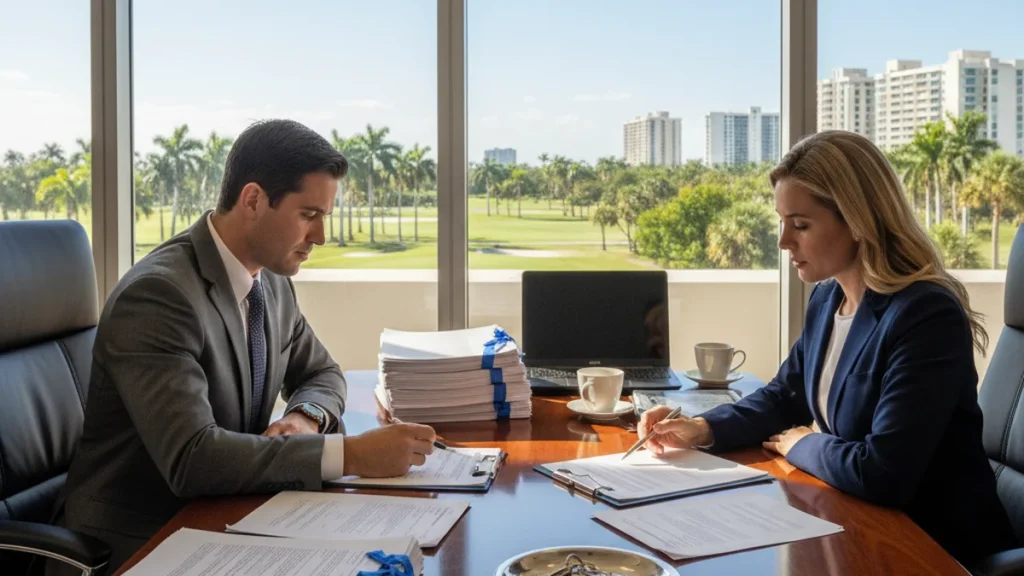
Florida real estate closing disputes happen more often than buyers and sellers expect. After weeks of negotiation, inspections, and financing, the closing table is supposed to be a formality — but title defects, last-minute financing failures, undisclosed liens, and seller walk-outs can derail even the most well-prepared transaction. Understanding where real estate closings go wrong in Florida helps you protect yourself before the deal collapses.
Most Common Causes of Florida Closing Disputes
Title Defects and Unpaid Liens
One of the most common closing surprises is a title defect discovered during the final title search. Unpaid contractor liens, IRS federal tax liens, or prior mortgages that were never properly released can block a clear title transfer. Under Florida lien law, certain liens attach automatically and must be satisfied before the deed can transfer free and clear. A Fort Lauderdale real estate attorney can identify and resolve most title defects before closing day.
Financing Fall-Through at the Last Minute
Buyers sometimes lose financing after contracts are signed — job loss, credit changes, or appraisal gaps are common culprits. Whether the buyer forfeits their deposit depends on the contract’s financing contingency language. Florida contracts are not uniform, and what one clause says about forfeiture can differ dramatically from another. If a financing dispute arises, both parties need legal counsel quickly.
Seller Refusing to Close
When a seller backs out after a contract is signed, the buyer has legal remedies including specific performance — a court order forcing the seller to complete the sale. Florida courts have consistently upheld specific performance in real estate cases because every parcel of land is considered legally unique. A business litigation attorney can file for specific performance or negotiate a settlement that protects your position.
| Dispute Type | Common Cause | Legal Remedy |
|---|---|---|
| Title defect | Old lien or deed error | Quiet title action or negotiated payoff |
| Seller walk-out | Better offer received | Specific performance lawsuit |
| Buyer financing failure | Credit change or appraisal gap | Deposit dispute / contract interpretation |
| Undisclosed defects | Seller concealment | Fraud or breach of contract claim |
| Survey discrepancy | Boundary error | Contract rescission or price adjustment |
Undisclosed Property Defects After Closing
Florida’s Seller Disclosure Requirements
Florida law requires sellers to disclose known material defects that are not readily observable. The landmark Johnson v. Davis case established this duty, and courts have consistently enforced it. If a seller conceals a leaky roof, mold, foundation cracks, or flood history, the buyer may have claims for fraud, negligent misrepresentation, or breach of contract even after the deal closes. The Florida Bar notes that post-closing disclosure disputes are among the fastest-growing areas of real estate litigation.
What You Can Recover
- Cost to repair the undisclosed defect
- Diminution in property value
- Out-of-pocket losses from relying on false disclosures
- Attorney fees in fraud cases under Florida’s litigation fee statute
Deposit Disputes: Who Keeps the Escrow?
When a deal falls apart, the buyer’s deposit often becomes a battleground. Most Florida contracts specify that the deposit goes to the seller if the buyer defaults and to the buyer if the seller defaults or if a contingency is not met. But “default” is a term that requires legal interpretation. Escrow agents cannot release disputed deposits without written agreement from both parties or a court order — which means disputes can drag on for months without resolution. Early legal intervention speeds up the process significantly.
According to Florida Realtors, escrow disputes are one of the top reasons real estate transactions require attorney involvement post-closing.
How to Protect Yourself Before and During Closing
- Review the title commitment carefully before closing day — not after
- Understand every contingency in your contract and its deadline
- Do a final walkthrough within 24 hours of closing
- Confirm all agreed repairs were completed and documented
- Get written confirmation of lien payoffs from the closing agent
A real estate litigation attorney reviewing your contract before you sign is the single most effective way to prevent closing disputes.
 Closing disputes often hinge on ambiguous contract language — legal review is critical.
Frequently Asked Questions
| Question | Answer |
|---|---|
| Can I back out of a Florida real estate contract? | Only if a valid contingency applies. Otherwise you may forfeit your deposit or face a lawsuit. |
| What is specific performance in a real estate dispute? | A court order forcing a party to complete the sale as contracted, because land is considered legally unique. |
| How long do I have to sue after closing? | Fraud claims: 4 years. Contract claims: 5 years from breach. Concealment of defects can extend these timelines. |
| Who decides who gets the deposit? | The escrow agent cannot decide — parties must agree in writing or a court must order the release. |
| Do I need an attorney for a closing dispute? | Yes. These disputes involve contract law, property law, and litigation strategy that agents cannot handle. |
When a Closing Turns Into a Legal Fight, Be Ready
If your Florida real estate closing dispute has already started — or you want to prevent one — Feinstein Real Estate Litigation & Business Law is ready to help. Call (954) 767-9662 or contact us through our contact page today.
About Feinstein Real Estate Litigation & Business Law
A South Florida firm with 37+ years of experience in real estate closings, contract disputes, title litigation, and business law. Serving Broward, Miami-Dade, and Palm Beach Counties.
