





 954-767-9662
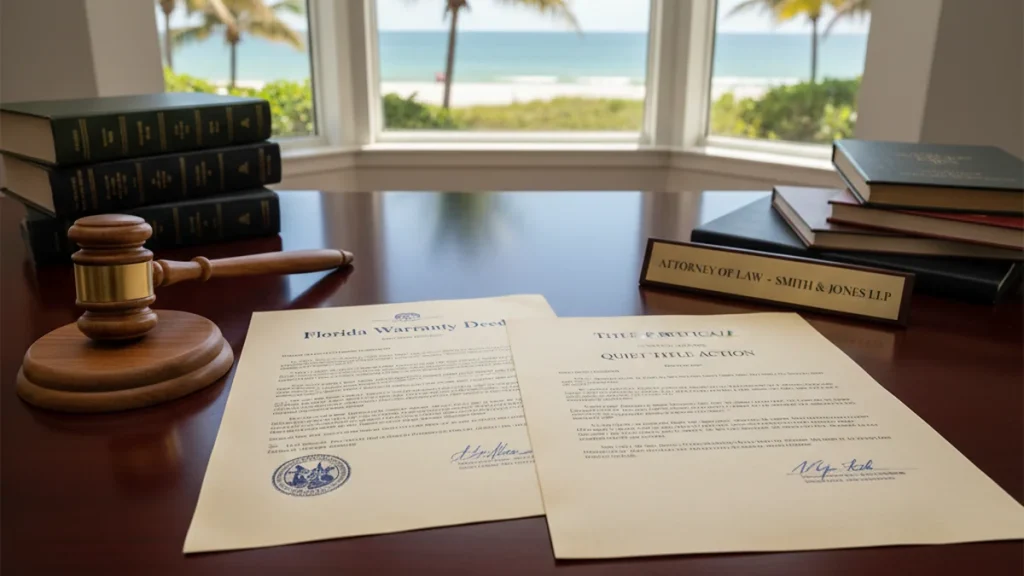
A quiet title action in Florida is a lawsuit filed to establish clear, undisputed ownership of real property. When ownership is clouded by competing claims, liens, or gaps in the chain of title, buyers, lenders, and owners cannot move forward with confidence. Filing a Florida quiet title action removes those clouds so that the title is clean and marketable. Understanding this process protects your investment before disputes escalate into costly litigation.
What Does “Quieting Title” Actually Mean?
Establishing Legal Ownership on Record
When a court “quiets” title, it issues a final judgment declaring who the rightful owner is. That judgment is recorded in the public record, permanently silencing any adverse claims. Florida courts handle these actions under Florida Statute § 65.021, which outlines the grounds and procedures for bringing a quiet title suit.
Common Reasons Title Becomes Clouded
- Errors in a prior deed — wrong legal description or misspelled name
- Unrecorded interests from a prior owner’s heirs
- Fraudulent or forged conveyances
- Tax deed sales that did not follow proper notice procedures
- Boundary disputes with adjacent property owners
- Adverse possession claims by a longtime occupant
Any one of these issues can block a sale or refinance. A Fort Lauderdale real estate litigation lawyer can assess which issue applies and how aggressively it needs to be addressed.
When Do You Need a Quiet Title Action in Florida?
After Purchasing a Tax Deed Property
Tax deed purchases are among the most common triggers for a quiet title action Florida filing. When a county sells a property for unpaid taxes, prior lienholders and heirs of former owners may still assert claims. A quiet title action puts all potential claimants on notice and eliminates their interests if they fail to respond.
After Acquiring Property Through Foreclosure or Probate
Foreclosure sales and probate transfers often leave title defects. Missing heirs, unsatisfied junior liens, or improperly noticed creditors can resurface years later. Filing a Florida quiet title lawsuit closes those gaps decisively. According to the Florida Bar Journal, quiet title actions are especially critical after non-judicial transfers where court oversight was limited.
Resolving Boundary and Encroachment Disputes
Neighbors who have used a strip of your land for decades may eventually assert an adverse possession claim. A quiet title action establishes your boundary legally before that claim matures. Early action is always less expensive than defending a full adverse possession lawsuit.
How the Quiet Title Process Works in Florida
| Stage | What Happens | Typical Timeframe |
|---|---|---|
| Title Search | Attorney identifies all clouds, liens, and competing claims | 1–2 weeks |
| Complaint Filed | Lawsuit filed in circuit court naming all potential claimants | Week 2–3 |
| Service of Process | All defendants served; publication notice for unknown claimants | 4–8 weeks |
| Default or Response | Defendants either respond or default is entered | Weeks 8–16 |
| Final Judgment | Court issues judgment quieting title in your favor | Months 4–6 |
| Recording | Judgment recorded in county property records | 1–2 days after judgment |
Publication Notice for Unknown Claimants
Florida law requires publishing notice in a local newspaper when defendants cannot be personally served. This puts unknown heirs and interest holders on notice. The Florida publication statute governs the frequency and format of this notice. Skipping or botching this step can void the entire judgment.
Quiet Title vs. Title Insurance: What’s the Difference?
Title Insurance Covers Future Claims — It Doesn’t Eliminate Them
Title insurance indemnifies you if a covered claim surfaces later. It does not remove the cloud from the record. A quiet title action in Florida actually eliminates the defect, making the title insurable and marketable going forward. Lenders almost always require clean title before funding a purchase or refinance.
When You Need Both
After a successful quiet title action, most owners purchase a new title insurance policy. The clean judgment gives the insurer confidence, and the policy protects against any claims that may have been missed. Your real estate litigation attorney can coordinate with your title company to make the transition seamless.
Costs and Realistic Expectations
- Uncontested cases: typically $1,500–$4,000 in attorney fees plus court costs
- Contested cases: fees rise significantly depending on the number of defendants and complexity
- Timeline: 3–6 months for uncontested; 12+ months if defendants actively litigate
- Result: a recorded final judgment that clears the cloud permanently
The Florida Realtors confirm that title defects are among the leading causes of delayed or collapsed real estate closings in South Florida. Addressing them proactively is almost always cheaper than losing a sale.
 A quiet title attorney reviews the chain of ownership to identify competing claims.
Frequently Asked Questions
| Question | Answer |
|---|---|
| How long does a quiet title action take in Florida? | Uncontested cases typically resolve in 3–6 months. Contested cases can take over a year. |
| Do I need an attorney to file a quiet title action? | Technically no, but the procedural requirements — publication, proper service, court filings — make attorney representation essential in practice. |
| Can a quiet title action remove a lien? | Yes, if the lienholder is named and properly served. Certain statutory liens (like IRS liens) require separate federal proceedings. |
| What happens if a defendant contests the action? | The case proceeds as contested litigation. A judge or jury ultimately determines ownership based on evidence and legal arguments. |
| Is a quiet title action the same as a title search? | No. A title search identifies defects. A quiet title action is the legal proceeding that eliminates them. |
Clear Title Starts with the Right Attorney
A clouded title does not fix itself. The longer you wait, the more claimants can appear and the harder it becomes to establish clean ownership. If you are facing a quiet title action in Florida — or suspect your title has a defect — Feinstein Real Estate Litigation & Business Law can clear it. Call (954) 767-9662 or visit our contact page to schedule a consultation today.
About Feinstein Real Estate Litigation & Business Law
Feinstein Real Estate Litigation & Business Law is a South Florida firm with over 37 years of experience resolving complex real estate and business disputes. Serving Fort Lauderdale, Broward County, Miami-Dade, and Palm Beach, the firm handles quiet title actions, breach of contract, commercial litigation, mediation, and more.
