
Phone

What to Expect in a Florida Commercial Lease Dispute

How to Handle a Broker Commission Dispute in Florida

Florida Non-Compete Agreements: When Are They Enforceable?

What Is a Lis Pendens in Florida Real Estate?

Breach of Fiduciary Duty in Florida Real Estate Transactions

Breach of Fiduciary Duty in Florida Real Estate Transactions

Can You Sue a Contractor for Defective Work in Florida?

5 Signs You Need a Business Litigation Attorney in South Florida

Real Estate Litigation in Fort Lauderdale: What to Expect

Call Now Email12
Florida's Business Law Firm
Fort Lauderdale Phone954-767-9662

What to Expect in a Florida Commercial Lease Dispute

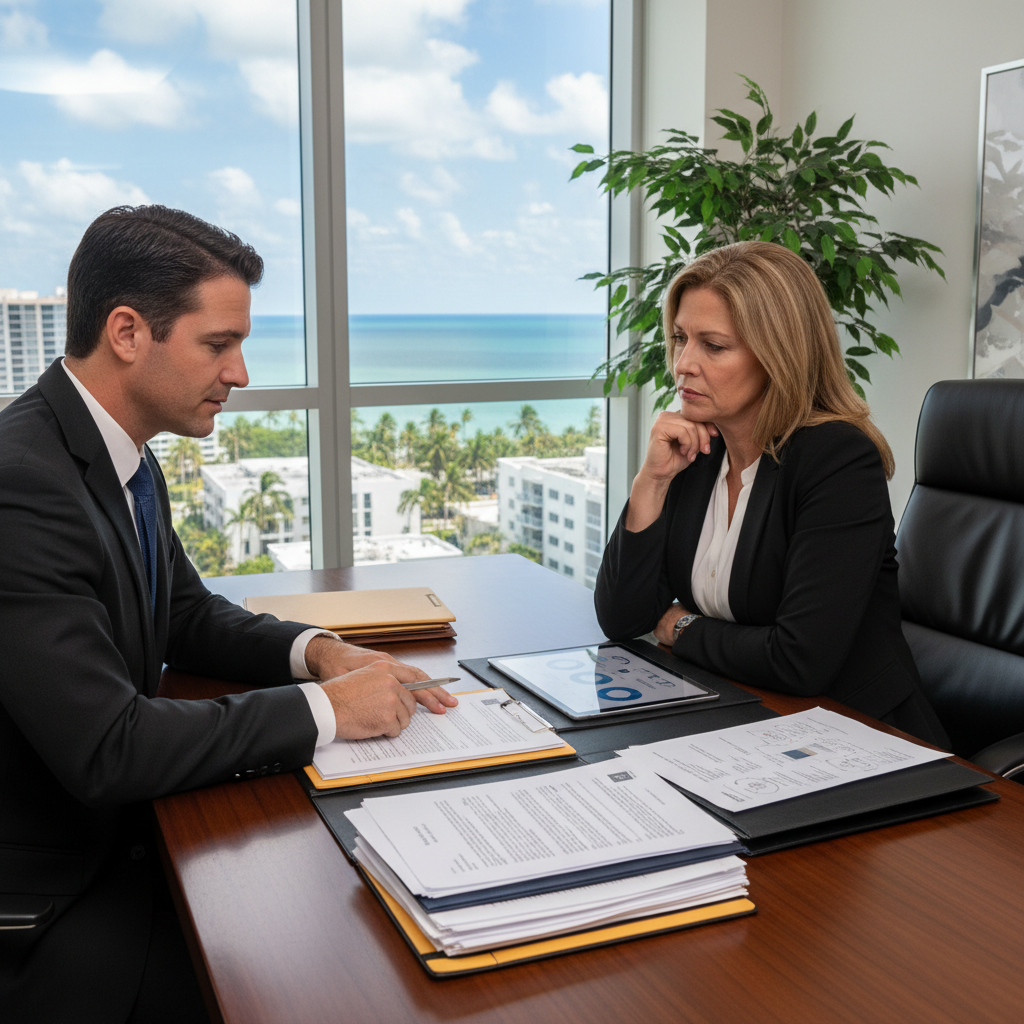
Florida commercial lease dispute — attorney reviewing agreement

A Florida commercial lease dispute can go from a late payment or a maintenance argument to a full-blown eviction proceeding or six-figure damages claim faster than most business owners expect. Whether you’re a landlord who hasn’t received rent in 90 days or a tenant sitting in a space with a broken HVAC system your landlord refuses to fix, commercial lease disputes in Florida are driven almost entirely by what the written lease says — and most people don’t fully understand their lease until there’s already a problem. Here’s what you need to know before this gets worse.

Why Florida Commercial Leases Are Different from Residential

Far Fewer Tenant Protections

Florida’s residential landlord-tenant statute (Chapter 83, Part II) comes loaded with tenant rights. Commercial leases in Florida are governed by Chapter 83, Part I — which is much leaner. There’s no statutory requirement for a commercial landlord to return a security deposit within a set timeframe unless the lease says so. The implied warranty of habitability doesn’t apply the same way. The written agreement controls almost everything, which is why the specific language in your lease matters so much in a dispute.

The Three-Day Notice Requirement Still Applies

Before a commercial landlord can begin eviction proceedings for non-payment, Florida law still requires a three-day written notice to pay or vacate under § 83.20. That notice must be properly served and must comply with the exact statutory requirements — a defective notice can restart the clock and delay the entire eviction process.

The Most Common Commercial Lease Disputes in Florida

Non-Payment and Rent Disputes

This is the most common starting point. You’re probably dealing with a tenant who stopped paying, is paying partial rent, or is claiming a right to withhold rent because of conditions at the property. Landlords: document every missed payment and send your three-day notice correctly the first time — a procedural error means starting over. Tenants: check your lease for any abatement rights before you withhold rent unilaterally.

CAM and Operating Expense Reconciliation

Common Area Maintenance charges are a recurring source of Florida commercial lease disputes. Many tenants don’t scrutinize annual CAM reconciliations closely enough — and many landlords include expenses that aren’t actually permitted under the lease. A Florida contract dispute attorney can audit the reconciliation and identify overcharges that can often be recovered without litigation.

Early Termination and Buildout Disputes

You’re probably also facing one of these if things have gone sideways:

  • A tenant wants out before the lease ends and disputes the early termination penalty
  • A landlord failed to deliver promised tenant improvement allowances
  • A buildout has construction defects that the landlord refuses to repair
  • A subletting or assignment request the landlord is blocking without a legitimate reason
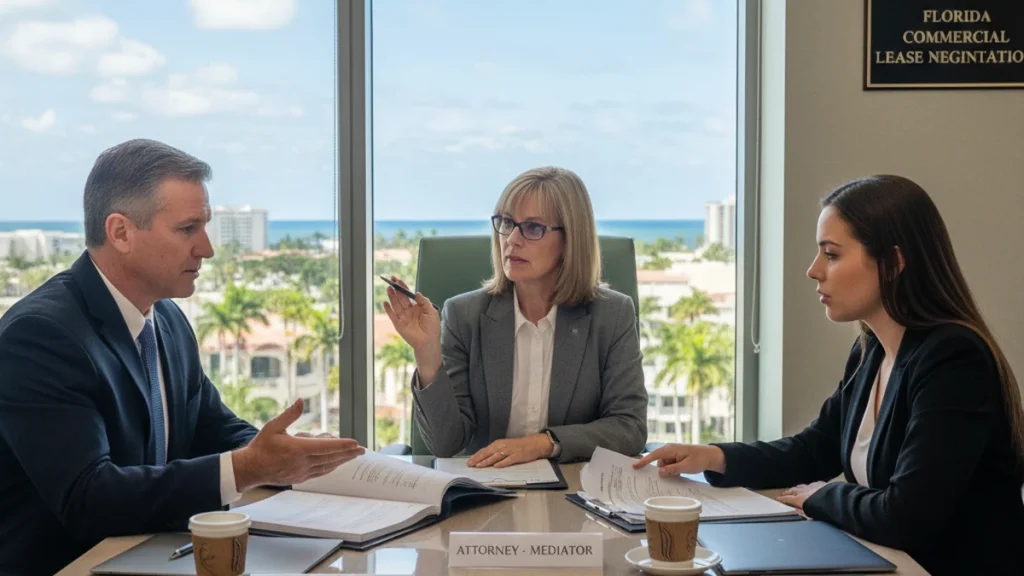
Florida commercial lease negotiation between landlord tenant and attorney

Commercial lease disputes often escalate to litigation when notice requirements are ignored.

What the Litigation Process Actually Looks Like

From Demand Letter to Trial

Stage What Happens Typical Timeline
Pre-suit demand Attorney sends formal demand citing the breach and demanding cure or payment Days 1–14
Filing & service Complaint filed in circuit court; defendant has 20 days to respond Weeks 2–4
Discovery Exchange of financials, lease communications, maintenance records Months 2–6
Mediation Florida courts typically require mediation before trial Months 4–8
Trial or settlement Most cases resolve at mediation; contested cases go to trial Months 6–18+

Self-Help Eviction Is Not Allowed

Some landlords think they can change the locks or remove a tenant’s property when rent goes unpaid. Self-help eviction is prohibited in Florida even if your lease purports to allow it. A landlord who locks out a commercial tenant without a court order can face significant liability. The right path is through the courts — and with a proper three-day notice, the process moves faster than most people expect. Review the full Florida landlord-tenant statute if you want to see exactly what’s permitted.

Attorney Fees — A Huge Factor in How These Cases Resolve

Prevailing Party Clauses Cut Both Ways

Most well-drafted commercial leases include a prevailing party attorney fee clause. Under Florida law, if a contract provides for fees to one party, it applies to both. That means if you lose, you pay the other side’s attorney fees — and if you win, you can recover yours. This dynamic changes how both sides evaluate settlement at every stage of a Florida business litigation case.

Frequently Asked Questions

Question Answer
Can my landlord lock me out of my commercial space in Florida? No. Self-help eviction is illegal in Florida regardless of what your lease says. The landlord must go through the court eviction process.
How long does a commercial eviction take in Florida? Uncontested evictions can wrap up in 4–6 weeks after proper notice. Contested cases can take several months.
What if our lease has no dispute resolution clause? Florida courts default to standard civil litigation procedures. Mediation may still be required by the court before trial.
Can I withhold rent if my landlord won’t make repairs? This is risky without specific lease language authorizing it. Consult an attorney before withholding rent — it can trigger eviction proceedings.

Stop Letting a Lease Dispute Drain Your Business

The longer a Florida commercial lease dispute goes unresolved, the more it costs both sides. Feinstein Law represents landlords and tenants in commercial lease litigation throughout Broward, Miami-Dade, and Palm Beach counties. Call (954) 767-9662 or contact us at our contact page.

About Feinstein Law: Feinstein Law is a Fort Lauderdale litigation firm handling business, real estate, and construction litigation throughout South Florida.

By : Michael Feinstein | April 9, 2026 | Commercial Real Estate

How to Handle a Broker Commission Dispute in Florida

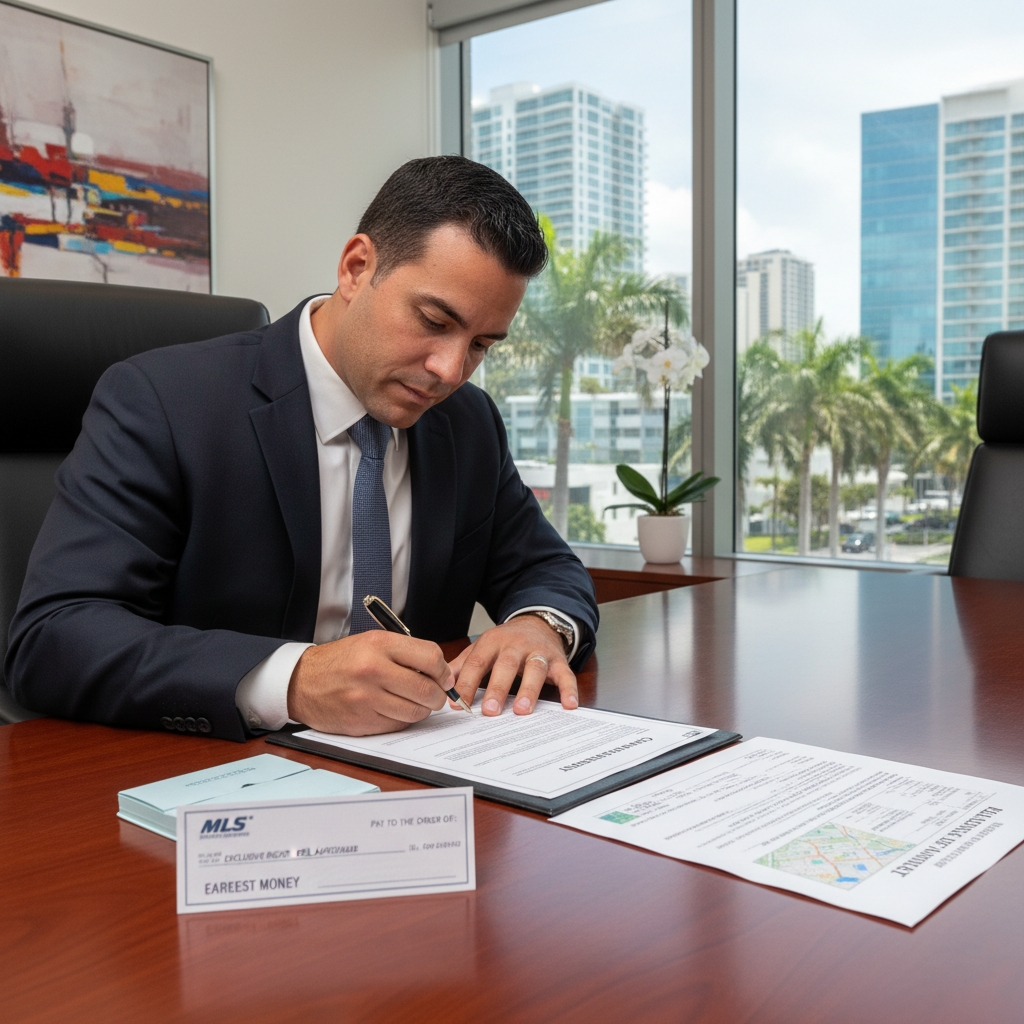
Florida real estate broker commission agreement and earnest money

If you’re a real estate agent who completed a transaction and isn’t getting paid, or a seller who believes a broker didn’t earn the commission they’re claiming — you’re dealing with a broker commission dispute in Florida, and the outcome depends heavily on what your listing agreement or buyer’s broker agreement actually says. Florida broker commission disputes became more contentious after NAR’s 2024 settlement changed how buyer’s agent compensation is disclosed and negotiated. Whether you’re a broker trying to collect or a party trying to avoid paying, here’s what you’re actually dealing with.

How Real Estate Commissions Work in Florida

Commissions Are Always Negotiable

There is no standard commission rate in Florida. The rate is negotiated between the broker and the client and documented in a written listing agreement or buyer’s broker agreement. Commissions are typically paid at closing from the sale proceeds — but a broker’s right to a commission can exist even if a deal doesn’t close, depending on the contract language. Understanding what your agreement says about when a commission is earned is the foundation of any Florida commission dispute.

The Three-Part Test for Earning a Commission

Under Florida common law, a real estate broker typically earns a commission when they:

  • Are the procuring cause of the sale — they introduced the buyer and seller, or their efforts were the dominant reason the deal happened
  • Had a valid written brokerage agreement in place at the time of the transaction under § 475.42
  • Had a buyer who was ready, willing, and able to purchase on the agreed terms

If a seller cancels a deal after the broker produced a buyer who was ready and willing — the broker may still be owed their commission even though no closing occurred.

Florida real estate mediation conference — neutral mediator between parties

The Most Common Florida Broker Commission Disputes

Seller Refuses to Pay After Deal Falls Through

This is the most frequent dispute. The broker produced a qualified buyer, the seller accepted the offer, and then something went wrong — the seller got cold feet, accepted a higher offer from another buyer, or claimed the first buyer wasn’t truly qualified. Whether the broker is owed a commission depends on the listing agreement language and whether the broker was truly the procuring cause. A Florida real estate litigation attorney can evaluate the specific agreement and facts quickly.

Co-Brokerage and Buyer’s Agent Disputes

When two brokerages are involved — a listing agent and a buyer’s agent — disputes arise over the agreed co-brokerage split. After NAR’s 2024 settlement, buyer’s agent compensation must now be documented separately and is no longer automatically offered through the MLS. If the buyer’s broker agreement or seller’s agreement doesn’t clearly establish the co-brokerage arrangement, disputes are almost guaranteed.

Dual Agency and Undisclosed Conflicts

Florida brokers who represent both buyer and seller in the same transaction as a dual agent must have written consent from both parties under § 475.278. Brokers who fail to get that consent — or who don’t fully disclose the conflict — can forfeit their commission entirely, even if the deal closed and they did real work. Courts take these disclosure requirements seriously.

What Florida Courts Look at in Commission Disputes

Factor Why It Matters
Written agreement language The contract controls — courts look at when the commission is earned, what triggers payment, and any conditions
Procuring cause Was the broker actually the dominant reason the buyer and seller connected? Multiple brokers claiming the same deal creates disputes.
Licensing status Florida requires brokers to be properly licensed to sue for a commission — unlicensed activity voids the right to collect
Disclosure compliance Failure to make required disclosures (dual agency, referral fees) can forfeit the commission entirely

Frequently Asked Questions

Question Answer
Can a Florida real estate broker sue for commission without a written contract? Generally no. Florida Statute § 475.42 requires a written brokerage agreement for a broker to sue for a commission.
What if I sold my property directly after the listing expired? Check your listing agreement. Many include a safety clause — protecting the broker’s commission for a period after expiration if the buyer was introduced during the listing term.
Can a buyer’s agent sue a seller for commission in Florida? Yes — if there’s a co-brokerage agreement or the seller’s listing agreement promised a buyer’s agent commission and the broker was the procuring cause.

Florida Broker Commission Disputes Require Specific Legal Knowledge to Win

Whether you’re owed a commission or disputing one, Feinstein Law handles Florida broker commission disputes and real estate contract litigation throughout South Florida. Call (954) 767-9662 or reach us at our contact page.
About Feinstein Law: Feinstein Law is a Fort Lauderdale firm handling real estate litigation, business disputes, and contract matters throughout Broward, Miami-Dade, and Palm Beach counties.

By : Michael Feinstein | April 8, 2026 | Broker Commission Disputes

Florida Non-Compete Agreements: When Are They Enforceable?

Florida non-compete agreement review with business attorney

If you’ve been handed a Florida non-compete agreement to sign — or you’re an employer trying to enforce one — you need to understand something most people get wrong: Florida doesn’t treat these agreements the way almost every other state does. Florida non-compete agreements are explicitly authorized by statute, and courts here are required to enforce them when they’re reasonable. That means signing one carries real consequences. And fighting one is harder than you’d expect. Here’s what actually determines whether a Florida non-compete holds up in court.

What Florida Law Actually Says

The Statute Is Employer-Friendly by Design

Florida’s non-compete statute, § 542.335, is one of the most employer-favorable in the country. It requires courts to enforce non-compete agreements in Florida that protect a legitimate business interest and are reasonable in time, area, and scope. Courts cannot simply void an overly broad agreement — they are required by law to reform it, narrowing it to an enforceable version. That’s called blue-penciling, and it strongly favors employers.

What That Means If You’re an Employee

You can’t rely on a non-compete being thrown out just because it seems broad. A court may enforce a 2-year version of a 5-year agreement rather than toss it entirely. Before you take a new job at a competitor, talk to a Florida business litigation attorney who can read your specific agreement and tell you the real risk.

The Threshold Question: Is There a Legitimate Business Interest?

Without This, the Agreement Fails

This is the first thing any court evaluates. A Florida non-compete without a legitimate business interest behind it will not be enforced — period. Florida recognizes these as legitimate interests:

  • Trade secrets and confidential business information — formulas, client lists, pricing models, proprietary processes
  • Substantial customer relationships — clients the employee developed or had significant access to
  • Specialized training — extraordinary investment the employer made in the employee’s skill set
  • Business goodwill — tied to a geographic area or specific marketing territory

If none of those exist, the agreement has no anchor. That’s the argument an employee’s attorney will make first in any Florida contract dispute.

Florida attorney reviewing non-compete agreement with client

What Doesn’t Qualify

General knowledge of the industry, basic job skills, or relationships the employee brought to the company — not built while there — typically don’t qualify as legitimate business interests. The employer has to show the interest they’re protecting is genuinely theirs to protect.

Reasonableness: Time, Geography, and Scope

Time Periods Florida Courts Treat as Presumptively Reasonable

Restriction Period Context Florida Presumption
6 months or less Any employee Presumed reasonable
Up to 2 years Former employee, independent contractor Presumed reasonable
Up to 3 years Sale of business goodwill Presumed reasonable
More than 2 years Employee non-compete Faces heightened scrutiny

Geographic and Activity Scope

The restriction must tie to the actual area where the employer does business and the actual work the employee performed. A statewide non-compete for an employee who only worked in one city, or a ban on entire industries when the employee worked in one niche role, are both vulnerable to challenge — though again, courts may narrow rather than void.

Injunctions: Why Non-Compete Cases Move Fast

Employers Can Get an Emergency Order Within Days

When an employee violates a Florida non-compete agreement, employers typically don’t wait for trial — they go straight to court for a temporary injunction. Florida law presumes irreparable harm exists when a legitimate business interest is threatened. That means employers don’t need to prove actual financial damage to get an emergency order stopping the former employee from working for the competitor. This process can move in days, not months.

What This Means If You’re the Employee

If you’ve already started the new job, you could be ordered to stop immediately while litigation plays out. The cost — financially and professionally — can be severe. Don’t assume the agreement won’t be enforced because it “seems unreasonable.” Get legal advice before you make the move, not after. The FTC’s non-compete rulemaking has been blocked by federal courts as of 2026, so Florida’s employer-friendly statute still governs.

Frequently Asked Questions

Question Answer
Can Florida courts really rewrite my non-compete? Yes. Florida law requires courts to modify overbroad agreements rather than void them. This is a major difference from most states.
What if I was laid off — does the non-compete still apply? Generally yes in Florida unless the agreement says otherwise. Some courts consider whether the employer terminated without cause when evaluating enforceability, but it’s not an automatic defense.
Can I negotiate a non-compete before signing? Absolutely — and you should. Once signed, you’re bound by it. Push back on duration, geography, and scope before you put pen to paper.
Does Florida’s non-compete law apply to independent contractors? Yes. Florida § 542.335 covers employees, independent contractors, and business purchasers.

Whether You’re Enforcing or Escaping a Florida Non-Compete, Know Where You Stand

Florida’s law puts employees at a real disadvantage compared to most states. If you’re facing a Florida non-compete agreement — on either side — Feinstein Law can evaluate your position and tell you exactly what you’re up against. Call (954) 767-9662 or reach us at our contact page.

About Feinstein Law: Feinstein Law is a Fort Lauderdale litigation firm handling business disputes, contract matters, and real estate litigation throughout South Florida.

By : Michael Feinstein | April 8, 2026 | Business Litigation

What Is a Lis Pendens in Florida Real Estate?

Florida lis pendens — real estate litigation property filing

A lis pendens in Florida is one of the most powerful — and most disruptive — legal tools in real estate disputes. If one has just been recorded against your property, you’re probably finding out because a title company flagged it, a buyer walked away, or a lender declined your refinance. A Florida lis pendens tells the world that your property is tied up in pending litigation. Understanding what it means, whether it’s valid, and how to fight it is the difference between getting your transaction back on track quickly — or watching it sit frozen for months.

What Exactly Is a Lis Pendens?

The Legal Meaning

Lis pendens is Latin for “suit pending.” Under Florida Statute § 48.23, it’s a recorded notice in the public property records warning potential buyers and lenders that the property is subject to active litigation. Once recorded in the county where the property sits, it becomes visible to any title search — and most buyers and lenders will not close on a property carrying one.

Who Files It and Why

Anyone with a lawsuit that directly affects title or possession of a specific piece of real property can file a Florida lis pendens. Common situations include:

  • Mortgage foreclosure actions — the lender puts the world on notice before the foreclosure sale
  • Partition actions — co-owners seeking to force a sale or divide jointly held property
  • Breach of contract claims — a buyer or seller asserting rights to a specific deal
  • Specific performance suits — demanding a court force a sale to proceed
  • Construction lien foreclosures — contractors enforcing unpaid lien claims

If someone filed one against your property and you’re not sure why, a Florida real estate litigation attorney can pull the underlying case and tell you exactly what you’re dealing with within hours.

How a Lis Pendens Kills a Real Estate Transaction

Title Companies Won’t Insure It

This is the practical problem. A title company runs a search before any closing. The moment they see a recorded lis pendens, they will either decline to issue title insurance entirely or exclude the lis pendens-related claims from coverage. Without title insurance, no lender closes. And most cash buyers walk too — because they’d be taking a property subject to whatever the lawsuit decides.

The Buyer Could Lose Everything

If a court ultimately rules in favor of the claimant after a sale went through, that ruling can unwind the transaction or subordinate the buyer’s interest. Florida courts have voided sales that happened with knowledge of a recorded lis pendens. That’s why even sophisticated buyers won’t touch a property with an active notice.

Attorney filing lis pendens notice at Florida county clerk window

A lis pendens clouds the title and can stop a sale in its tracks until the dispute is resolved.

How to Challenge a Florida Lis Pendens

Motion to Discharge

The most direct route is asking the court to discharge the lis pendens. You file a motion arguing that the underlying lawsuit doesn’t directly affect title or possession — or that the claimant can’t show a fair nexus between the property and their claim. Florida courts have discharged lis pendens filings where the connection to the property was too indirect. If successful, the notice is removed from the records and your title clears.

Requiring a Lis Pendens Bond

Even when the claim has merit, Florida courts can require the claimant to post a lis pendens bond — cash or surety — to protect you from damages if their lawsuit ultimately fails. This creates real financial pressure on claimants who don’t have a strong case. It’s a powerful negotiating tool in the right circumstances.

Serving a Demand to Commence Action

If the lien is tied to a contractor or creditor claim, you can serve a written demand requiring them to file suit within 60 days. If they don’t, the lis pendens is extinguished by operation of law. This is a standard tactic used by Florida construction litigation attorneys to clear title when a contractor recorded a lien but hasn’t followed through with a foreclosure action.

Lis Pendens vs. Related Concepts

Term What It Means Effect on Property
Lis Pendens The pending lawsuit affecting the property Clouds title, blocks sales and refinancing
Notice of Lis Pendens The recorded document filed in public records Gives constructive notice to all future buyers
Lis Pendens Bond Security posted by the claimant Protects owner from damages if claim fails
Discharge of Lis Pendens Court order removing the notice Clears title — transaction can proceed
Transfer to Bond Lien moved from property to cash/surety bond Frees property while dispute continues

Frequently Asked Questions

Question Answer
How long does a lis pendens stay on my Florida property? Until the lawsuit resolves, the court discharges it, or the claimant voluntarily releases it. There’s no automatic expiration.
Can I sell my property with a lis pendens in Florida? Technically yes — but practically no. Most buyers and title companies will refuse to close until it’s resolved or transferred to bond.
Can I get attorney fees if the lis pendens was wrongfully filed? Yes. Florida courts can award fees and damages against a party who filed a lis pendens without a legitimate basis. See § 48.23(3).
Does a lis pendens affect my credit? Not directly — it affects your property’s title, not your credit report. But if it leads to a judgment or foreclosure, that’s a different story.

Act Fast — A Lis Pendens Gets More Expensive the Longer It Sits

Every day a Florida lis pendens stays on your property is another day a deal can fall apart or carrying costs pile up. Feinstein Law handles real estate litigation including lis pendens challenges and contract disputes throughout South Florida. Call (954) 767-9662 or reach us through our contact page.

About Feinstein Law: Feinstein Law is a Fort Lauderdale firm handling real estate, business, and construction litigation throughout Broward, Miami-Dade, and Palm Beach counties.

By : Michael Feinstein | April 7, 2026 | Real Estate Law

Breach of Fiduciary Duty in Florida Real Estate Transactions

Florida attorney consulting client about property fiduciary breach

If you suspect a real estate agent, property manager, or transaction professional in Florida violated your trust — took a deal that should have been yours, failed to disclose a conflict of interest, or put their own financial interests above your legal interests — you may be dealing with a breach of fiduciary duty in Florida real estate. Florida real estate fiduciary duty violations are legally actionable, and the damages can be substantial. But these cases require understanding exactly who owed you a duty, what that duty required, and how they fell short.

Who Owes a Fiduciary Duty in Florida Real Estate Transactions

It’s Not Everyone in the Deal

The existence of a fiduciary duty in Florida real estate depends on the specific relationship — not every party to a transaction has one. Understanding who owes you a fiduciary duty is the threshold question in any potential claim.

  • Florida real estate brokers and agents — owe fiduciary duties to their clients under § 475.278, including loyalty, confidentiality, obedience, full disclosure, and accounting
  • Attorneys representing you at closing — owe fiduciary duties as your legal representative
  • Property managers — owe fiduciary duties to property owners for the funds and property they manage
  • Trustees handling real property — owe the full fiduciary duty to trust beneficiaries
  • The other party’s agent — owes duties only to their client, NOT to you unless they’re acting as a transaction broker

Transaction Broker vs. Single Agent

Florida uses a unique designation system. A single agent owes you full fiduciary duties including undivided loyalty. A transaction broker has a lower standard — they facilitate the deal but don’t owe you the same loyalty. If your agent switched from single agent to transaction broker without proper written disclosure, that’s a potential violation of Florida real estate law.

What Breach of Fiduciary Duty Looks Like in Florida Real EstateFlorida real estate attorney reviewing fiduciary duty breach documents with client

Common Violations by Agents and Brokers

  • Failing to disclose a known material defect the agent learned during the transaction
  • Representing both buyer and seller without proper dual agency disclosure and consent
  • Steering a client away from a better deal to protect the agent’s commission or relationship with the other side
  • Disclosing a buyer’s maximum budget or urgency to the seller without authorization
  • Recommending a specific inspector, lender, or attorney who pays the agent referral fees without disclosure
  • Usurping a client’s opportunity — buying a property the agent learned about through the agency relationship

If any of these patterns match your situation, a Florida real estate litigation attorney can evaluate whether the conduct crossed the line from poor service into actionable breach.

What You Have to Prove in a Florida Real Estate Fiduciary Duty Case

Element What It Requires
Fiduciary relationship Prove the defendant owed you a fiduciary duty — not just a general duty of care
Breach The defendant’s conduct violated the specific duties owed to you
Causation The breach directly caused your harm — not just that they acted badly
Damages Quantifiable financial loss resulting from the breach

Evidence That Matters Most

Email communications between the agent and the other party, text messages, MLS activity records showing when the agent knew what, and financial records showing undisclosed referral fees or commissions are the most powerful evidence in these cases. Preserve everything before you confront the agent or make any formal complaint. Filing a complaint with the Florida Real Estate Commission (FREC) is a separate process from a civil lawsuit and can proceed simultaneously.

Damages Available for Florida Real Estate Fiduciary Duty Violations

  • Compensatory damages — financial losses directly caused by the breach
  • Disgorgement — commissions or fees earned through the breach can be forfeited
  • Rescission — in serious cases, the transaction itself can be unwound
  • Punitive damages — available when conduct was intentional and egregious
South Florida luxury waterfront real estate property — high asset real estate disputeHigh-value real estate disputes require attorneys experienced in luxury market transactions.

Frequently Asked Questions

Question Answer
Can I sue a real estate agent for not disclosing a property defect in Florida? Yes — if the agent knew about the defect and failed to disclose it, they can be personally liable separate from the seller.
Does a transaction broker in Florida owe me fiduciary duties? No — a transaction broker owes limited duties, not full fiduciary duties. That’s why the single agent vs. transaction broker distinction matters at the start of every relationship.
How long do I have to sue a real estate agent in Florida? 4 years from when the breach was discovered or reasonably should have been discovered.

A Real Estate Fiduciary Duty Breach in Florida Is Legally Actionable — Act Quickly

Feinstein Law represents buyers, sellers, and investors in Florida real estate fiduciary duty claims and real estate litigation throughout South Florida. Call (954) 767-9662 or visit our contact page.

About Feinstein Law: Feinstein Law is a Fort Lauderdale litigation firm handling real estate, business, and contract disputes throughout Broward, Miami-Dade, and Palm Beach counties.

By : Michael Feinstein | April 6, 2026 | Real Estate Litigation

Breach of Fiduciary Duty in Florida Real Estate Transactions

Florida real estate attorney reviewing fiduciary duty breach documents with client

A breach of fiduciary duty in a Florida real estate transaction occurs when someone entrusted to act in your best interest — an agent, broker, attorney, property manager, or partner — puts their own interests ahead of yours and causes you financial harm. This is one of the most serious claims in Florida property law because it involves a fundamental violation of trust. Understanding what a fiduciary duty means in the context of real estate, who owes it, and what happens when it is broken helps buyers, sellers, and investors protect themselves from a type of harm that often goes unrecognized until significant damage is done.

Florida real estate transactions involve multiple parties who hold positions of trust. Real estate agents, brokers, attorneys acting as closing agents, property managers, and co-owners in joint ventures all carry fiduciary obligations that go beyond ordinary business conduct. These obligations — loyalty, confidentiality, obedience, disclosure, accounting, and reasonable care — define the standard of conduct Florida courts use to evaluate whether a fiduciary acted properly.


When any of those duties is violated, the party who was harmed has the right to file a breach of fiduciary duty claim in Florida court. These cases are distinct from ordinary contract claims — the damages can be broader, and courts have specific equitable remedies available that do not apply in standard breach of contract litigation.

Florida courtroom interior — preliminary injunction business dispute

Who Owes a Fiduciary Duty in Florida Real Estate?

Party Fiduciary Duty Owed To Key Obligations
Real Estate Broker / Agent Their principal (buyer or seller) Loyalty, disclosure, confidentiality, accounting
Property Manager Property owner Honest accounting, proper maintenance, no self-dealing
Real Estate Attorney (closing agent) Client Competent representation, no conflicts of interest
Title Agent Lender and parties Proper handling of escrow funds
LLC Managing Member / Partner Other members No self-dealing, fair distribution, transparent decision-making

Common Examples of Fiduciary Duty Breaches in Florida Real Estate

  • Dual agency without disclosure: An agent representing both buyer and seller without informing both parties in writing
  • Withholding material information: A broker who knows about a competing offer or property defect and fails to disclose it to their client
  • Self-dealing by a property manager: A manager who directs repair contracts to their own company at inflated prices without the owner’s informed consent
  • Misappropriation of escrow funds: A closing agent who diverts funds held in trust for their own use

Each of these scenarios involves someone in a trusted position using that position for personal gain at the expense of the person they were supposed to protect. Florida courts take these violations seriously — especially when the breach involves real estate transactions involving large sums of money.

What Damages Are Available for Breach of Fiduciary Duty in Florida?Florida business partner breach of contract — litigation attorney

Florida law provides several remedies for breach of fiduciary duty in real estate:

  • Compensatory damages: Recovery of all financial losses directly caused by the breach
  • Disgorgement: The fiduciary must give back any profits they made from the breach
  • Constructive trust: A court can impose a trust over property or funds wrongfully obtained by the fiduciary
  • Punitive damages: Available when the breach involved intentional misconduct or fraud
  • Attorney’s fees: Courts may award fees in egregious cases

The disgorgement remedy is particularly powerful in real estate cases — it means the fiduciary cannot profit from their betrayal even if the plaintiff suffered no measurable financial loss. Courts focus on the wrongdoer’s unjust gain, not just the victim’s documented harm.

How to Prove Breach of Fiduciary Duty in Florida Real Estate Cases

Florida courts require three essential elements to establish a breach of fiduciary duty:

Element What Must Be Proven
Fiduciary Relationship A legal or factual relationship where one party owed a duty of loyalty and care to the other
Breach of Duty The fiduciary failed to perform that duty or acted in conflict with the beneficiary’s interests
Damages The breach caused measurable financial harm or unjust enrichment to the beneficiary

Real estate contract disputes involving fiduciaries often require expert testimony on industry standards, market value, and the scope of fiduciary obligations under Florida law. An experienced real estate litigation attorney can build this case and present it effectively to a jury or judge.

Frequently Asked Questions: Fiduciary Duty in Florida Real Estate

Question Answer
How do I prove breach of fiduciary duty in Florida? You must show: (1) a fiduciary relationship existed, (2) the duty was breached, and (3) you suffered damages as a result.
Is a real estate agent always a fiduciary in Florida? Yes — licensed agents and brokers owe fiduciary duties to their principals under Florida real estate law.
What is the statute of limitations for fiduciary duty claims in Florida? Generally 4 years from when the breach was discovered or should have been discovered.
Can I sue both the agent and their broker? Yes — brokers are vicariously liable for the fiduciary violations of their licensed agents under Florida law.

Protect Your Real Estate Investment From Fiduciary Breaches

A breach of fiduciary duty in Florida real estate is a serious legal violation with real financial consequences. If you believe someone you trusted in a property transaction acted in their own interest at your expense, Feinstein Law can evaluate your claim. We handle Florida real estate litigation involving fiduciary breaches, Broward County property disputes, and complex fraud cases for clients throughout South Florida. Call (954) 767-9622 or use our contact page.

About Feinstein Law

Feinstein Law is a Fort Lauderdale real estate and business litigation firm handling fiduciary duty claims, fraud cases, and complex property disputes throughout South Florida.

By : Michael Feinstein | April 6, 2026 | Real Estate Litigation

Can You Sue a Contractor for Defective Work in Florida?

Florida homeowner suing contractor for defective construction work

If you’re asking whether you can sue a contractor for defective work in Florida, you probably already have water coming through your ceiling, foundation cracks spreading across your floor, or an electrical system that failed inspection — and the contractor has stopped returning your calls. Suing a contractor for defective work in Florida is absolutely an option, and Florida law gives you several strong tools to pursue it. But the process has strict deadlines and mandatory pre-suit steps that can kill your case if you miss them. Here’s exactly what you need to know before you do anything else.

What Counts as Defective Work Under Florida Law?

The Legal Definition

Florida’s Construction Defect Statute (Chapter 558) defines a defect as any deficiency in design, specifications, surveying, planning, supervision, or construction that results in physical damage to the structure. That’s a broad definition — and intentionally so. It covers faulty workmanship, defective materials, code violations, and design errors that affect your property’s value or safety.

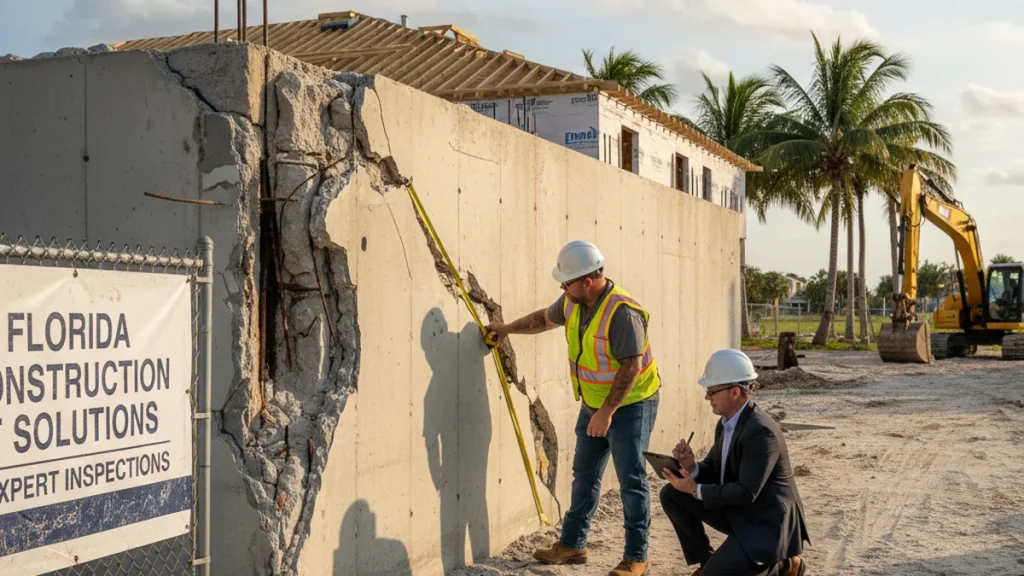
Florida construction defect inspection with contractor and attorney at building site

Common Examples That Lead to Lawsuits

  • Foundation cracks or settling from improper soil preparation
  • Water intrusion through faulty window seals, roofing, or waterproofing
  • Electrical or plumbing work that fails code inspection
  • Structural failures from undersized framing or inadequate concrete
  • Mold resulting from poor ventilation or moisture control
  • Tile, flooring, or stucco defects tied to substandard installation

Not every imperfection qualifies. Florida courts ask whether the work deviated from industry standards or the specific contract terms. If you’re unsure whether your situation crosses the line, an experienced Florida construction litigation attorney can help you assess it before you spend a dollar on anything.

Who Can You Actually Sue?

It’s Not Always Just the General Contractor

You’re probably focused on the GC — the person or company you wrote the check to. But Florida construction defect claims can run up the entire chain. You might have valid claims against multiple parties at once, which matters because some defendants carry insurance and others may not.

Potential Defendants

  • General contractors — responsible for project delivery and supervising all subs
  • Subcontractors — directly liable for their specific scope of work
  • Architects and engineers — liable when the defect traces to design errors or negligent specs
  • Material suppliers — liable when defective products caused the problem
  • Developers — may carry implied warranty of fitness liability on new construction

Identifying all responsible parties early is something a Florida real estate litigation attorney will do as a first step. Wait too long and some parties walk away protected by Florida’s statute of repose.

Florida’s Chapter 558 Pre-Suit Notice — You Can’t Skip This

What the Law Requires

Before you file a lawsuit, Florida law requires you to serve a written Chapter 558 notice of claim on the contractor. This notice must describe the defect in reasonable detail. The contractor then has 45 days (or 30 days for smaller residential repairs) to inspect the property and respond — either with a repair offer, monetary settlement, or denial.

Why This Step Actually Matters

Skipping it can get your case dismissed. But done right, the pre-suit process gives your attorney leverage. If the contractor ignores the notice, denies it without inspection, or makes a lowball offer, that becomes part of your litigation record. Courts look at how both parties behaved before the lawsuit was filed. The Florida DBPR also handles contractor license complaints separately — which is worth pursuing in parallel.

Deadlines — This Is Where Cases Die

Statute of Limitations vs. Statute of Repose

These are two separate clocks, and both can end your right to sue:

Deadline Type Timeframe When Clock Starts
Statute of Limitations 4 years Date you discovered — or reasonably should have discovered — the defect
Statute of Repose 10 years Date of substantial completion of the construction project
Latent Defects May extend discovery clock But the 10-year repose deadline is absolute

The repose deadline is the one that surprises people. Even if you just discovered the defect, if the project was completed more than 10 years ago, your claim is likely gone. If you’re inside that window, don’t wait — contact a Florida construction attorney today.

What Damages Can You Recover?

  • Cost of repair — what it actually costs to fix the defective work
  • Diminution in value — reduction in your property’s market value
  • Consequential damages — temporary housing, lost rent, mold remediation costs
  • Attorney fees — recoverable in some cases under contract or statute

Do You Need an Expert Witness?

Yes — Courts Require It

Florida courts require expert testimony in construction defect cases to establish what the standard of care was and how the contractor deviated from it. You’ll typically need a licensed engineer, contractor, or architect who can inspect the defect, document it, and testify about causation. Your attorney handles finding and retaining the right expert — but understand upfront that it’s a cost of litigation. Complex litigation like this moves faster and more efficiently when expert retention happens early.

Frequently Asked Questions

Question Answer
Can I sue if I already paid the contractor in full? Yes. Payment does not waive your right to pursue defective work claims. Florida courts consistently hold that paying for bad work doesn’t mean you accepted it.
What if the contractor is no longer licensed? You can still file a civil claim. Report the license issue to Florida DBPR separately — the two processes run independently.
Can I sue for emotional distress? Generally no. Florida construction defect claims are limited to economic damages and property losses unless a physical injury occurred.
Does my homeowner’s insurance cover contractor defects? Possibly for resulting damage (like mold from a leak), but typically not for the defective work itself. Check your policy and notify your insurer early.

Getting Your Property Fixed — and Your Money Back

You shouldn’t have to absorb the cost of work that was never done right. Feinstein Law represents property owners and developers in Florida construction defect disputes throughout South Florida. Call (954) 767-9662 or visit our contact page to talk through your situation.

About Feinstein Law: Feinstein Law is a Fort Lauderdale-based litigation firm representing clients in construction disputes, real estate litigation, and business litigation throughout Broward, Miami-Dade, and Palm Beach counties.

By : Michael Feinstein | April 4, 2026 | Construction Litigation

5 Signs You Need a Business Litigation Attorney in South Florida

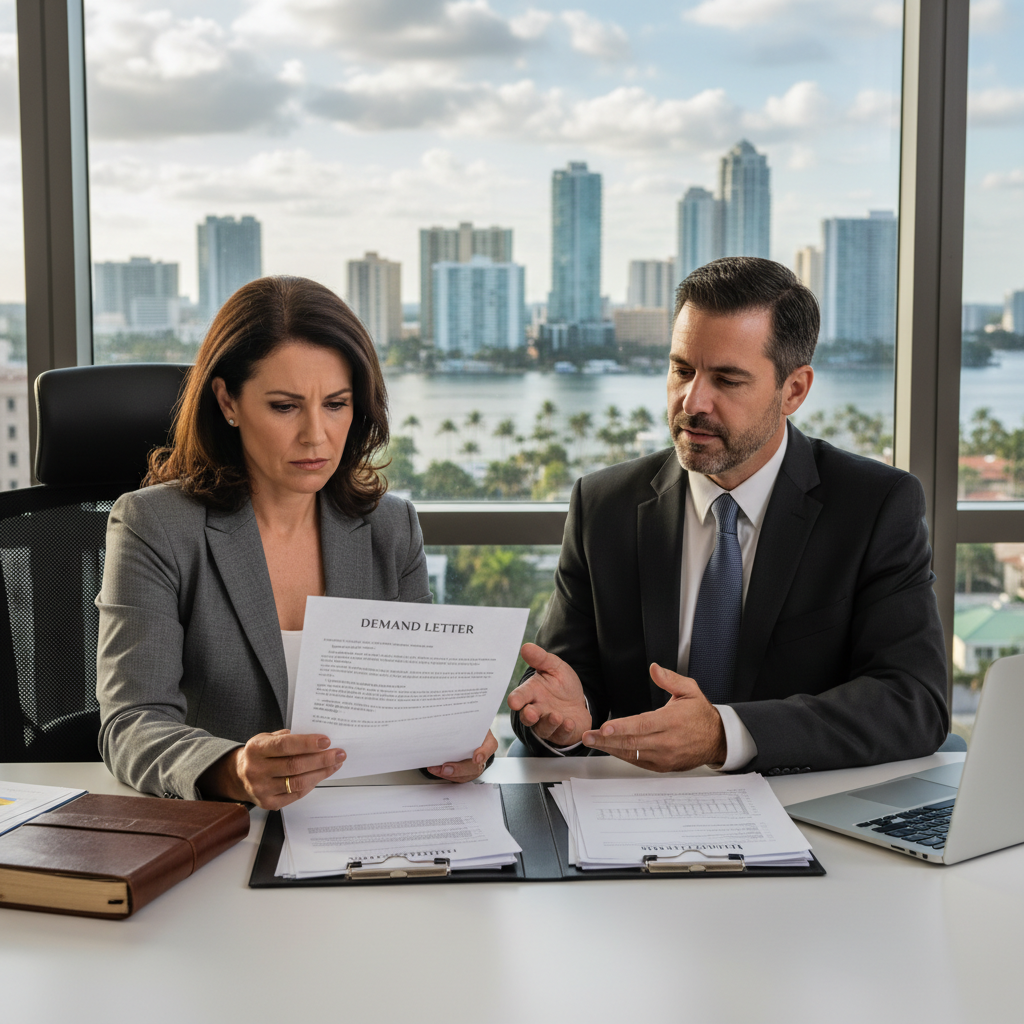
South Florida business litigation attorney — demand letter review

Most South Florida business owners wait too long before calling a business litigation attorney. By the time they act, the other side has already filed a lawsuit, frozen a bank account, or hired aggressive counsel that put them at a significant disadvantage from the start. Knowing the warning signs that your business dispute is heading toward litigation — and acting before it gets there — is the difference between a quick resolution and years of costly court battles. Here are five signs that you need a business litigation attorney in South Florida right now.

South Florida’s business environment — driven by real estate, finance, hospitality, and international trade — produces a high volume of commercial disputes. From Fort Lauderdale to Miami, Broward County courts see a constant stream of breach of contract cases, partnership blow-ups, non-compete violations, and commercial landlord-tenant conflicts. The businesses that come out ahead are the ones that recognized the warning signs early and got the right counsel involved before the situation became a courtroom fight.

Fort Lauderdale Real Estate Litigation lawyer

A South Florida business litigation attorney does not just show up for trial — they help you assess risk, send the right pre-suit communications, evaluate whether mediation or litigation is smarter, and build the strongest possible position before the other side makes their first move.

Sign 1: You Received a Demand Letter or Legal Threat

A written demand letter from an attorney is not a bluff. It is a formal signal that the other party is prepared to litigate if you do not comply or respond appropriately. Ignoring it — or responding emotionally without legal guidance — almost always makes the situation worse. The moment you receive a business demand letter in Florida, you need an attorney reviewing it and preparing your response.

Sign 2: A Business Partner Is Acting Outside Their Authority

If a business partner is signing contracts you did not approve, diverting clients, moving company funds, or refusing to provide financial information they are obligated to share, these are not internal HR issues — they are legal violations. Florida law and your operating agreement define what partners can and cannot do. A business litigation attorney can send a cease-and-desist, seek emergency injunctive relief, or initiate dissolution proceedings before the damage becomes irreversible.

Sign 3: A Contract Dispute Is No Longer Being Handled Through Normal CommunicationFlorida business litigation attorney fees — fee agreement review

When emails stop being answered, payments are withheld without explanation, or the other side starts copying their attorney on communications, the dispute has escalated beyond what a handshake or a phone call will fix. Contract disputes in South Florida — over services, deliverables, payment terms, or breach of exclusivity — move quickly from informal disagreement to formal litigation. Getting an attorney involved at this stage can still resolve the matter through negotiation or mediation before a lawsuit is filed.

  • Monitor communications for signs of escalation — copied attorneys, formal letters
  • Document all agreements and changes in writing
  • Preserve evidence before the situation becomes adversarial
  • Act quickly — Florida statutes of limitations are short
  • Emails go unanswered for more than a week on a payment or deliverable dispute
  • The other party’s attorney is now CC’d on all communications
  • Payments are being withheld without written explanation
  • The other side is building documentation against you — you should be too

Sign 4: You Are Facing a Non-Compete or Trade Secret Violation

Former employees or partners who violated a non-compete agreement or took proprietary client lists and business information are creating legal exposure for you if you do not act — and creating liability for themselves. Florida courts do enforce properly drafted non-compete agreements under Florida Statute §542.335. Emergency injunctive relief can stop the violation within days of filing if the facts support it. Delay here is costly.

  • Unpaid rent or breach of the lease terms
  • Withholding security deposits without proper documentation
  • Wrongful exclusion from management or business operations

Sign 5: Someone Filed a Lis Pendens on Your Property

  • A lis pendens recorded against your property signals that someone is claiming a legal interest in it through pending litigation
  • It clouds your title and prevents a clean sale or refinancing
  • The wrong move in the first days after a lis pendens is recorded can significantly worsen your position in the underlying dispute

What a South Florida Business Litigation Attorney Does for You

  • Get emergency injunctions within 24-72 hours to stop ongoing harm
  • Negotiate favorable settlements that avoid months of litigation
  • Reviews demand letters and assesses legal exposure
  • Negotiates with opposing counsel before litigation
  • Files emergency motions for temporary restraining orders
  • Manages discovery and depositions
  • Prepares for trial or settlement negotiations


Situation What Your Attorney Does
Demand letter received Analyzes exposure, prepares legal response, opens negotiation channels
Partner misconduct Sends cease-and-desist, files for emergency injunction if assets at risk
Contract dispute Reviews agreement, identifies remedies, pursues mediation or litigation
Non-compete violation Files for temporary restraining order and injunction to stop ongoing harm
Lis pendens filed Files motion to discharge or bond over lis pendens to protect your title


Key Actions to Take Immediately

  • Document all communications and agreements in writing
  • Preserve evidence — emails, contracts, financial records
  • Contact a litigation attorney within days, not weeks
  • Do not attempt self-help remedies without legal guidance
  • Understand your deadlines — Florida has strict filing limits

When to Contact a Business Litigation Attorney in South Floridaboca-grande-litigation-attorney

Do not wait for the situation to escalate further. Here are the specific moments when you should pick up the phone:

  • You received a cease-and-desist letter or legal demand from the other side
  • A partner, client, or vendor stopped responding to your communications
  • Someone has recorded a lis pendens or filed a lien against your property or business assets
  • Clear written demand letter with specific claims and deadline
  • Preserve all communications as evidence for court
  • Act before statute of limitations expires
  • Consider mediation before filing suit to save costs

Quick Checklist: Do You Need a Business Litigation Attorney?

  • You received a written demand letter or legal notice
  • A business partner is acting outside their authority
  • Contract communication has broken down
  • Someone filed a lis pendens or other legal action against you
  • You are facing enforcement of a non-compete or confidentiality agreement

If any of these apply, call an attorney now — do not wait.

Frequently Asked Questions: Business Litigation in South Florida

Question Answer
How do I know if my situation requires a litigation attorney vs. a transactional attorney? If a dispute has started — demand letter, lawsuit threat, or court filing — you need a litigation attorney, not just business counsel.
Can a business dispute be resolved without filing a lawsuit? Yes — most resolve through negotiation, mediation, or arbitration. An attorney helps you reach the best outcome without unnecessary litigation.
How quickly can I get emergency relief in a Florida business dispute? A temporary restraining order can be obtained within 24–72 hours in cases involving imminent, irreparable harm.
What if I cannot afford full litigation? Discuss fee arrangements with your attorney. Many Broward County litigation firms offer flat-fee or hybrid arrangements for defined stages of a case.

Key Takeaways When You Need a Litigation Attorney

  • Do not ignore demand letters — they signal the other side is prepared to litigate
  • Partner misconduct requires immediate legal action to stop ongoing harm
  • Contract disputes escalate quickly without attorney involvement
  • Non-compete violations can be stopped with emergency injunctive relief
  • A lis pendens on your property requires immediate response

What to Do When You Receive a Legal Threat

  • Do not ignore demand letters or legal notices — they signal intent to litigate
  • Consult an attorney immediately before responding in writing
  • Preserve all evidence and communications related to the dispute
  • Review your contracts and insurance policies for coverage or notice requirements

Do Not Wait — Get a Business Litigation Attorney on Your Side Now

If any of these five signs apply to your situation, you are already behind where you should be. Feinstein Law represents South Florida businesses in commercial litigation, contract disputes, partner conflicts, and real estate matters throughout Broward, Miami-Dade, and Palm Beach counties. Call (954) 767-9622 or use our contact page to speak with a litigation attorney today.

About Feinstein Law

Feinstein Law is a Fort Lauderdale litigation firm representing businesses and individuals in complex commercial disputes and real estate litigation across South Florida.

By : Michael Feinstein | April 3, 2026 | Business Litigation

Real Estate Litigation in Fort Lauderdale: What to Expect

Fort Lauderdale real estate litigation — Broward County courthouse

If you’re dealing with a real estate litigation matter in Fort Lauderdale, you’re probably wondering how long this takes, what it actually costs, and whether going to court is even worth it. Fort Lauderdale real estate litigation runs through Broward County’s 17th Judicial Circuit — one of the busiest court systems in Florida — and the process looks very different depending on whether you’re in a contract dispute, a title fight, or a construction defect case. Here’s what the process actually looks like from start to finish.

Florida Statute §44.102 provides the legal framework for these disputes.

How Fort Lauderdale Real Estate Litigation Starts

Learn more at Florida Business Corporation Act. Florida Rules of Civil Procedure (real estate litigation)

Pre-Suit Demand and Notice Requirements

Most Fort Lauderdale real estate disputes begin with a formal demand letter — a written notice from one party’s attorney setting out the legal basis for the claim and what remedy they’re seeking. In some cases, like Florida construction defect claims, a statutory pre-suit notice under Chapter 558 is legally required before filing. Missing that step can result in a dismissal. In standard contract disputes, there’s no mandatory pre-suit notice — but sending one creates a record and often resolves the matter without court involvement.

Side view of the Broward County Courthouse in Fort Lauderdale with palm trees

Filing in Broward County’s 17th Circuit

Civil real estate cases in Fort Lauderdale are filed in the Broward County 17th Judicial Circuit Court. Claims over $30,000 go to circuit court; smaller claims go to county court. The filing fee, service of process, and initial case management conference set the litigation timeline. Broward’s circuit judges are experienced with commercial and real estate matters — but their dockets are full, which means cases move on the court’s schedule, not yours.

The Litigation Timeline in Broward Circuit Court

Phase What Happens Typical Duration
Filing & service Complaint filed, defendant has 20 days to respond Week 1–4
Case management Judge sets discovery deadlines, mediation date, and trial date Month 1–2
Discovery Depositions, document requests, expert designations Months 3–10
Mediation Required before trial — most cases settle here Months 6–12
Motions Summary judgment, motions in limine to exclude evidence Months 10–18
Trial Jury or bench trial — most cases never get here Months 18–30+

Why Most Cases Settle Before Trial

Broward County courts require mediation in virtually all civil cases before trial. The combination of mediation costs, expert witness fees, and attorney time means most Fort Lauderdale real estate litigation resolves before trial — often because both sides do the math and realize settlement makes more financial sense. A realistic Fort Lauderdale real estate litigation attorney will map out that math for you early.

Types of Real Estate Cases Filed in Fort Lauderdale Courts

What Broward Circuit Court Sees Most

  • Breach of purchase contract — failed closings, deposit disputes, specific performance claims
  • Seller non-disclosure claims — concealed defects on residential and commercial properties
  • Commercial lease disputes — eviction, rent disputes, CAM reconciliation fights
  • Construction defect litigation — defective work by contractors, subcontractors, or developers
  • Quiet title actions — resolving competing ownership claims or clearing title clouds
  • Partition actions — co-owners forcing a sale when they can’t agree

Costs of Fort Lauderdale Real Estate LitigationBusiness professionals reviewing litigation documents in Fort Lauderdale office

What You Should Budget For

  • Attorney fees — $300–$600/hour for experienced Fort Lauderdale real estate litigators
  • Expert witnesses — appraisers, engineers, contractors at $200–$500/hour; required for most defect and valuation disputes
  • Deposition costs — court reporter, transcript, and preparation time add up quickly
  • Mediation fees — typically $600–$2,000 per party split equally
  • Trial costs — contested trials add significant attorney time, jury fees, and exhibit costs
  • Florida Civil Procedure Rules — governs Broward County Circuit Court litigation

Florida’s prevailing party attorney fee statute means that if your contract has a fee clause — which most real estate contracts do — the winner can recover those costs. That changes the risk calculus significantly. The Florida attorney fees statute (§ 57.105) also allows fee awards for frivolous claims and defenses.

Frequently Asked Questions

For more information, see Broward County Clerk Court Information.

For more information, see Florida Courts System.

Question Answer
How long does real estate litigation take in Fort Lauderdale? Simple disputes resolved at mediation: 3–6 months. Contested cases that go through full discovery and trial: 18–30+ months.
Can I recover attorney fees if I win my real estate case in Broward? Yes — if your contract has a prevailing party fee provision, which most Florida real estate contracts do. Courts enforce them strictly.
Do I have to go to mediation before trial in Broward County? Yes. The 17th Circuit requires it in virtually all civil cases. Most attorneys treat it as the primary resolution opportunity.

Fort Lauderdale Real Estate Disputes Require Local Knowledge and Litigation Experience

Feinstein Law handles Fort Lauderdale real estate litigation in Broward’s 17th Circuit for buyers, sellers, landlords, tenants, and investors. Call (954) 767-9662 or reach us at our contact page.

About Feinstein Law: Feinstein Law is a Fort Lauderdale firm handling real estate litigation, business disputes, and construction law throughout Broward, Miami-Dade, and Palm Beach counties.

By : Michael Feinstein | April 1, 2026 | Real Estate Litigation
Call Now