





 954-767-9662
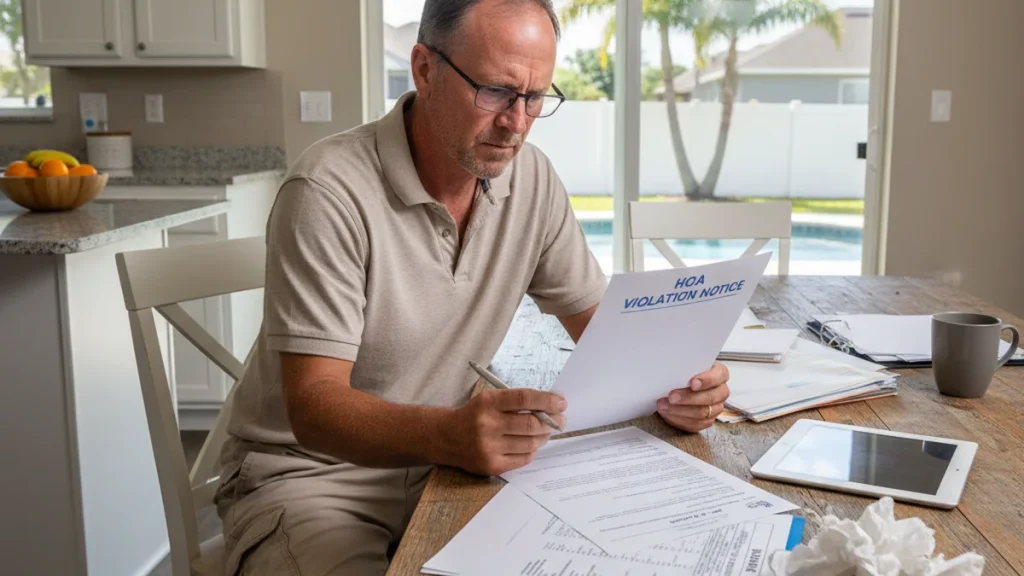
HOA disputes in Florida are among the most common and most frustrating legal conflicts homeowners face. Whether you’re fighting an unfair fine, challenging a board decision, or dealing with a lien on your home, Florida’s community association laws give homeowners real rights — but only if you know how to use them. This guide explains what Florida HOA disputes look like, what the law says, and when you need a real estate attorney in your corner.
Common Types of HOA Disputes in Florida
Fines and Assessment Disputes
HOAs have the authority to levy fines for violations of community rules, but Florida law limits how and when they can do so. Under Florida Statute § 720.305, an HOA cannot fine a member more than $100 per violation per day, with a cap of $1,000 per violation unless the governing documents allow more. Before imposing a fine, the HOA must give proper notice and an opportunity to be heard before a fining committee.
Lien and Foreclosure Threats
An HOA can place a lien on your property for unpaid assessments and, in some cases, foreclose on that lien. This is one of the most aggressive collection tools available to a community association — and one of the most legally regulated. If you receive a lien notice or a foreclosure threat over HOA dues, contact a Fort Lauderdale real estate litigation attorney before responding.
Board Misconduct and Transparency Issues
Florida’s Homeowners Association Act (Chapter 720) requires boards to hold open meetings, maintain financial records, and allow member inspection of documents. When boards act without transparency — holding secret meetings, denying record requests, or self-dealing on contracts — homeowners have legal recourse including petitioning the Division of Florida Condominiums, Timeshares, and Mobile Homes or filing suit directly.
Your Rights as a Florida HOA Member
| Right | Legal Basis | How to Enforce |
|---|---|---|
| Inspect association records | F.S. § 720.303(5) | Written request; board must respond within 10 business days |
| Attend board meetings | F.S. § 720.303(2) | All meetings must be properly noticed; members may attend |
| Challenge fines before a committee | F.S. § 720.305 | Demand a fining committee hearing before paying |
| Vote to recall board members | F.S. § 720.303(10) | Petition with enough member signatures triggers recall election |
| Request alternative dispute resolution | F.S. § 720.311 | Pre-suit mediation required for most HOA disputes |
Mandatory Pre-Suit Mediation
Before filing most lawsuits against an HOA in Florida, state law requires you to attempt pre-suit mediation. This is not optional — skipping it can get your case dismissed. An experienced business litigation attorney who also handles HOA matters can guide you through this process efficiently and position you for litigation if mediation fails.
When Should You Hire an Attorney for an HOA Dispute?
- The HOA has placed or threatened a lien on your home
- You received a notice of foreclosure over unpaid assessments
- The board denied a legitimate record inspection request
- You have been fined without proper notice or a hearing
- The HOA is selectively enforcing rules against you
- A board member has a conflict of interest in a vote that affected you
The Florida Bar’s guidance on community association law confirms that homeowners often underestimate how much leverage they have when boards fail to follow proper procedures. A single procedural error by the HOA — like missing the fining committee step — can invalidate an entire enforcement action.
Condo Association vs. HOA: Different Rules
Florida condominiums are governed by the Condominium Act (Chapter 718), which has different rules than the HOA Act. Condo owners have stricter inspection rights, different meeting requirements, and different dispute resolution pathways. If your dispute involves a condo association rather than a traditional HOA, the legal strategy differs. A West Lauderdale real estate litigation attorney familiar with both statutes can advise on the correct approach.
Frequently Asked Questions
| Question | Answer |
|---|---|
| Can an HOA really foreclose on my home in Florida? | Yes, but only after following strict legal procedures including notice, lien recording, and a cure period. |
| What is the maximum fine an HOA can charge in Florida? | $100/day per violation up to $1,000 total, unless governing documents authorize more. |
| Can I sue my HOA directly? | Yes, but Florida law requires pre-suit mediation for most disputes before a lawsuit can be filed. |
| What records am I entitled to inspect? | Financial records, meeting minutes, contracts, and governing documents — all within 10 business days of a written request. |
| What if the HOA ignores my record request? | You may file a complaint with the DBPR or pursue legal action for non-compliance. |
Fighting Back Starts with Knowing Your Rights
An HOA has significant power — but that power has limits under Florida law. If your HOA dispute in Florida has escalated beyond what you can handle alone, Feinstein Real Estate Litigation & Business Law can step in. Call (954) 767-9662 or visit our contact page to discuss your situation.
About Feinstein Real Estate Litigation & Business Law
Feinstein Real Estate Litigation & Business Law is a South Florida law firm with over 37 years of experience handling HOA disputes, real estate litigation, breach of contract, and business law matters throughout Broward, Miami-Dade, and Palm Beach Counties.
